

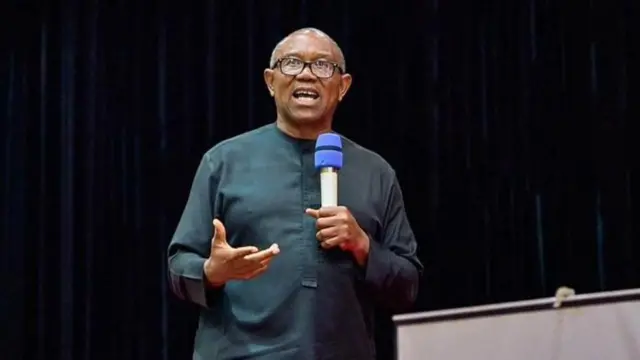

As concerns mount over worsening food insecurity across northern Nigeria, the 2027 presidential candidate of the **Nigeria Democratic Congress** (NDC), Peter Obi, has argued that the country’s deepening hunger crisis is the consequence of policy failures, insecurity and years of neglect of the agricultural sector.
Obi’s intervention follows a warning by the **World Food Programme** that more than 17 million people in nine northern states could face acute food insecurity, with millions of others across the country vulnerable during the current lean season.
In a statement posted on his X account on Saturday, Obi described the situation as a national emergency, insisting that a country endowed with vast arable land should not be grappling with widespread hunger.


He attributed the crisis largely to insecurity, which he said has forced farmers off their lands and turned once-thriving agricultural communities into conflict zones.
According to him, restoring security to farming communities is essential to reviving food production and preventing a further deterioration of the humanitarian situation.
Obi called on the Federal Government and state governments to urgently redirect investments toward agriculture by securing food-producing areas, supporting smallholder farmers with affordable inputs and financing, and working more closely with development partners to address looming food shortages.
He also urged policymakers to abandon what he described as short-term, consumption-driven economic policies in favour of strategies that expand domestic production, modernise rural infrastructure and unlock Nigeria’s agricultural potential.
The former Anambra State governor maintained that the country’s worsening position on global hunger indices reflects structural governance challenges rather than a shortage of natural resources.
He argued that sustainable investments in agriculture and rural livelihoods would have a greater impact on economic recovery and poverty reduction than projects that do not directly improve productive capacity.
“A prosperous Nigeria, free from hunger, is achievable, but it requires leadership that prioritises the welfare of its citizens,” Obi said, adding that the country possesses the resources needed to feed itself if supported by effective leadership and coherent agricultural policies.