


A social media post by former Jigawa State Governor, Sule Lamido, has triggered a broader national conversation about patriotism, leadership and the place of national symbols in shaping citizens’ sense of identity and belonging.
What began as a simple comparison between two photographs has evolved into a debate over how public officials should relate to the emblems that represent Nigeria’s sovereignty and collective heritage.
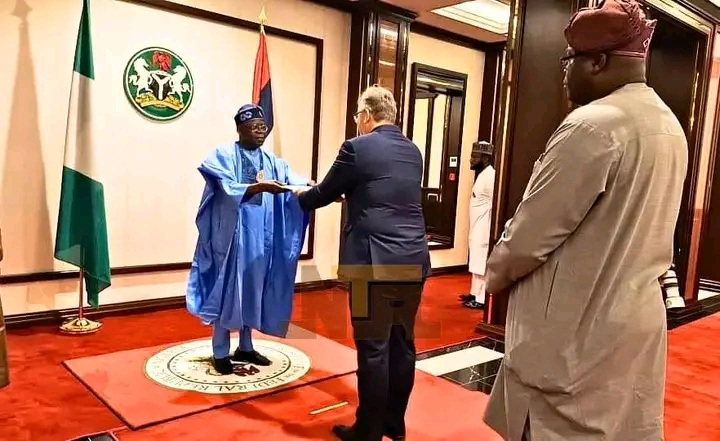
The controversy erupted after Lamido shared an image of President Bola Ahmed Tinubu standing on a floor-mounted Nigerian Coat of Arms at the Presidential Villa. Alongside it, he posted a photograph of Brazilian football star Vinicius Junior carefully avoiding stepping on the crest of his club, Real Madrid, captioning the images: “Pictures speak: Desecration versus respect.”

The post quickly gained traction across social media platforms, drawing reactions from political figures, legal minds, civil society advocates and ordinary citizens.
For many commentators, the discussion transcended the issue of whether the President intentionally disrespected the national emblem. Instead, it raised deeper questions about how nations cultivate reverence for their symbols and the role leaders play in setting standards of national conduct.
Among those weighing in was Mallam Sultan Abubakar, who argued that the Coat of Arms represents much more than an official insignia.
According to him, national symbols embody a country’s history, sovereignty, sacrifices and aspirations, making them deserving of the highest regard from both leaders and citizens.
“Respect for national symbols is a reflection of patriotism and a demonstration of reverence for the values and identity that bind a nation together,” he stated.
Supporters of this view contend that symbols matter because they help unite citizens across ethnic, religious and political divides. They argue that the conduct of public office holders towards such symbols inevitably sends a message about the value placed on national institutions.
Others, however, have urged caution against interpreting the image as an act of disrespect.
One of them, Abu Sadiq Ahmed Sulaiman, explained that the Coat of Arms embedded in the floor of the Presidential Villa serves as an official protocol marker where the President stands while receiving foreign dignitaries and conducting state functions.
He noted that similar practices exist in other countries, including the placement of the Presidential Seal in official spaces in the United States.
Yet even those defending the protocol arrangement conceded that public perception cannot be ignored.
“The intent may not be desecration, but national symbols derive their power from how citizens feel about them,” Sulaiman observed, suggesting that the debate may prompt a review of how such symbols are displayed in official government facilities.
Several contributors also drew comparisons with the sporting world, arguing that football clubs and other global institutions often enforce strict respect for their logos, badges and colours. In their view, sovereign symbols representing an entire nation should command even greater reverence.
Beyond the immediate controversy, analysts say the debate reflects a growing public desire for stronger civic values and greater respect for institutions at a time when many Nigerians are searching for symbols capable of reinforcing national unity.
As the discussion continues, one issue appears to unite both critics and defenders of the President: the recognition that national symbols carry profound emotional and political significance and that how they are treated can shape public perceptions of leadership, patriotism and national pride.
What started as a photograph has thus evolved into a wider reflection on the meaning of citizenship and the symbols through which a nation expresses its identity.