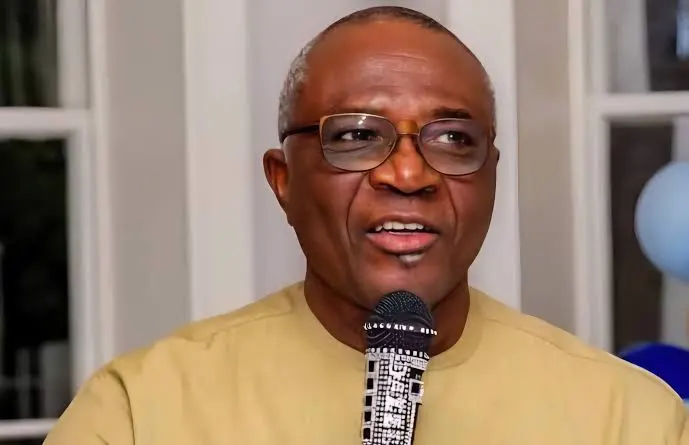

The Human Rights Writers Association of Nigeria (HURIWA) has condemned comments by the Special Adviser to President Bola Ahmed Tinubu on Information and Strategy, Mr. Bayo Onanuga, dismissing widespread concerns about hunger in the country.
In a statement signed by its National Coordinator, Comrade Emmanuel Onwubiko, HURIWA described Onanuga’s remarks as a troubling display of disconnect from the realities confronting millions of Nigerians amid what it called the country’s worst cost-of-living crisis in decades.
The association argued that personal observations cannot replace empirical evidence and credible assessments from national and international bodies monitoring food security and poverty levels.
According to HURIWA, the claim that hunger is not as severe as reported because people are seen carrying out economic activities or because new roads are being constructed is both flawed and insensitive.
“Nigerians cannot eat roads. They cannot feed their families with official optimism or survive on public relations narratives while food prices remain beyond the reach of ordinary households,” the statement said.
HURIWA noted that Onanuga’s position contradicts recent findings by the Food and Agriculture Organization (FAO) and the World Food Programme (WFP), which identified Nigeria as one of 13 global hunger hotspots where acute food insecurity is expected to worsen between June and November 2026.
The group also cited WFP projections that about 34.8 million Nigerians could face crisis-level or worse food insecurity between July and September 2026, while more than 3.6 million internally displaced persons remain vulnerable across parts of the North-East, North-West and North-Central regions.
“These are not opposition figures or social media commentators. They are globally respected humanitarian institutions whose findings are based on rigorous field research and internationally recognised methodologies,” HURIWA stated.
The rights group challenged the presidential spokesman to undertake an independent tour of communities across Kaduna, Zamfara, Sokoto, Katsina, Niger, Plateau, Benue and Borno states to gain firsthand insight into the hardships faced by ordinary citizens.
It urged him to engage market women struggling with inflation, pensioners forced to choose between food and medication, displaced families living in camps, unemployed youths, farmers battling insecurity and workers grappling with rising living costs.
“Only then can he begin to appreciate the depth of the economic distress facing millions of Nigerians,” the association said.
While acknowledging ongoing infrastructure projects and government intervention programmes, HURIWA stressed that such efforts should not be used to dismiss evidence of widespread hardship.
“The true measure of economic success is not the number of roads commissioned but whether citizens can afford three meals a day, provide for their families and live with dignity,” the group argued.
HURIWA urged the Presidency to confront the country’s food insecurity challenge with honesty and urgency, insisting that meaningful solutions can only emerge when government recognises the scale of the crisis.
“History has shown that governments are strongest not when they deny uncomfortable realities, but when they confront them with sincerity, courage and practical solutions,” the statement added.