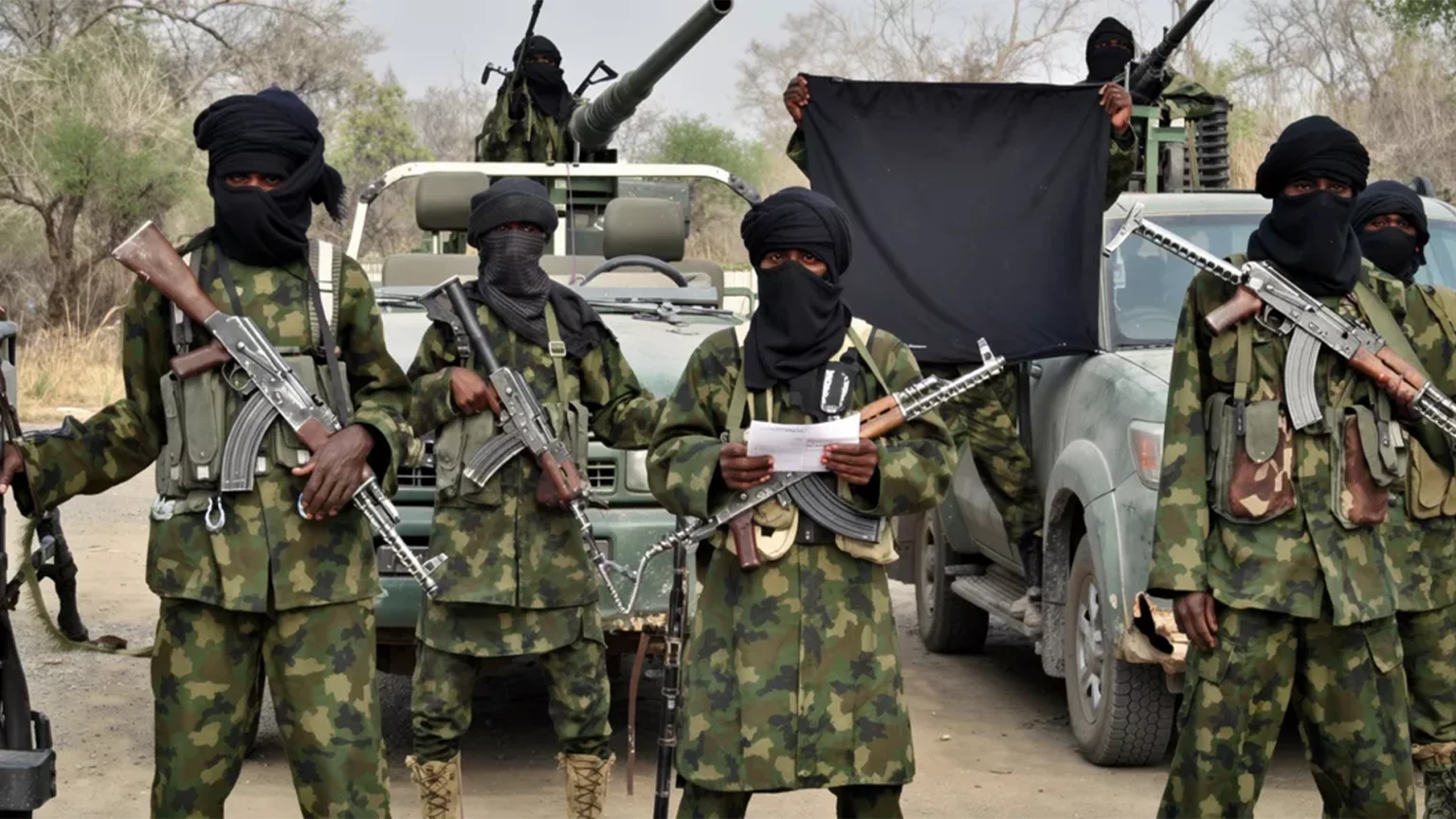
The Federal Government’s latest publication of a sanctions list naming 48 individuals and 12 entities allegedly linked to terrorism financing has once again underscored Nigeria’s evolving—but still contested—approach to disrupting the financial backbone of extremist networks.
Released through the Nigeria Sanctions Committee (NIGSAC) under the Office of the National Security Adviser (ONSA), the list is part of a broader counter-terrorism financing framework designed to align Nigeria with United Nations Security Council obligations while strengthening domestic enforcement mechanisms.
On paper, the move signals progress: a structured attempt to track, freeze, and block financial flows suspected of sustaining insurgent groups and criminal networks. But beneath the announcement lies a deeper and more persistent question—how effective are sanctions in an environment where informal financial systems remain deeply entrenched?
While the sanctions list provides names of individuals and corporate entities allegedly involved in illicit financing, security and financial crime analysts say the real test lies not in publication, but in enforcement.
Nigeria’s financial ecosystem, particularly in border communities and informal trade corridors, is still heavily cash-based. Bureau de change operators, cross-border traders, and unregulated financial intermediaries continue to play significant roles in moving funds outside formal banking channels.
This reality, analysts argue, makes it easier for illicit financial flows to adapt faster than regulatory responses.
Even as authorities tighten oversight through banks and regulated institutions, concerns persist that sophisticated networks linked to groups such as Islamic State West Africa Province and Jama’atu Ahlis Sunna Lidda’awati wal-Jihad increasingly rely on decentralised, informal, and transnational methods that are harder to trace.
The sanctions regime is grounded in the Terrorism (Prevention and Prohibition) Act 2022, which empowers the state to freeze assets, restrict travel, and block financial access for designated individuals and entities.
But experts say Nigeria’s challenge has never been the absence of legal instruments—it is the gap between designation and disruption.
“Publishing names is the visible part of the process,” a security analyst in Abuja noted. “But dismantling the networks behind those names is far more complex.”
The inclusion of bureau de change firms and trading companies in the latest list reflects growing concern that legitimate-looking businesses may be used as conduits for laundering or transferring funds linked to terrorism financing.
However, questions remain about the depth of investigation behind some listings, and whether enforcement agencies have the capacity to sustain long-term surveillance across multiple jurisdictions.
A widening financial battlefield
The sanctions also highlight how Nigeria’s counter-terrorism strategy has increasingly shifted from purely military operations to financial warfare.
Over the past decade, the state has combined military pressure with intelligence-led financial tracking, leading to hundreds of prosecutions and convictions related to insurgency-linked activities.
Yet despite these efforts, insurgent groups have demonstrated resilience—adapting financing structures, exploiting regional trade routes, and leveraging informal economies across West and Central Africa.
The Office of the National Security Adviser Nigeria, which coordinates the sanctions framework, has repeatedly emphasized that cutting off financial lifelines is essential to weakening operational capacity on the ground.
Still, observers caution that financial sanctions alone cannot resolve structural vulnerabilities such as unemployment, weak border controls, and limited financial inclusion in rural and conflict-affected areas.
The public release of names is also seen as part of a transparency and deterrence strategy—signalling to financial institutions and the public that the government is actively monitoring terrorism-related financial flows.
However, this approach carries its own risks.
Without clear judicial outcomes or publicly accessible evidence, some analysts warn that sanctions lists may be perceived as administrative rather than strictly evidentiary instruments, potentially raising concerns about due process and reputational damage for listed individuals or entities.
At the same time, financial institutions are now under increased pressure to comply with “know-your-customer” and anti-money laundering regulations or risk penalties for facilitating prohibited transactions.
Nigeria’s counter-terrorism financing strategy sits at a crossroads between containment and long-term disruption.
On one hand, the sanctions regime reflects a maturing security architecture that recognizes the importance of financial intelligence in modern conflict. On the other, it exposes the limitations of a system still grappling with porous borders, informal economies, and transnational criminal networks.
For now, the publication of the latest list reinforces a clear message from authorities: the financial ecosystem supporting insurgency is under sustained surveillance.
But it also leaves unresolved a deeper policy question—whether sanctions are gradually choking these networks, or simply pushing them further underground.
As Nigeria intensifies both military and financial pressure on extremist groups, the effectiveness of its strategy may ultimately depend not on how many names are listed, but on how deeply the structures behind those names are dismantled.
Nigeria releases terrorism financing sanctions list naming 48 individuals