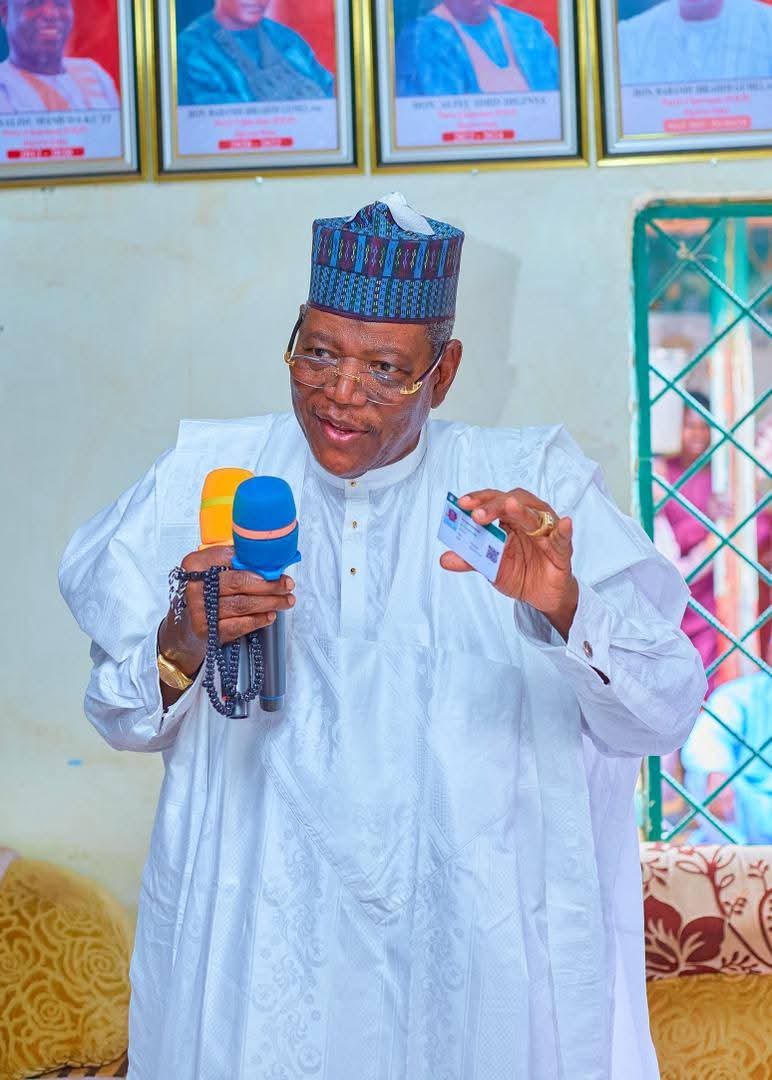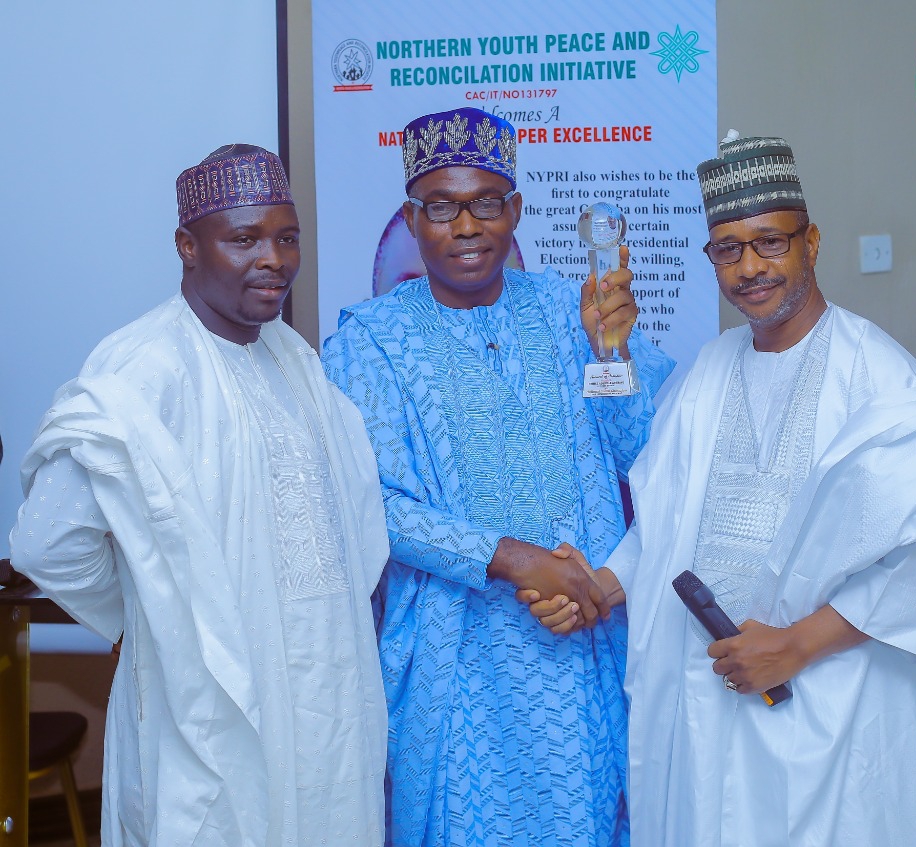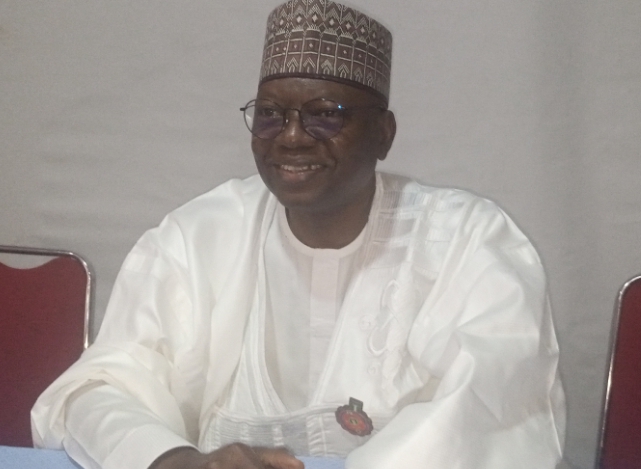
Amid shifting political alliances across Nigeria, former Jigawa State governor, Sule Lamido, has reaffirmed his unwavering commitment to the Peoples Democratic Party (PDP), declaring the party his “home” and urging supporters to remain steadfast as the race toward 2027 gathers momentum.
Speaking during an interview at the PDP aecretariat in Dutse on Saturday, Lamido pushed back strongly against claims that he left the party’s recent convention midway questioning the basis of the narrative.
“How do you come up with this information? Are you really being fair to me?” he asked pointedly.
While acknowledging internal challenges within the PDP, the elder statesman insisted they are not grounds for defection, framing his loyalty in deeply personal terms.
“Yes, it is true, there are problems in PDP. But it is my party—my home,” he said.
“If my house is leaking, I will not abandon it and go and rent a small house somewhere else.”
Using the analogy, Lamido took aim at politicians defecting across party lines, describing such movements as lacking conviction and ideological clarity.
“I am not going to any political house owned by somebody else. I am from a political home.”
On the emergence of alternative platforms such as the African Democratic Congress (ADC), Lamido questioned both the moral and political basis of the realignments.
“Those who went to ADC were originally in PDP… they left their home,” he said.
“Morally, is it right to go and confiscate another party from its owners?”
He argued that frequent defections point to a deeper issue of political inconsistency.
“They left because they have no capacity to stand on their own and build something fresh.”
Lamido also dismissed claims that Nyesom Wike is the national leader of the PDP, noting that leadership perceptions differ within party ranks.
“Did I say that? People are free to believe who their leader is,” he said.
“Even within parties, some people believe in certain leaders, others do not.”
Beyond rhetoric, political developments in Jigawa State appear to reinforce Lamido’s position.
Stakeholders maintain that the PDP’s entrenched grassroots structure continues to give it a commanding advantage in the state.
“Jigawa is the heart of PDP in northern Nigeria today. PDP is still very strong in Jigawa,” a party source said.
Recent cracks within the All Progressives Congress (APC) have further strengthened that narrative, with reports of resignations and growing internal discontent.
“People have left APC in the last three days in droves… the party they are looking for is PDP.”
Several prominent figures, including Bala Usman Chamo, Muhammed Sabo Yankoli, Hon. Jamilu Uwais Xaki, Alhaji Auwal Sasani, Aminu Salle Illalla, and Hassan Musa Namadeena, are said to have stepped down from their positions, signaling widening cracks within the ruling party’s state structure.
“They have not joined yet, but they have all resigned. And the only alternative they see is PDP.”
Analysts say the trend underscores weakening cohesion within the APC.
“The way people are leaving APC shows something is wrong… it suggests the leadership is losing control.”
For the PDP, its enduring institutional presence remains a key advantage, with representation across the National Assembly and State Assembly.
“PDP has structure in the state… people fall back to that structure.”
This structural depth, combined with the influence of key figures such as Lamido and former governor Mohammed Badaru Abubakar, continues to shape political calculations in the state.
“Lamido is a force to reckon with—whether you like it or not.”
“If anybody wants to capture Jigawa, they must reckon with Lamido and Badaru… that’s the reality.”
Observers say this combination of structure and influence is driving renewed confidence within the PDP.
“PDP is becoming stronger, and that is where the tension is coming from.”
Mobilisation, Discipline, and the Road Ahead
At a recent stakeholders’ meeting in Dutse, Lamido reinforced party unity and readiness for the electoral cycle ahead.
“We are not going anywhere. We will remain in PDP,” he declared.
“Everybody will contest—from State Assembly to President—under PDP. No shaking.”
He also urged members to remain law-abiding and actively participate in the electoral process, particularly ongoing voter registration.
“INEC has spoken. Our duty is to obey the law… go and revalidate your voter cards.”
“Don’t complain, don’t give excuses—prepare for the election.”
He further directed members to engage in the party’s digital membership registration as a demonstration of loyalty and organisation.
“Go and register. It shows clearly—we are in PDP, and we are staying in PDP.”
A Party Consolidating, Not Retreating
With rival parties grappling with internal strains and no alternative platform matching its structure in the state, the PDP in Jigawa appears to be consolidating rather than weakening.
Lamido, summing up his position, returned to the metaphor that has come to define his stance:
“I am not going to any political house owned by somebody else. I am from a political home.”
Taking a broader swipe at governance and political accountability, he added:
“If a vehicle is not working, you don’t blame the passengers—you blame the driver.”
As the countdown to 2027 intensifies, that sense of political “home” may yet prove to be the PDP’s most enduring advantage in Jigawa.
Lamido Doubles Down on PDP Loyalty, Rallies Base as Jigawa Holds Firm