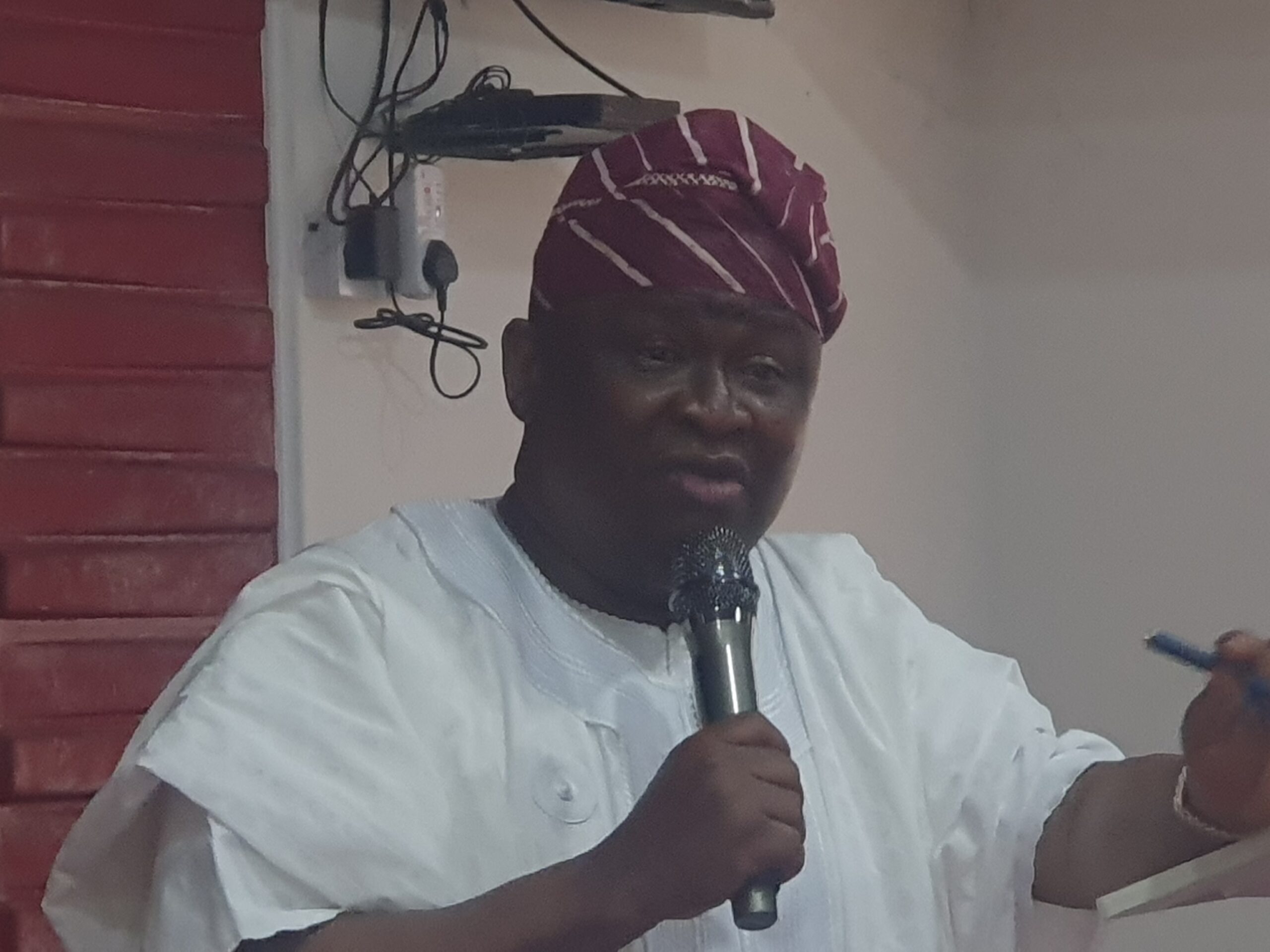
The Chairman of the Senate Committee on Appropriation, Senator Olamilekan Adeola Solomon, has defended the ₦9 trillion increase in Nigeria’s 2026 Appropriation Bill, bringing the total budget to ₦68.323 trillion, while outlining the funding framework behind the adjustment.
Speaking at the National Assembly and in engagements with journalists, Adeola explained that the upward revision followed formal requests from the Executive to address emerging national priorities and close critical funding gaps across key sectors.
He noted that President Bola Ahmed Tinubu initially presented a ₦58.4 trillion budget in December 2025, but the figure was revised after extensive deliberations between both chambers of the National Assembly and a detailed review of additional submissions from the Executive.
Adeola emphasized that the process was transparent and fully compliant with legislative procedures, adding that every addition was backed by official correspondence and subjected to rigorous scrutiny by lawmakers.
Describing the revised fiscal plan as aligned with the administration’s Renewed Hope Agenda, he said the 2026 budget represents a “Budget of Consolidation” designed to sustain ongoing reforms, stabilize the economy, and accelerate national development.
Responding to public concerns about the size of the increase, the lawmaker assured that the National Assembly ensured all provisions were justified and necessary to prevent disruptions in government operations.
He highlighted key components of the adjustment, including ₦456 billion for a strategic infrastructure initiative aimed at promoting balanced regional development, and about ₦482 billion in counterpart funding for the health sector to meet international obligations and strengthen healthcare delivery.
According to him, the judiciary also received increased funding of approximately ₦403 billion to address rising caseloads and personnel shortages, particularly within appellate courts.
Adeola further disclosed that ₦5.71 trillion was earmarked to sustain ongoing projects, while ₦2 trillion was allocated to complete legacy projects inherited from previous administrations—measures he said were critical to avoiding abandoned infrastructure and ensuring continuity.
He added that preparatory works and feasibility studies also received funding, including ₦8.69 billion for a proposed super highway project, as part of broader efforts to expand Nigeria’s infrastructure base.
On the funding structure, Adeola explained that the ₦9 trillion increase was supported by a combination of enhanced revenue projections, independent revenue sources, and borrowing.
He revealed that the oil benchmark was revised upward from $65 to $75 per barrel, generating an estimated ₦2.5 trillion in additional revenue. He also pointed to expected inflows from agencies such as the Nigerian Communications Commission (NCC), alongside increased contributions from major telecom operators including MTN and Airtel.
While acknowledging that borrowing remains part of the financing mix, Adeola described it as a standard global practice necessary for funding large-scale development. He maintained that Nigeria remains committed to meeting its debt obligations and sustaining its financial credibility.
He urged public discourse to focus not only on the issue of borrowing but on how funds are deployed, stressing that prudent utilization is key to delivering tangible development outcomes.
Adeola expressed optimism about Nigeria’s economic trajectory, citing early signs of recovery, improving macroeconomic indicators, and renewed investor confidence as evidence that current reforms are gaining traction.
He reaffirmed the commitment of the National Assembly to work closely with the Executive to ensure effective implementation of the 2026 budget, adding that sustained reforms and disciplined resource management would position Nigeria for stronger growth and long-term economic stability.
Adeola Defends ₦9 Trillion Budget Expansion, Outlines Funding Strategy for 2026