
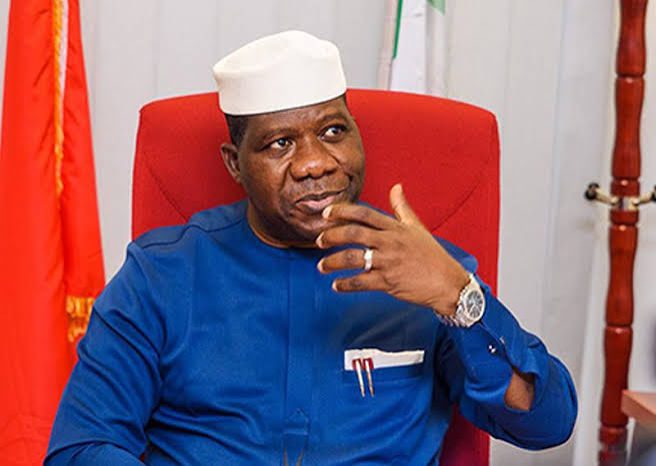
The Leader of the Senate, Senator Opeyemi Bamidele, has revealed that the National Assembly is advancing plans to establish a decentralised policing system designed to strengthen accountability, deepen security coordination, and curb the abuse of power within Nigeria’s security architecture.
Speaking in a statement issued on Sunday to commemorate the 74th birthday of Bola Ahmed Tinubu, Bamidele said the legislature is working deliberately to design a framework that aligns with global best practices while addressing Nigeria’s unique security challenges.
According to him, the proposed model will not only devolve policing responsibilities to subnational governments but will also embed strong oversight mechanisms to ensure that no authority—political or otherwise—can exploit security institutions for personal or partisan gain.
“This effort is about building a policing system that works for every Nigerian,” Bamidele said, stressing that the framework under consideration will prioritise accountability, discipline, and respect for human rights.
He explained that the National Assembly is determined to create a system that balances operational efficiency with strict institutional checks, ensuring that security agencies remain servants of the people rather than instruments of control.
The Senate Leader, who also serves as Vice Chairman of the Committee on the Review of the 1999 Constitution, noted that the reform effort has gained momentum amid growing national concerns over insecurity, ranging from terrorism to banditry and violent crime.


He added that there is increasing consensus among stakeholders that Nigeria’s centralised policing structure requires urgent reform to better reflect the country’s federal character and improve response time to security threats across diverse regions.
President Tinubu, he noted, has already expressed support for the decentralised policing initiative, describing it as a necessary step toward strengthening internal security and ensuring effective governance at all levels.
The Nigeria Police Force has also taken a proactive step in this direction, submitting a 75-page comprehensive framework to the Deputy President of the Senate, Senator Jibrin Barau, for legislative consideration.
Bamidele emphasised that the new system will incorporate safeguards to prevent misuse by political actors, while also reinforcing mechanisms for justice delivery and safeguarding citizens’ constitutional rights.
He said the objective is to dismantle the culture of impunity that has, over time, weakened public trust in law enforcement institutions.
Beyond security reforms, Bamidele used the occasion to reflect on President Tinubu’s leadership at 74, describing him as a “man of vision and purpose” who has demonstrated courage in implementing bold and sometimes difficult policy decisions.
He praised Tinubu’s reform agenda, particularly in the economic space, noting that initial hardships have begun to give way to measurable progress, including improvements in fiscal stability and increased foreign reserves.
According to him, the administration’s policies have strengthened Nigeria’s economic outlook, improved investor confidence, and enhanced coordination between the federal and subnational governments.
Bamidele further highlighted key economic indicators, including increased statutory allocations to states and improved tax administration systems, as evidence that the administration’s reforms are beginning to yield results.
While acknowledging that challenges remain, he expressed optimism that sustained collaboration between the executive and legislature would deliver lasting solutions to Nigeria’s security and economic concerns.
Ultimately, the Senate Leader framed the state police initiative as more than a policy proposal—it is, in his words, a defining step toward securing Nigeria’s future.
If successfully implemented, the framework, he suggested, could reshape policing in Nigeria, restore public confidence in security institutions, and lay the foundation for a safer, more accountable, and more resilient nation.