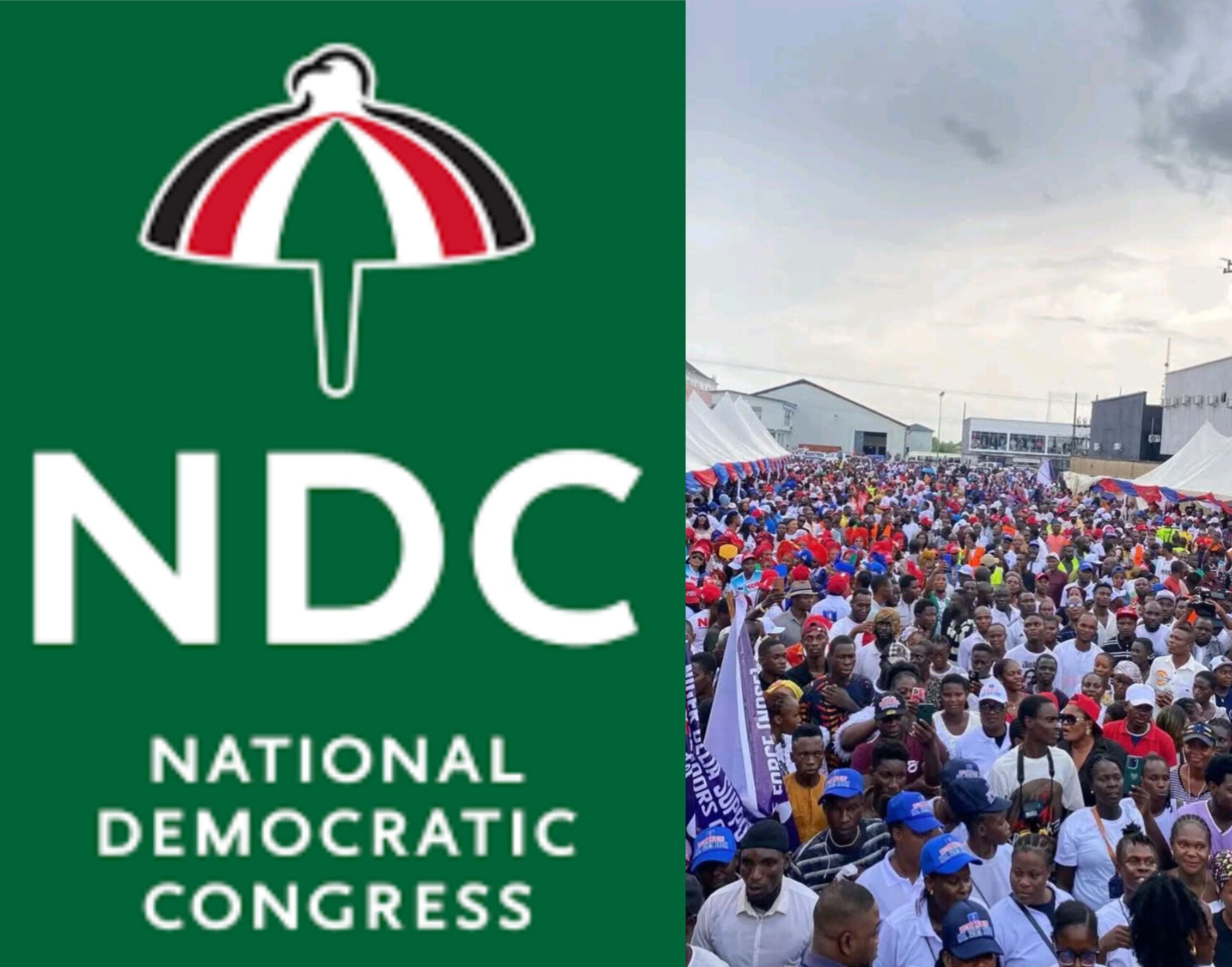
What began as a rain-soaked gathering in Yenagoa quickly turned into a defining political moment, as thousands of Bayelsans defied the weather to align with the Nigeria Democratic Congress (NDC)—a development that is now stirring talk of a potential upset in the state’s political order.
The optics were powerful: a relentless downpour, yet an unyielding crowd. For many observers, it was more than just a rally—it was a statement of intent.
At the centre of the momentum is Henry Seriake Dickson, the party’s National Leader and former governor, whose political influence appears to be recalibrating loyalties across Bayelsa. His legacy and grassroots network, built over years in office, are now being repurposed to power a new political vehicle.
But beyond symbolism, the real tremor came from the wave of defections that followed.
In one of the most striking moments of the event, former APC stalwart Selekebina Saboh crossed over to the NDC with more than 10,200 supporters—a mass movement that cuts across communities and voting blocs. The scale of that defection alone signals a crack in the dominance of established parties.
He was not alone.
Wilson Ayakpo Dayegha, a political figure from Ekeremor, also declared for the NDC, framing the party as the most credible path to grassroots-driven victory. Together, these moves suggest that the NDC is no longer operating at the fringes—it is actively pulling weight from the centre.
Driving the party’s message, National Chairman Moses Cleopas cast the NDC in almost existential terms.
“The NDC is the Noah’s Ark of our time,” he told the crowd—a metaphor aimed at positioning the party as a sanctuary for disenchanted politicians and voters alike.
For the party’s state leadership, the turnout itself was validation. Bayelsa Chairman Dauperebo Ikuromo praised supporters for standing firm despite the storm, describing the moment as proof of a growing movement rather than a fleeting show of strength.
Yet the deeper story may lie in what this convergence represents.
For years, Bayelsa’s political space has been largely defined by dominant parties with entrenched structures. But the NDC’s emergence—powered by high-profile defections, grassroots enthusiasm, and Dickson’s enduring influence—suggests a reordering may be underway.
The rain did not scatter the crowd; it hardened it. And in that image lies the takeaway: this is not just about a rally, but about momentum.
As political actors begin to reposition ahead of the next elections, the events in Yenagoa point to a simple but significant shift—the NDC is no longer asking to be noticed; it is forcing its way into the conversation.
Rain, Defections Signal Rising Force in NDC’s Bayelsa Surge