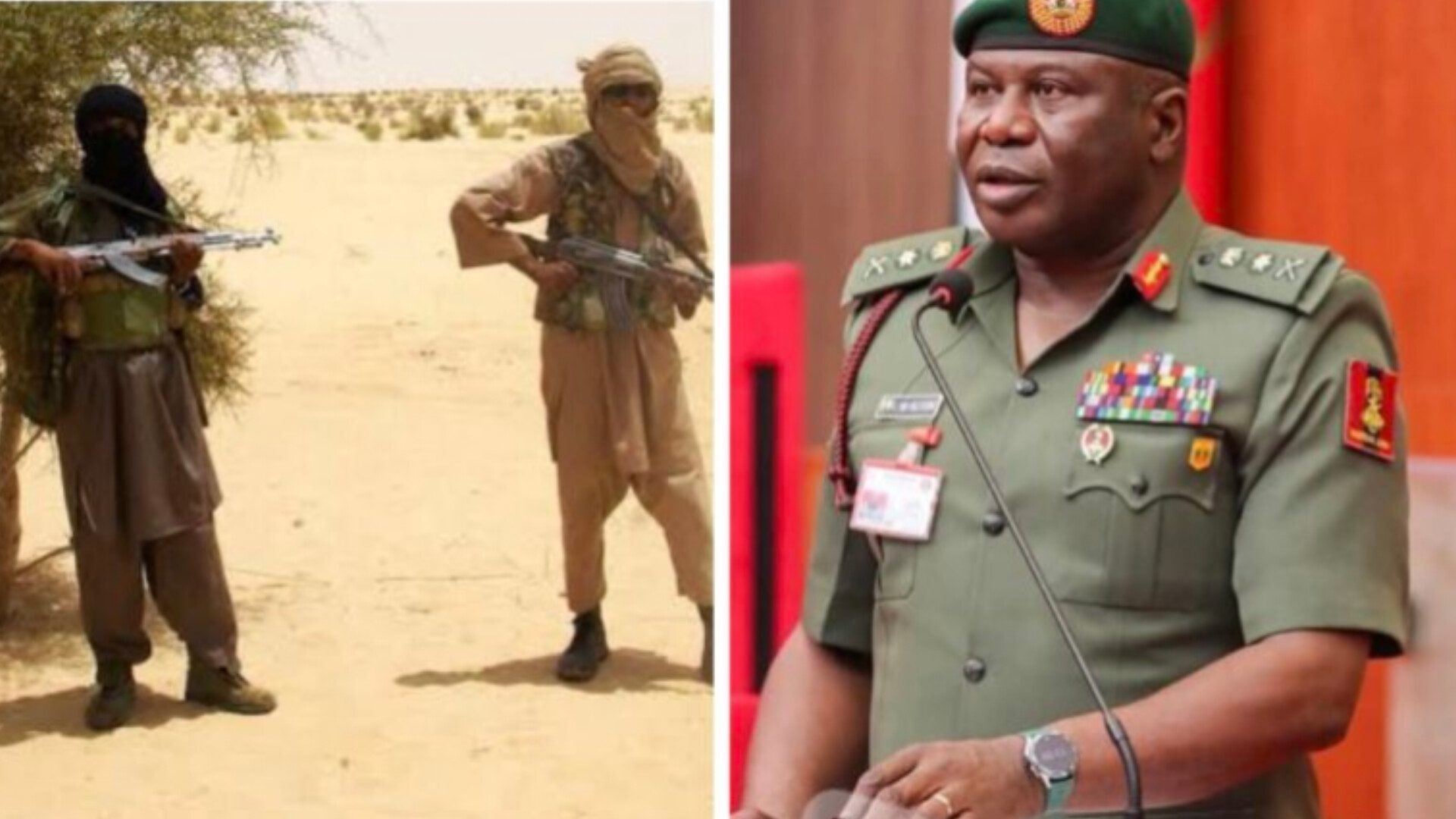
The Human Rights Writers Association of Nigeria has criticised remarks attributed to General Olufemi Oluyede, in which he reportedly compared the rehabilitation of terrorists to the Biblical “prodigal son,” describing the statement as offensive and inappropriate.
In a statement issued in Abuja, by its National Cordinator, Comrade Emmanuel Nnadozie Onwubiko, the group said likening members of Boko Haram and Islamic State West Africa Province to a figure associated with repentance trivialises the severity of atrocities committed by insurgents.
HURIWA argued that the Biblical analogy is misplaced, noting that the parable refers to personal repentance within a family context—not acts such as killings, abductions, and bombings linked to terrorism.
The group warned that such remarks could send the wrong signal at a time Nigerians expect firm and decisive action against insecurity, adding that it raises concerns about the tone and direction of military leadership.
It further stated that the comments may be interpreted as suggesting leniency toward perpetrators of violent crimes, a position it said undermines justice and accountability.
The organisation also expressed concern over the use of religious references in national security matters, stressing that such comparisons risk offending citizens and trivialising both faith and the experiences of victims.
Referencing recent attacks, HURIWA said statements perceived as soft on terrorism could deepen the pain of affected families and erode public confidence in the fight against insurgency.
The group called on the defence chief to issue a public apology, particularly to victims of terrorism and members of the public who may find the remarks insensitive.
It also urged the Federal Government to review the situation, warning that comments of such nature could raise broader concerns about leadership and strategy in Nigeria’s ongoing counterterrorism efforts.
HURIWA maintained that while deradicalisation programmes may be part of counterinsurgency strategies, they must not be framed in ways that appear to diminish the gravity of terrorism or weaken deterrence.
The group concluded that Nigeria’s fight against insurgency requires not only military strength but also clear, responsible communication that reflects the seriousness of the challenge.
HURIWA Slams Defence Chief Over ‘Prodigal Son’ Comment, Demands Apology