Leaders under the umbrella of the Southern Nigeria socio-political bloc have renewed their demand for the presidency to remain in the South ahead of the 2027 general elections, citing equity, political balance, and national stability.
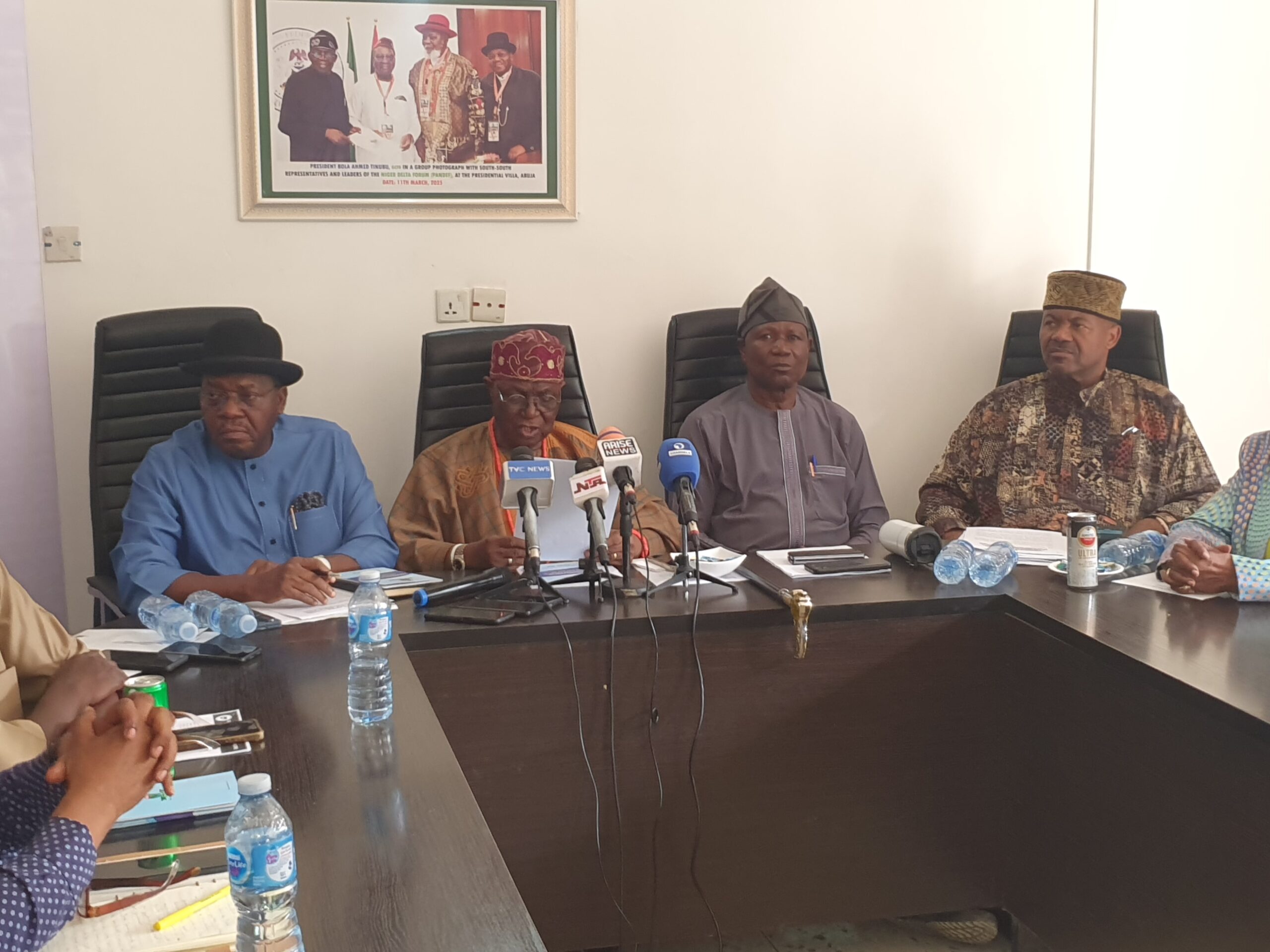
The position was part of a communiqué issued at the end of a high-level meeting of the Southern Nigeria and Middle Belt Leaders Forum (SNBLF) held in Abuja on Tuesday.
Chaired by Oba Oladipo Olaitan, the meeting brought together key stakeholders, including John Azuta-Mbata and other prominent leaders from the South and Middle Belt.
The forum reaffirmed its earlier stance from the 2023 elections, insisting that the presidency should remain in the South following the completion of the eight-year tenure of former President Muhammadu Buhari.
“The assembly admonishes all political parties to clearly zone the position of President to Southern Nigeria in the interest of national political stability,” the communiqué stated, urging parties to ensure their candidates for the 2027 elections emerge from the region.
Beyond politics, the group raised concerns over Nigeria’s worsening security situation, warning that large portions of the country remain inadequately governed and under-policed. While expressing confidence in the efforts of the armed forces, the forum noted that existing security structures are overstretched.
“More than 70 per cent of the national territorial space is ungoverned and inadequately secured,” the communiqué observed.
To address the challenge, the forum called for urgent constitutional amendments to enable the establishment of state and community policing systems. It stressed that decentralised policing is critical to improving security outcomes across the country.
“The constitution should be amended to ensure state and community police. We must have state police now, not tomorrow,” the group declared.
In line with this, the forum announced the formation of a 12-member committee of security experts to contribute to ongoing national discussions on policing reforms. It also rejected reintegration programmes for repentant insurgents, urging the government to halt such initiatives immediately.
On governance, the forum reiterated its long-standing demand for restructuring, advocating greater autonomy for states in line with the principles of true federalism. It argued that Nigeria’s current structure falls short of its foundational ideals.
Addressing economic concerns, the group urged the Federal Government to intensify efforts to ease the hardship facing Nigerians amid rising inflation and global economic pressures. It called for targeted interventions to cushion the effects on households and businesses.
A key recommendation was the need to prioritise local refining of crude oil. The forum stressed that strengthening domestic refining capacity would stabilise fuel supply, reduce reliance on imports, and shield the economy from external shocks.
It also called for clear and enforceable policies to gradually phase out the importation of refined petroleum products, noting that continued dependence exposes the country to price volatility and foreign exchange pressures.
According to the group, investing in local refining would boost energy security, create jobs, and stimulate broader economic growth.
The leaders further emphasised the importance of active citizen participation in governance, urging Nigerians to remain engaged in shaping the country’s future through dialogue and collective action.
The meeting also featured participation from the National Christian Elders Forum, led by elder statesman Samuel Danjuma Gani, underscoring the broad coalition backing the resolutions.
Southern Leaders Push for Southern Presidency, State Police Ahead of 2027