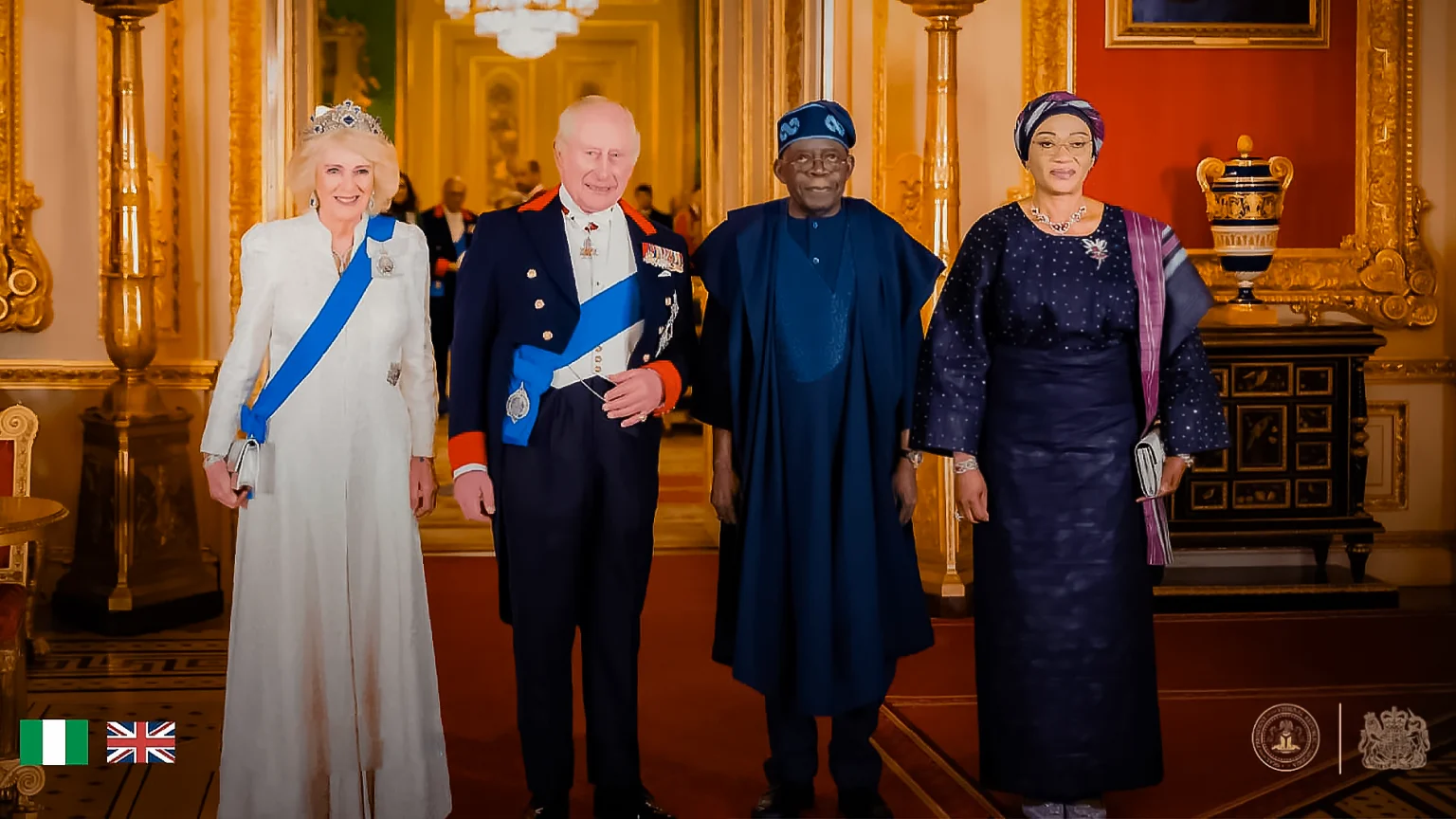
President Bola Ahmed Tinubu and King Charles III have taken centre stage in a high-level interfaith dialogue in Windsor, as global attention intensifies over religious violence and insecurity in Nigeria.
The meeting, held during Tinubu’s state visit to the United Kingdom, brought together faith leaders and international organisations to explore pathways to peace, tolerance, and long-term stability.
The engagement comes against the backdrop of rising concern from global observers over attacks in Nigeria’s Middle Belt and northern regions. While some groups describe the violence as religious persecution, Nigerian authorities insist it reflects a broader fight against terrorism.
At a state banquet attended by senior members of the British royal family, Tinubu underscored the importance of Nigeria–UK cooperation, particularly in tackling security threats with roots in the Sahel.
He also spotlighted the growing impact of Nigerians in Britain, especially within the National Health Service, where Nigerian doctors and nurses remain a critical part of the workforce.
Tinubu expressed optimism about Nigeria’s future, pointing to its youthful population and expanding entrepreneurial base as drivers of long-term growth.
King Charles III echoed similar sentiments, acknowledging Nigeria’s strategic importance and the deepening economic relationship between both countries.
Amid the diplomatic engagements, the Socio-Economic Rights and Accountability Project (SERAP) has called on the British monarch to use the visit to press for accountability and reforms.
The organisation raised concerns over alleged restrictions on free expression and the use of legal instruments to target journalists, activists, and civil society actors. It also flagged the humanitarian situation in displacement camps across parts of northern Nigeria.
Economic cooperation remains a major pillar of the visit. Both countries are advancing agreements expected to boost investment, create jobs, and strengthen sectors such as finance, technology, and the creative economy.
A major highlight is a £746 million deal to upgrade port infrastructure in Lagos, alongside plans for an academic partnership with Coventry University to establish a degree-awarding campus in Nigeria.
Despite the diplomatic gains, the trip has stirred criticism within Nigeria. Questions have been raised about the size of the official delegation and the timing of the visit, especially as insecurity persists in parts of the country.
Recent attacks in Katsina State, which reportedly claimed several lives, have further fuelled concerns about leadership presence and responsiveness.
Beyond politics and economics, the visit carries strong symbolic undertones. It is the first Nigerian state visit to the UK in nearly four decades and comes during Ramadan, prompting adjustments to royal protocols in respect of the Muslim fasting period.
The visit blends diplomacy with cultural exchange—highlighting shared history while testing both nations’ commitment to tackling pressing challenges.
Tinubu, King Charles Convene Interfaith Dialogue Amid Nigeria Security Concerns