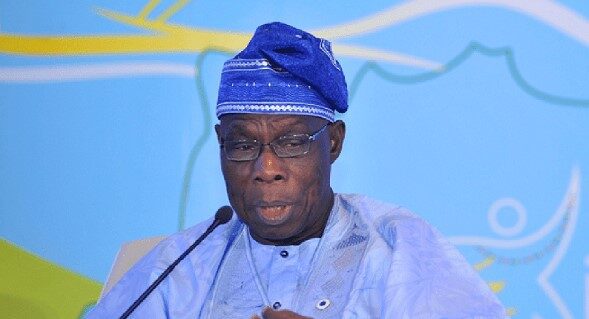
Former Nigerian President Olusegun Obasanjo has again raised concerns over what he described as the persistent leadership crisis holding back Africa’s development, insisting that the continent’s greatest challenge is not its resources or history but the failure of those entrusted with power.
Speaking in Abeokuta during a colloquium organised to mark his 89th birthday, the elder statesman also dismissed rumours about his death, saying he remains strong and has no intention of leaving the world anytime soon.
The event, themed “Burden and Blessing of Leadership: Reflections from Global Africa to the World,” brought together dignitaries, scholars and political leaders to reflect on leadership and governance across the continent.
Obasanjo argued that Africa possesses enormous natural and human resources that should ordinarily make it a prosperous and influential region. However, he lamented that many parts of the continent remain plagued by poverty, insecurity, disease and conflict.
According to him, the root cause of these challenges lies largely in poor leadership and the failure of leaders to govern in the interest of the people.
“Africa is not a problem to be managed but a promise to be fulfilled through honest, courageous, selfless, incorruptible and transformational leadership,” he said.
The former president also reflected on his personal experiences in public service, describing leadership as both a burden and a blessing. He recalled his imprisonment under the military regime of late Head of State Sani Abacha, where he was detained for more than three years and faced what he described as a “kangaroo trial.”
Obasanjo noted that leadership often comes with loneliness, particularly when difficult decisions that affect millions of lives must be made by a single individual.
He cited the final phase of the Nigerian Civil War in 1970, when he commanded the Third Marine Commando Division, as one of the moments when he had to make a critical decision to avoid further humanitarian catastrophe.
Reflecting on Nigeria’s political history, he also highlighted the significance of the peaceful transfer of power in 1979 when he handed over to civilian president Shehu Shagari, describing the moment as one of the defining tests of leadership.
The former president urged younger Africans to take democracy seriously and resist the temptation to manipulate it for personal or political advantage.
He warned that Africa’s rapidly growing youth population could either become a demographic dividend or a source of instability if governments fail to invest in education, healthcare and employment opportunities.
Using Nigeria as an example, he expressed concern that millions of children remain out of school, warning that such neglect could create a fertile recruitment ground for violent groups such as Boko Haram and other criminal networks.
Obasanjo also used the occasion to dismiss what he described as a fake letter circulating online suggesting he had announced his own death.
“At 89, I believe God still has work for me to do,” he said. “Those wishing otherwise are wasting their time. I dey kampe.”
He concluded by urging African leaders and emerging generations to build strong institutions, uphold accountability and prioritise the welfare of their citizens in order to unlock the continent’s enormous potential.
Obasanjo at 89: “I Dey Kampe,” Warns Africa Over Leadership Crisis