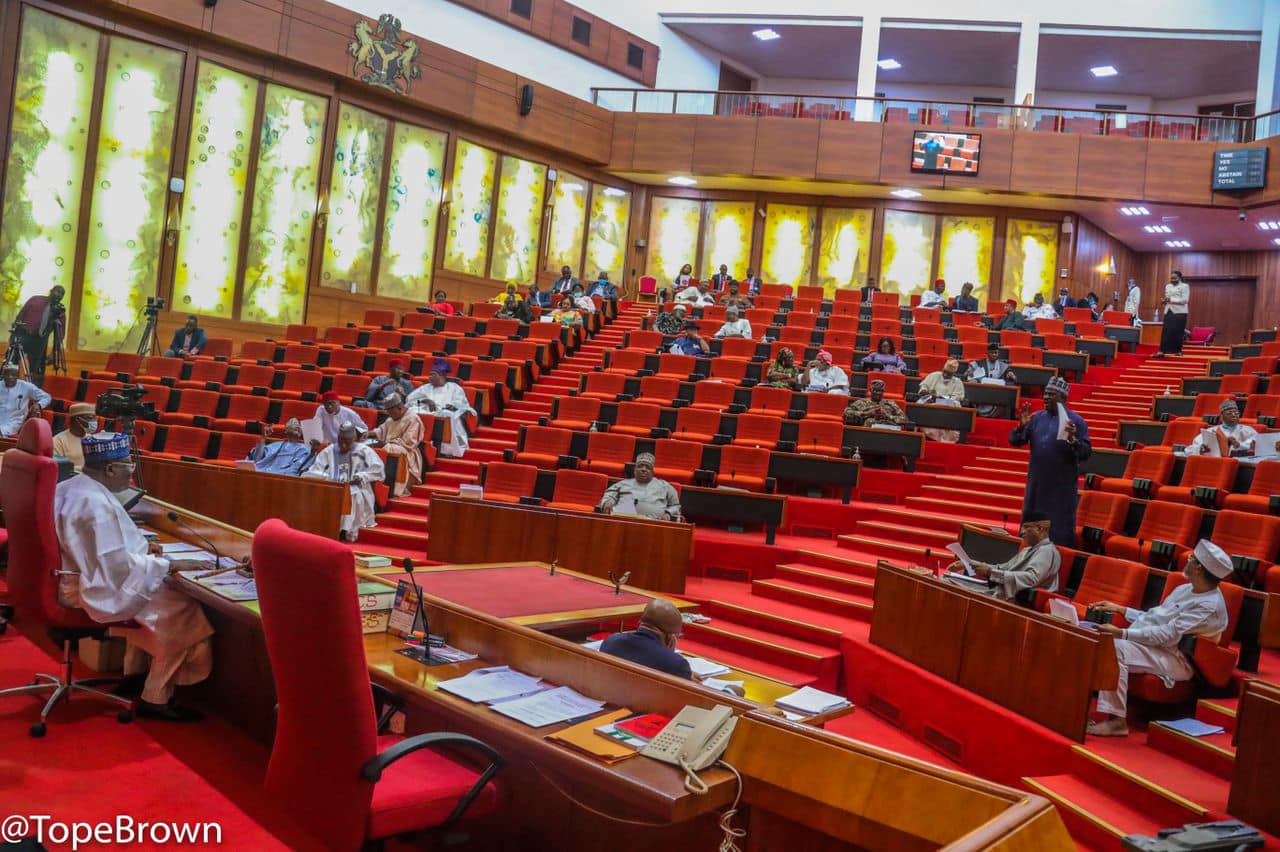
In a nation wrestling with economic strain, insecurity and widening divisions, a quiet ceremony inside the National Assembly complex turned into an unmistakable moral summons.
What was billed as the commissioning of the National Assembly Christian Chapel became something deeper — a moment when the pulpit stood face-to-face with political power, and asked hard questions.
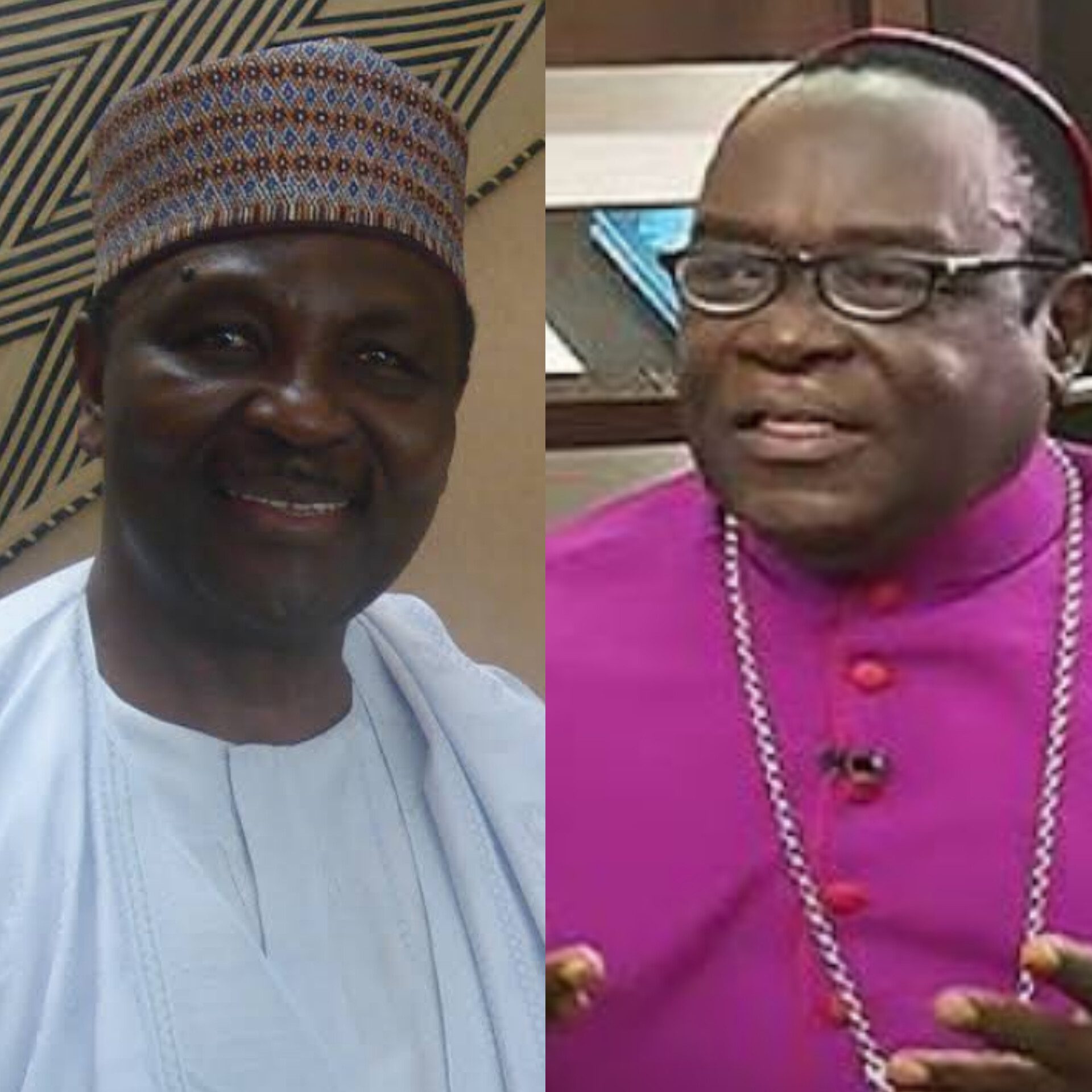
At the centre of it were two voices from different generations: the Catholic Bishop of Sokoto Diocese, Matthew Hassan Kukah, and former Head of State, Yakubu Gowon.
Before senators, members of the House of Representatives and political dignitaries, both men delivered messages that went beyond celebration. They challenged conscience. They invoked unity. They demanded responsibility.
Bishop Kukah wasted little time on formalities.
“What are we waiting for?” he asked, his voice steady but searching. “When danger rises, when injustice spreads, when confusion fills the land — why is the Senate silent? What is the purpose of leadership if we cannot act when the nation needs us most?”
The chamber, moments earlier buoyant with ceremony, grew reflective.
Kukah framed his remarks not as criticism, but as moral reflection. He reminded lawmakers that their mandates carry a weight beyond politics.
“We are here by grace,” he said. “None of us was guaranteed this seat. To serve in the National Assembly is not simply political success — it is a moral responsibility.”
For Kukah, leadership is less about power and more about stewardship. Public office, he suggested, is not a reward but a trust.
“Public office is not a platform for privilege. It is a platform for sacrifice,” he declared.
He drew attention to what he described as a national paradox: Nigerians often admire order and accountability in other countries, yet struggle to reproduce those values at home.
“When we travel abroad, we see systems that work. We see order. We see respect for the common good. Why can we not practice the same values here?” he asked.
It was not a rhetorical flourish. It was an indictment of complacency.
Faith Beyond Ritual
At the heart of Kukah’s address was a call to authenticity — that faith must move beyond symbolism.
“Faith must not only be preached. It must be practiced,” he said.
Referencing the Lord’s Prayer, he focused on a single word: “Our.”
“Jesus taught us to pray, ‘Our Father,’ not ‘My Father.’ That word — ‘our’ — changes everything,” he explained. “It reminds us that leadership is about community. It is about embracing even those who disagree with us.”
He urged lawmakers to craft legislation that reflects inclusiveness.
“The laws we make must protect not only those who voted for us, but also those who did not. They must defend the poor, the vulnerable and the forgotten.”
As Nigeria navigates economic reforms and persistent insecurity, Kukah’s message struck a sensitive chord. He did not prescribe specific policies. Instead, he called for courage — the courage to act decisively, ethically and compassionately.
He closed with a sober reminder: “Power is temporary. Accountability before God is eternal.”
If Kukah’s tone was prophetic, Gowon’s was paternal.
“I must say how delighted I am to be invited to be part of this occasion,” the elder statesman began. “I am truly honored to be among you.”
He congratulated the National Assembly leadership for establishing the chapel, describing it as more than brick and mortar.
“This is a commendable achievement. It reflects commitment, faith and dedication,” he said.
But Gowon’s focus quickly turned to unity — a theme inseparable from his own history.
“As you all know, God loves every one of us,” he said. “And because God loves us, He commands that we love one another as we love ourselves.”
In a country often strained by ethnic, religious and political fault lines, his words carried historical resonance.
“I sincerely hope that this spirit of love is what will guide this National Assembly — whether you are Christian, Muslim, or belong to any other faith,” he added.
Gowon reflected on Nigeria’s turbulent past and the sacrifices made to keep the country intact.
“I believe strongly in the continuity and unity of this country — a country for which many sacrificed and shed their blood to ensure that Nigeria remains one united nation,” he said.
Then came a simple line that drew nods across the hall: “Your neighbor is your brother. Your neighbor is not your enemy.”
Observers described the twin addresses as symbolic of something larger. In a legislature often defined by partisan battles and political calculations, the commissioning of a worship space became an opportunity for introspection.
The newly inaugurated chapel now stands within the heart of Nigeria’s legislative complex — not merely as a sanctuary for prayer, but as a constant reminder of ethical obligation.
For Kukah, the message was urgency and accountability. For Gowon, it was unity and reconciliation.
Both converged on a singular idea: national progress requires more than budgets and bills. It demands integrity. It requires empathy. It calls for leaders who understand that authority is temporary but moral consequence is lasting.
As lawmakers dispersed after the ceremony, they left with more than commemorative photographs. They carried pointed questions about silence in moments of crisis, about laws that must serve all citizens, and about whether faith in public life is ritual or responsibility.
For a brief afternoon in Abuja, the pulpit did not whisper. It confronted power directly.
Whether those words will echo in legislative chambers — shaping debates, influencing votes and guiding national direction — remains uncertain.
But the message was clear: leadership without conscience is fragile. Unity without love is hollow. And power, without moral purpose, is fleeting.
NASS Chapel: Kukah, Gowon Confront Lawmakers with Moral Choice