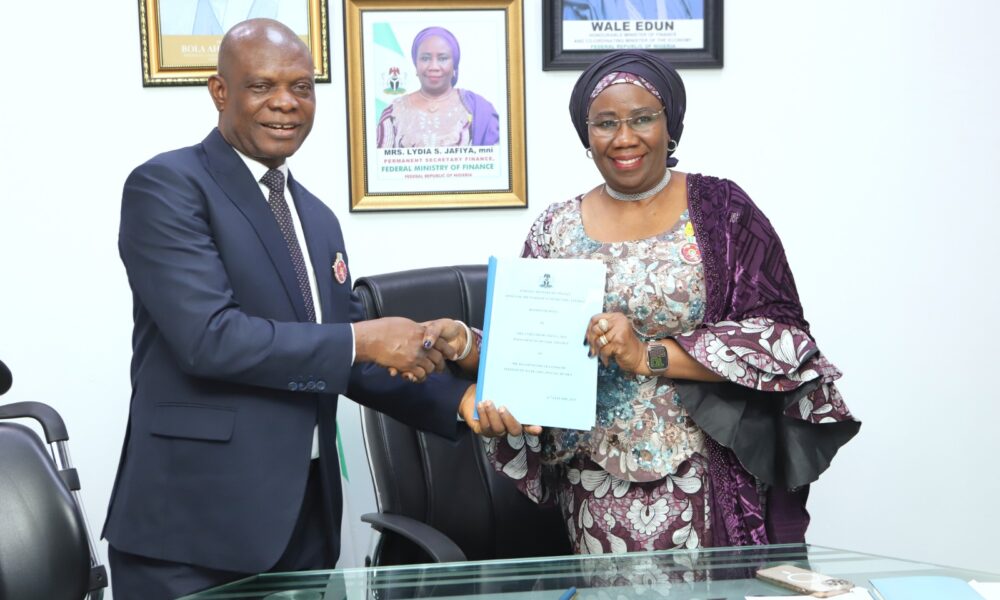
The Minister of State for Finance, Doris Uzoka-Anite, has expressed confidence that the new oil earnings remittance order signed by President Bola Ahmed Tinubu will significantly raise monthly allocations to the Federation Account Allocation Committee (FAAC) and entrench fiscal discipline.
Assistant Director of Information and Public Relations in the ministry, Amadi Uloma Nneka in a statement on Saturdau quoted Uzoka-Anite while addressing FAAC members in Abuja, to have described the executive directive as a decisive shift from a retention-based oil revenue framework to a “federation-first” gross remittance model.
Under the order, certain oil sector revenues will be paid directly into the Federation Account. The directive suspends the 30 per cent allocation to the Frontier Exploration Fund (FEF) and the 30 per cent management fee on oil and gas profits previously retained by NNPC Limited. It also mandates that gas flare penalties be fully remitted and prohibits unconstitutional deductions from petroleum revenues.
The minister hinted the reform would unlock higher distributable revenue for federal, state and local governments, while strengthening transparency and regulatory clarity in petroleum revenue management.
She added that a planned retrospective audit of relevant funds and management fee deductions could yield recoveries that may provide a one-off fiscal boost.
However, Uzoka-Anite cautioned that sudden surges in distributed revenue could trigger inflationary pressures and exchange rate volatility if not prudently managed. She proposed phased disbursement of recoveries and stronger stabilisation buffers to moderate liquidity injections.
The minister urged states and MDAs to channel increased allocations into infrastructure, agriculture, energy and other productive sectors rather than expanding recurrent expenditure.
She also announced plans for monthly revenue transparency dashboards and production-to-remittance reconciliation reports to enhance accountability and public confidence in the reform process.
Oil Revenue Reform to Lift FAAC Allocations, Uzoka-Anite Assures