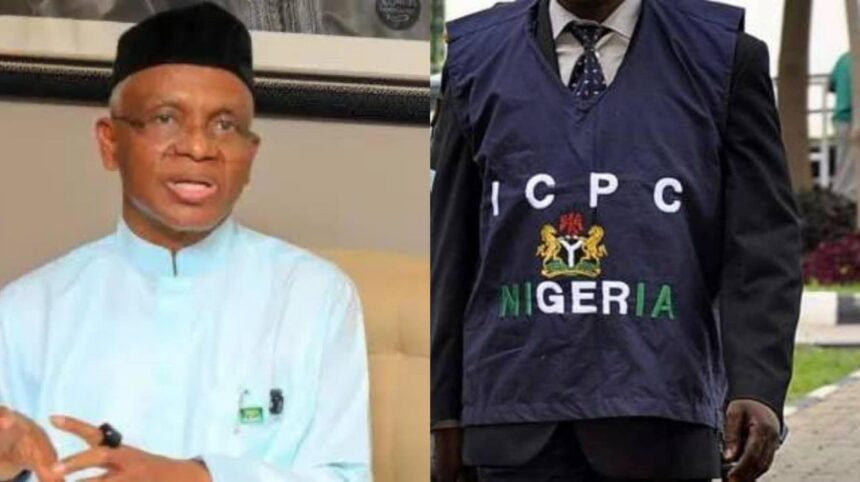
The political temperature rose sharply in Abuja on Thursday as operatives of the Independent Corrupt Practices and Other Related Offences Commission (ICPC) raided the residence of former Kaduna State Governor, Nasir El-Rufai, in what authorities describe as a decisive step in an ongoing investigation into alleged financial malpractices.
The early-day operation, carried out at El-Rufai’s Abuja home, marks a dramatic escalation in scrutiny surrounding the former governor’s eight-year administration in Kaduna State.
Though the ICPC has yet to release an official statement detailing what was recovered or the specific scope of the allegations, sources familiar with the investigation say the probe centres on suspected financial irregularities tied to key projects and expenditures executed during his tenure from 2015 to 2023.
El-Rufai’s camp reacted swiftly.
In a statement issued by his media aide, Muyiwa Adekeye, the former governor confirmed the search. One of his lawyers, Ubong Akpan, condemned the operation, alleging it was conducted without proper legal authorisation and amounted to a breach of due process.
Akpan described the action as “an abuse of power” and vowed that his client would challenge the raid in court, insisting that constitutional safeguards must not be ignored in the name of anti-corruption enforcement.
From EFCC Custody to ICPC Net
The raid comes on the heels of El-Rufai’s recent detention by the Economic and Financial Crimes Commission (EFCC), where he reportedly spent two nights before being granted administrative bail. Shortly after his release, he was said to have been taken into ICPC custody in connection with related allegations.
The back-to-back actions by Nigeria’s two major anti-graft agencies have amplified public attention and sparked debate across political and legal circles.
Public Reaction and Political Ripples
Observers say the development could reshape political alignments ahead of future electoral cycles, given El-Rufai’s influence within national politics.
Supporters argue that the investigation reflects growing institutional boldness in holding high-profile figures accountable. Critics, however, question whether enforcement actions are applied evenly across political divides.
For now, the ICPC remains tight-lipped on the outcome of the search, leaving many questions unanswered: What evidence, if any, was uncovered? Will formal charges follow? Or is this the opening chapter of a prolonged legal battle?
As the investigation unfolds, one thing is certain — the spotlight on El-Rufai and his Kaduna legacy has grown even brighter, and Nigeria’s anti-corruption landscape may be entering another defining moment.
ICPC Storms El-Rufai’s Home, Deepens Probe Into Alleged Kaduna Funds Scandal