Nigeria’s fiscal debate took a dramatic turn Thursday as the Nigerian Senate signaled it may trim the proposed N58.472 trillion 2026 budget, citing what lawmakers described as a persistent gap between projections and performance.
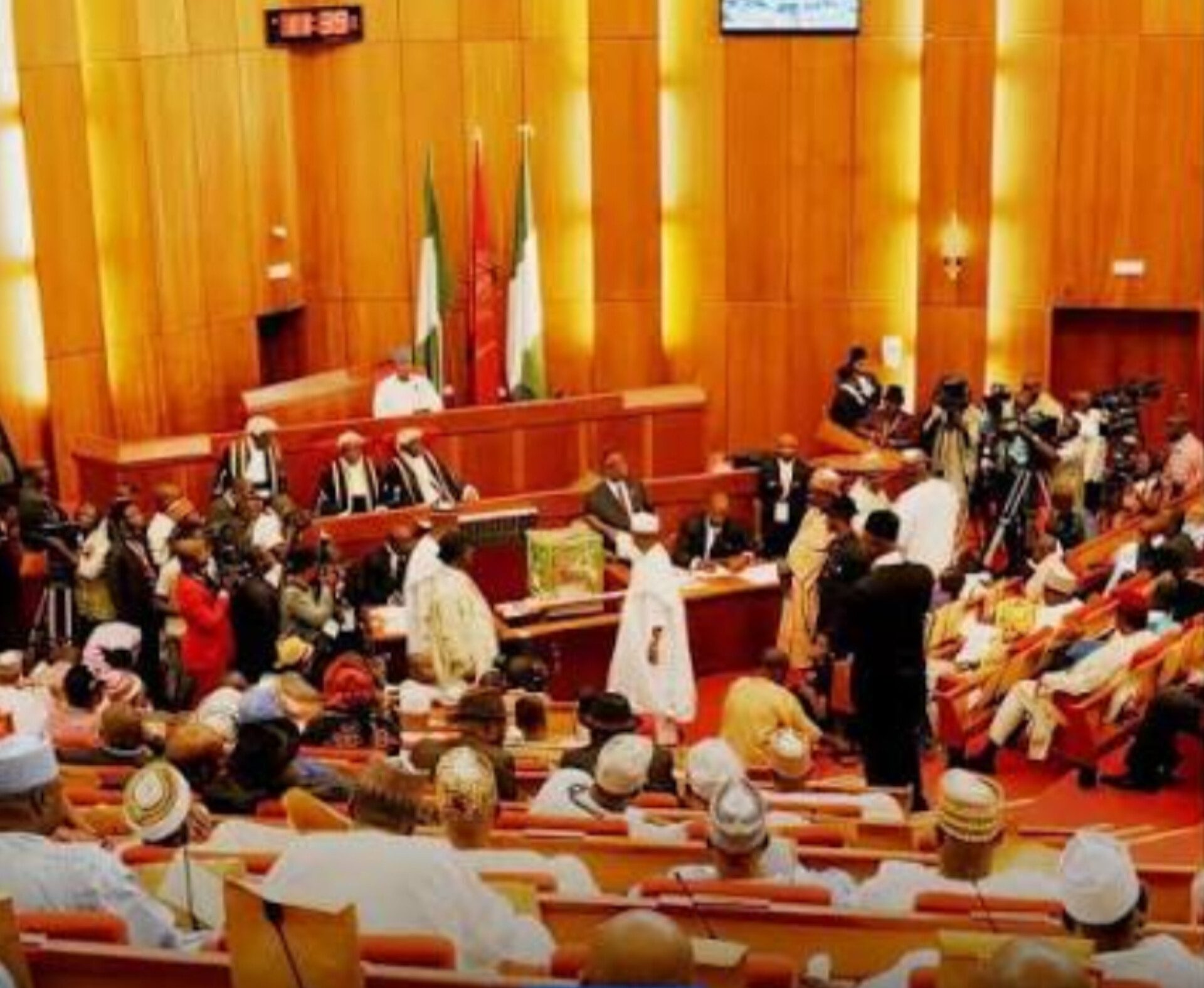
At a tense session of the Senate Committee on Appropriations, chaired by Solomon Olamilekan Adeola, members confronted the Presidential Economic Team over what they called “optimistic assumptions” that routinely fail to translate into actual capital releases for Ministries, Departments and Agencies (MDAs).
Rather than merely questioning numbers, senators framed the issue as one of credibility.
“This document before us originated from the executive,” Adeola reminded officials. “The gap between projected and realized oil revenue is wide. How do we explain 18 percent performance in one year and then project 36.5 percent the next when actual performance is still below expectations?”
With oil revenue underperforming and debt financing rising, lawmakers openly debated whether the 2026 proposal should be reduced or fundamentally restructured before passage.
“Do we reduce the N58.472 trillion budget, or proceed and make adjustments?” Adeola asked, warning that continued borrowing at high costs could deepen fiscal strain.
The first to face questioning was Wale Edun, Minister of Finance and Coordinating Minister of the Economy, who leads the Presidential Economic Team.
Edun defended the administration’s approach, insisting capital components of the 2024 and 2025 budgets were still being funded and that reforms were aimed at restoring realism to federal spending.
“Efficiency is not about the size of the budget, but about how much can actually be implemented,” he argued.
He maintained that macroeconomic indicators were stabilizing and that reforms — including efforts to push oil output toward 1.8 million barrels per day — were deliberate stretch targets designed to drive performance.
However, senators appeared unconvinced, pressing for clearer timelines and tangible evidence of implementation.
In a rare moment of candor, Zacch Adedeji, Chairman of the Nigeria Revenue Service, acknowledged that unrealistic projections undermine execution.
“If you assume you have one hundred units and spend based on that assumption, you may run into serious problems if the funds do not materialize,” he said.
But lawmakers quickly pointed out that those same projections originate from the executive branch.
Assurance from Minister of State
Offering a more concrete timeline, Doris Nkiruka Uzoka-Anite, Minister of State for Finance, assured senators that the 30 percent capital component of both the 2024 and 2025 budgets would be fully implemented before March 31, 2026.
“Payments for outstanding 2024 capital projects start today. The financial management system is back online,” she said, adding that MDAs have been directed to upload their cash plans for 2025 to trigger disbursements.
“We are ready to start, but MDAs must complete their documentation requirements.”
The public exchange was followed by a two-hour closed-door session, signaling the seriousness of the Senate’s concerns.
Also in attendance were Atiku Bagudu, Minister of Budget and Economic Planning, and Shamsedeen Babatunde Ogunjimi, Accountant-General of the Federation.
Beyond the numbers, the session underscored a growing institutional tension: whether Nigeria’s budgeting culture will shift from ambitious projections to conservative realism.
Senators hinted that asset disposals and other structural reforms may be necessary to reduce debt and fund critical projects.
Senate grills economic team, considers trimming 2026 budget