**Re-enact Electoral Bill Amid Ramadan, Lent 2027 Clash Fears
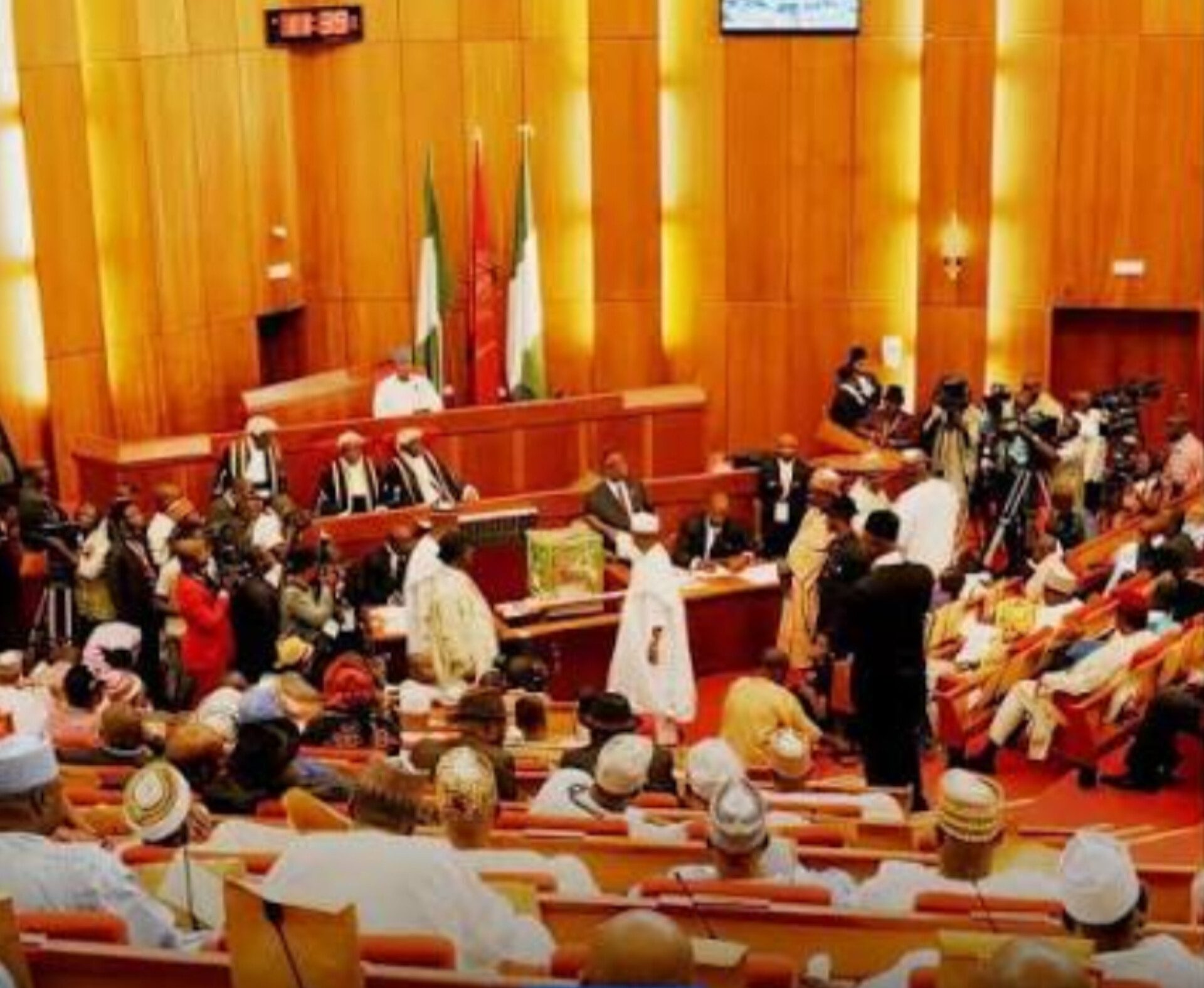
The Nigerian Senate was thrown into rare legislative turbulence on Tuesday as it first rescinded its earlier passage of the Electoral Act 2022 (Repeal and Re-Enactment) Bill, 2026, then passed it again after a stormy showdown over electronic transmission of election results and concerns that the 2027 general elections could clash with Ramadan and Lent.
What began as a technical correction quickly escalated into sharp exchanges, procedural disputes and a physical division on the floor of the Red Chamber — underscoring the political sensitivity of reforms that will shape the 2027 polls.
Rescission to Avert Religious Clash
The drama opened with a motion for rescission and recommittal moved by Senate Leader, Opeyemi Bamidele, who said the step was necessary to enable fresh amendments that would allow the Independent National Electoral Commission (INEC) adjust its timetable.
“Mr. President, with your permission, I wish to move the motion,” Bamidele began.
Explaining the legal basis, he cited the Senate Standing Orders:
“Order 526 of our Rule Book says it shall be out of order to attempt to reconsider any specific question upon which the Senate has come to a conclusion during the current session, except upon a substantive motion for rescission.”
He reminded lawmakers that the bill had been passed during an emergency sitting the previous week, but subsequent developments necessitated a review.
“Following the passage of that bill, INEC had announced their election notice and also announced their timetable fixing the presidential and national assembly election for February 2027.”
According to him, religious stakeholders immediately raised concerns.
“Stakeholders within the Muslim communities had reached out to INEC to say that the proposed date of February 2027… would conflict with the Ramadan exercise for 2027.”
He added that the concern was not limited to one faith.
“Let me also add that even the Christian Lenten period partly in February and dovetailing into March of 2027.”
Bamidele explained that the 360-day notice requirement in Clause 28 of the bill constrained INEC’s flexibility.
“INEC further came back to bring the leadership of the national assembly that, in view of what was passed, given 360 days, not later than 360 days, before which they would give the election notice and announce their timetable, time was already running.”
He was emphatic about the purpose of the reconvening:
“By way of rescission and recommitter, it is our own intention today to jettison what we had earlier passed and then recommit the bill for consideration to allow us to be able to pass a clause that will make it possible for INEC to reschedule its timetable.”
After debate, Senate President Godswill Akpabio put the question to a voice vote.
“Those in support of this motion as moved and seconded say aye. Those against say nay. The ayes have it.”
The Senate accordingly dissolved into the Committee of the Whole for clause-by-clause reconsideration.
Supporting the motion, Chairman of the Senate Committee on INEC and Electoral Matters, Simon Bako Lalong, dismissed claims that the INEC Chairman deliberately fixed the election date to coincide with Ramadan.
“Mr. President, I also move to support exactly the presentation made by the Senate Leader… all the reasons given are correct because all of us worked on this document for over two years,” he said.
Addressing public speculation, he stated:
“Let me also correct the impression going round that the current INEC Chairman deliberately fixed this date knowing fully well that it will coincide with the Ramadan.”
Providing historical context, he added:
“For the benefit of those who were here in 2019, it was the former INEC Chairman that reeled out the timetable from 2019 to 2030… so this timetable is not today.”
He maintained that legislative amendments were the appropriate remedy when conflicts arise.
“When it coincides like this there are provisions given by amendments… so I stand to support the presentation.”
If the rescission was procedural, the debate over Clause 60(3) prompted another closed door sessiom which lasted about 45mimutes
The provision allows manual transmission of results where electronic transmission fails due to network challenges — a clause that split the chamber.
Leading opposition to the proviso was Enyinnaya Abaribe, who demanded a formal division to test the will of the Senate.
He objected to retaining manual transmission as a fallback, arguing that Form EC8A should not become the sole basis for result collation in the event of technical failure.
At one point, Akpabio indicated that the demand for division had earlier been withdrawn — prompting immediate protests from opposition lawmakers.
Deputy Senate President Barau Jibrin invoked Order 52(6), arguing it would be procedurally improper to revisit an issue already decided.
The chamber grew rowdy, with a brief face-off between Abaribe and Senator Sunday Karimi heightening tensions.
Bamidele intervened, reminding colleagues that his earlier rescission motion had reopened the bill for fresh consideration, thereby validating Abaribe’s request.
Following deliberations, Akpabio directed Abaribe to formally move his motion under Order 72(1).
When the chamber divided, senators physically indicated their positions: 15 lawmakers opposed retaining manual transmission during network failure, while 55 voted in favour.
The majority carried the day. Clause 60(3) remained intact.
Technical Corrections and High Stakes
Beyond the headline issues, lawmakers cited multiple drafting inconsistencies in the legislation — including discrepancies in the Long Title and several clauses such as 6, 9, 10, 22, 23, 28, 29, 32, 42, 47, 51, 60, 62, 64, 65, 73, 77, 86, 87, 89, 93 and 143 — which required harmonisation.
A technical committee of leaders from both chambers and legal drafting experts was convened to address the anomalies before final passage.
By the end of the session, the Senate had both corrected the procedural path for INEC to adjust its timetable and reaffirmed the contentious fallback provision on manual transmission.
The Electoral Act remains the backbone of Nigeria’s democratic architecture — governing timelines, procedures and the integrity of result management.
Tuesday’s high drama in the Red Chamber reflected the enormous stakes ahead of 2027: balancing technology with logistics, legal certainty with flexibility, and electoral integrity with religious inclusivity.