“What we are witnessing is political sabotage.”
“Nigeria will not be held hostage.”
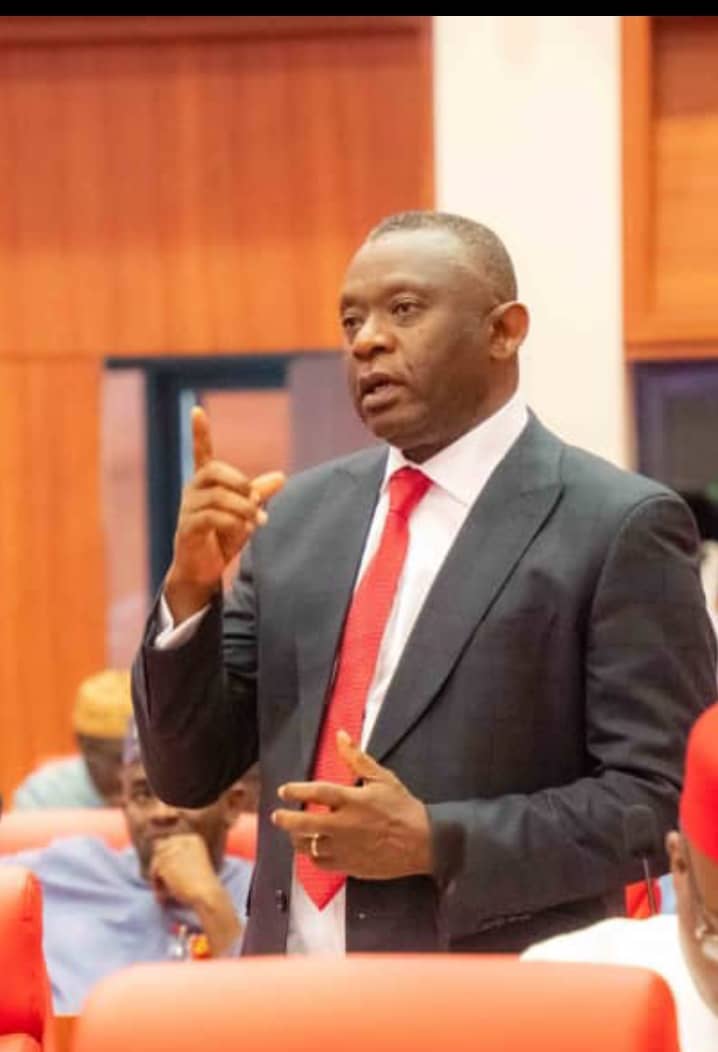
Senator representing Kogi West Senatorial District and Chairman of the Senate Committee on Services, Sunday Steve Karimi has issued a stark warning that Nigeria’s renewed wave of terrorism and banditry may be part of a calculated effort to destabilize the country ahead of the 2027 general elections.
His Media Officer
Busayo Tosin in a strongly worded statement, quoted the lawmaker to have argued that the pattern, timing, and coordination of recent attacks across parts of North Central Nigeria and other regions raise serious national questions.
According to him, the escalation of violence coming shortly after the Independent National Electoral Commission (INEC) released the timetable for the 2027 polls “cannot be dismissed as coincidence.”
Presidential and National Assembly elections are slated for February 20, 2027, while governorship and State Assembly elections will follow on March 6, 2027.
As political activities gradually build momentum nationwide, Karimi said destabilizing forces appear determined to manufacture uncertainty.
“We must speak frankly,” the Senator declared.
“When a government takes tough decisions to stabilize the economy and reposition the country, resistance is inevitable. But when that resistance manifests as coordinated violence, intimidation of rural communities, and mass abductions, we must call it what it is — political sabotage.”
Karimi pointed to disturbing developments in parts of Kwara State, where communities have reportedly been attacked and residents displaced. Similar security breaches have been recorded in Nasarawa, Plateau, Benue, and Taraba States.
The objective, he suggested, is to spread fear, erode public confidence, and weaken trust in democratic institutions ahead of the polls.
“Those who cannot win politically may be attempting to weaponize insecurity,” he said.
Despite the challenges, the Senator insisted that the Federal Government under President Bola Ahmed Tinubu has shown “political will and operational resolve” in confronting security threats.
He cited the ongoing reorganization within the Armed Forces, intensified deployment of special battalions to flashpoints, and expanded intelligence-driven operations as clear signals that the administration is not retreating.
Among the key measures highlighted are:
Recruitment of 50,000 additional police constables to strengthen internal security
Consideration of retired military personnel to secure ungoverned forested areas
Activation of forest guard initiatives in vulnerable communities
Expanded regional and international security cooperation
Continuous operational review to respond to evolving threats
Karimi described these steps as evidence of a deliberate repositioning of Nigeria’s security architecture ahead of the elections.
“Those who believe they can derail democracy through fear are mistaken,” he asserted. “Nigeria’s democratic process is stronger than their desperation.”
The lawmaker cautioned against politicizing insecurity for partisan advantage, warning that inflammatory rhetoric could embolden criminal networks.
He reaffirmed that the National Assembly stands firmly behind the President in providing legislative and budgetary backing to security agencies, stressing that credible elections require stability, public confidence, and order.
“The 2027 elections will hold as scheduled,” Karimi affirmed. “No gang of terrorists, no coalition of destabilizers, and no hidden sponsors of chaos will intimidate this nation into retreat.”
He urged citizens to remain vigilant, cooperate with security agencies, and resist misinformation designed to spread panic.
“Nigeria will not be held hostage,” he concluded. “Our democracy has survived difficult seasons before. Terror will not dictate our political future.”
As political alignments quietly begin ahead of 2027, Karimi’s comments inject fresh intensity into the national conversation — framing the fight against insecurity not only as a security battle, but as a struggle to defend the integrity of Nigeria’s democracy.