By Douglas Baye-Osagie
The gossip, whistling, half-truths, and boasting all end today. The Federation of International Football Association (FIFA) will give a final verdict on Nigeria’s petition against the Democratic Republic of Congo’s (DRC) player eligibility in the African playoffs against Nigeria in November 2025 for a World Cup spot.
On November 16, 2025, DR Congo beat Nigeria on penalties to qualify for the inter-confederation playoffs in March. They haven’t been to the World Cup since 1974, and a victory against Nigeria reawakened the hopes of one of the former giants of African football. Nigerian fans and players swallowed the penalty defeat painfully, but Nigerian football authorities and sports officials sought technicalities, keeping hopes alive with a petition claiming DR Congo fielded players with dual citizenship, violating Congolese laws. The probe focuses on the claim that nine players switched nationalities without completing the legal and administrative process.

According to the Nigeria Football Federation General Secretary, Dr. Muhammad Sanusi, FIFA approved the players based on documentation and assurances provided by the DR Congo federation, as FIFA regulations allow players to represent a country if they hold a valid passport. However, Nigeria’s complaint alleges that the clearance process itself may have been fraudulent, given potential conflicts with Congolese nationality laws. “It is not FIFA’s duty to know the domestic laws of every country,” Sanusi added. “That is why we formally drew FIFA’s attention to the issue, and we are now awaiting their verdict.”
Will history favor Nigeria? Will FIFA consider Nigeria’s pedigree? Is someone pushing Nigeria’s agenda at FIFA? Can Nigeria win two petitions in one World Cup qualification series, recalling the 3-point deduction from South Africa in the group stage for fielding an ineligible player against Lesotho? These questions have been lingering since November.
The calm in the DR Congo camp is telling. They have murmured much but said little. The evidence from Nigeria is compelling. Despite hoping for a favorable judgment, there’s a sense of guilt among DR Congo officials. The players involved haven’t dropped or renounced foreign passports, and DR Congo’s constitution hasn’t been amended to allow sports citizenship.
DR Congo’s football federation responded in December to Nigeria’s petition, saying, “If you can’t win on the pitch, don’t try to win from the back door. The World Cup has to be played with dignity and confidence. Not with lawyers’ tricks. Bring it.” Was that an admission of guilt or a show of strength to save face?
Nigeria has kept the issue in the news. Football fans across Africa saw Nigerian sports creators online pushing Nigeria’s case against DR Congo for the World Cup for the world to take notice. Though somewhat annoying, the consistent noise and shouts of cheating kept the news in the faces of FIFA. When you keep screaming that someone is a thief, there is a possibility of an arrest or a thorough scrutiny to really ascertain if the person is guilty or not. Kudos to those Nigerians who didn’t allow a day pass without reminding FIFA that a meat has been stolen from the Nigerian pot of soup.
Like we say in pidgin English parlance, “evidence choke.” The law doesn’t yield to sentiment. If the facts are against you, you can’t run from the law when found guilty. You don’t cheat your way to the top without being found out. Nigeria’s case is watertight, and FIFA will either change their rules or stick to them, ensuring players are properly cleared when switching nationalities.
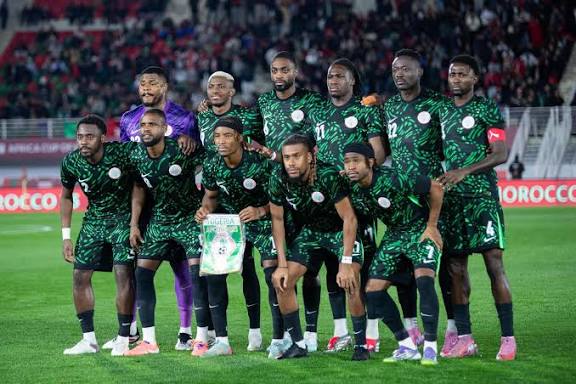
After the African Cup of Nations in January, the world again took notice of Nigeria’s absence in the World Cup, but the FIFA verdict hung over the discussions. Nigeria’s dominant display in the AFCON might add a soft spot to their case. Against four teams who qualified from the African Zone to the World Cup, the Super Eagles in a dominant style won 3 games, drew none, and lost on penalties to Morocco, keeping 3 clean sheets in 4 games.
The Super Eagles players have been making headlines in Europe. Ademola Lookman’s move to Atalanta has reignited passion in African superstar football, with a deal worth £30.3m. Lookman has raised the profile of African football in Spain again since the exit of the Cameroonian Samuel Eto’o, who conquered Spanish and European Club football with the mighty FC Barcelona in the 2000s. Also, Sevilla duo Akor Adams and Ejuke keep making headlines weekly. Victor Osimhen’s performance has brought respect to Turkish football with Galatasaray FC, and he’s the kind of superstar FIFA makes money from in the World Cup.
A talented generation of Super Eagles players might miss the World Cup. Given their ages, it’s uncertain they’ll play in 2030 if they don’t make it in 2026. Is there a lifeline today to reverse November’s misfortune? That will be a huge relief to the set of players who have played for almost a decade without a World Cup participation.
I believe DR Congo won’t match Nigeria’s World Cup performance. They might have deserved their place, but Nigeria has a higher market value. If FIFA rules in Congo’s favor, they’ll say they worked for it, but if it goes against them, Nigeria will say they stopped a cheat. Either way, it’ll end the suspense over Africa’s most popular nation’s World Cup qualification and earn Africa’s last slot for a playoff game to be Africa’s 10th country in the summer soccer fiesta.