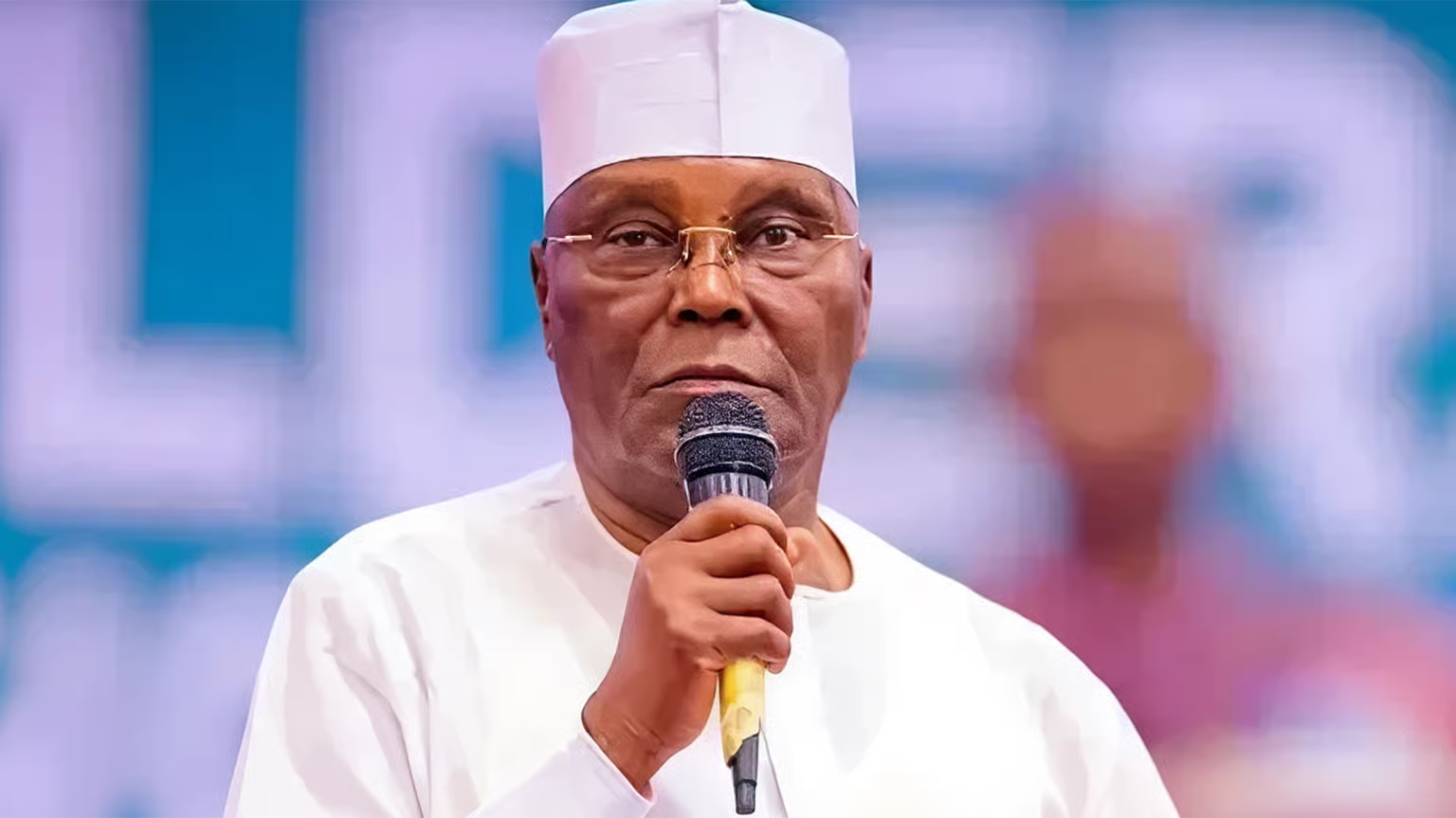
Former Vice President Atiku Abubakar has moved to shut down early speculation around vice-presidential permutations ahead of the 2027 elections, dismissing reports of secret negotiations as distractions that risk trivialising national political discourse.
Atiku’s response followed claims by former Ekiti State Governor Peter Ayodele Fayose that political deals were struck during a recent visit by the former vice president to ex-Head of State Ibrahim Babangida in Minna, including an alleged agreement with Oyo State Governor Seyi Makinde over a vice-presidential ticket.
But Atiku’s camp says the controversy underscores a deeper problem in Nigerian politics: the rush to personalise power contests long before the real issues confronting the country are addressed.
In a statement issued on Thursday, Phrank Shaibu, Senior Special Assistant on Public Communication to the former vice president, described the claims as “fiction masquerading as political analysis,” stressing that Atiku has not begun discussions on running mates or campaign financing.
“There were no negotiations over vice-presidential tickets, no financial commitments, and no backroom arrangements of any kind,” Shaibu said. “What is being circulated is not insider information but political gossip dressed up as news.”
Beyond denying the specific allegations, the statement framed the episode as symptomatic of a political culture obsessed with intrigue rather than substance.
“Atiku Abubakar’s engagements are national, consultative, and issue-driven,” Shaibu said. “They are not the narrow, transactional theatrics being promoted in some quarters.”
According to the former vice president’s aides, Atiku’s visit to Minna was part of routine consultations with elder statesmen — a long-standing political tradition — rather than a forum for clandestine deal-making.
Political observers note that Atiku’s firm rejection of early ticket speculation may be aimed at repositioning the conversation ahead of 2027, as opposition parties grapple with internal crises and questions about credibility.
The controversy also comes at a time when Nigeria’s major opposition platform, the Peoples Democratic Party (PDP), is still struggling to regain coherence following prolonged internal disputes, leadership disagreements, and defections.
By publicly distancing himself from rumours of transactional politics, Atiku appears to be signalling a desire to separate his political brand from the chaos often associated with succession battles and intra-party intrigue.
“It is unfortunate that some individuals, long stripped of political relevance, now seek attention by dragging serious national figures into manufactured controversies,” the statement added.
The former vice president’s camp warned that the constant circulation of speculative stories risks eroding public trust in democratic discourse and diverting attention from urgent national challenges such as insecurity, economic hardship, and institutional reform.
“Atiku Abubakar does not engage in secret deals, bribery, or political horse-trading,” Shaibu said. “He remains focused on principled engagement and national renewal, not the distractions of gossip politics.”
The statement concluded with a call for restraint, urging political actors and commentators to elevate public debate and allow serious discussions on governance, policy direction, and national unity to take precedence over rumours and personality clashes.
As the race toward 2027 gradually takes shape, Atiku’s response suggests an early attempt to define the terms of engagement — one that pushes back against speculation and insists on a broader, more substantive conversation about Nigeria’s future.
Atiku Shrugs Off VP Speculation, Signals Early Push for Issue-Based Politics