What was expected to be a routine confirmation of Justice Oyewole Olubumi to the Supreme Court on Tuesday turned into a forceful examination of Nigeria’s judicial system, as the Senate Committee on Judiciary spotlighted deep, systemic weaknesses undermining public confidence.
Senators seized the opportunity to air frustrations over conflicting rulings, runaway appeals, and a Supreme Court overwhelmed by cases that arguably should never have reached its doors.
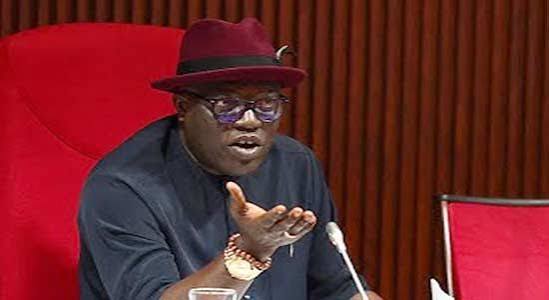
Leading the critique, Senator Neda Imasuen described the judiciary as “struggling under the weight of its own contradictions,” pointing to the persistent problem of courts of coordinate jurisdiction issuing opposing judgments.
“When courts at the same level give conflicting decisions, confusion is inevitable, litigation becomes endless, and public trust erodes,” Imasuen said. “What is more troubling is that this has continued for years with minimal discipline or consequences.”
The senator warned that these contradictions force litigants upward, flooding the Supreme Court and turning it into a “clearing house for every dispute” rather than the final arbiter it is meant to be. He cautioned that appointing more justices without addressing case flow and gatekeeping would be purely cosmetic.
Comparing Nigeria to other jurisdictions such as the United States, Imasuen highlighted the urgent need for structural overhaul. Senators Osita Izunaso and Shuaib Afolabi Salifu echoed the call for stronger internal controls, consistent judgments, and limitations on cases that automatically escalate to the apex court.
A particularly sharp critique focused on the legal profession itself. Imasuen questioned whether the criteria for attaining Senior Advocate of Nigeria (SAN) status inadvertently incentivized lawyers to push routine matters to the Supreme Court, worsening congestion.
Election litigation drew special attention, with senators warning that during election seasons, courts often stall regular business to meet constitutional deadlines. Imasuen suggested exploring specialised election courts to handle such disputes efficiently, asking:
“Must every election dispute end at the Supreme Court, or can we establish dedicated courts to protect the system?”
Justice Olubumi, the nominee, remained composed as the session evolved into a wider reckoning with institutional failures. Lawmakers stressed that his confirmation would not just be a personal milestone, but a test of the judiciary’s capacity to reform and restore efficiency.
Committee chairman Senator Adeniyi Ayodele Adegbomire struck a conciliatory note, affirming that Justice Olubumi enjoyed broad support, citing the strength of his résumé and judicial experience.
The screening reflects the Senate’s broader concern over backlogs, delays, and the quality of justice delivery in Nigeria, even as it seeks to fill Supreme Court vacancies with capable, reform-minded jurists.
Supreme Court nominee screening turns spotlight on judicial delays, systemic cracks