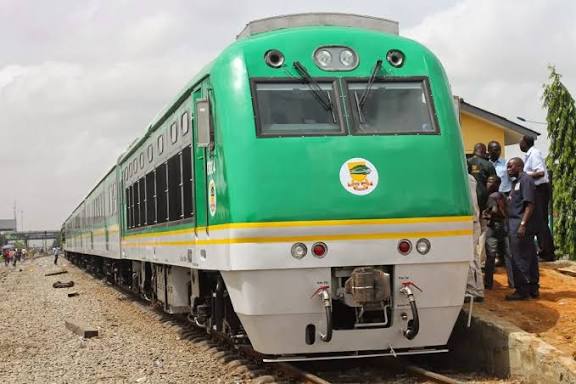
The Nigerian Senate on Thursday launched a comprehensive investigation into the Abuja–Kaduna–Kano railway line, more than a decade after its commissioning, amid mounting complaints over poor service delivery, aging infrastructure and a sharp decline in passenger patronage.
The probe follows renewed concerns by lawmakers over the deteriorating condition of the railway and the apparent inability of the Nigerian Railway Corporation (NRC) to effectively maintain the corridor.
An ad hoc committee, initially constituted in November but stalled due to funding constraints, was formally revived to examine every aspect of the project, including contract execution, maintenance practices, finances and operational efficiency.
Senator Abdul Ningi (Bauchi Central) gave a vivid account of his recent experience on the Abuja–Kaduna train, describing what he called a dramatic decline in service quality.
According to him, a journey that should take about one hour stretched to more than three hours due to worn-out coaches and deteriorating tracks.
“This is a Nigerian tragedy,” Ningi said, revealing that daily passenger numbers have plummeted from about 10,000 at the peak of operations to fewer than 1,000 on a single shuttle today. He added that revenue had fallen sharply and urged the Senate to treat the railway’s decline as a “national emergency.”
Completed in 2015 as the first phase of Nigeria’s railway modernisation programme, the Abuja–Kaduna railway was constructed by the China Civil Engineering Construction Corporation (CCECC) and financed largely through Chinese project-tied loans. At the time, it was celebrated as a flagship symbol of modern rail transportation in Nigeria.
However, the line has since been plagued by poor maintenance, vandalism, derailments and repeated security threats, including bandit attacks along the northern corridor. The most recent derailment occurred in August 2025 at Asham, further deepening public concerns about safety and management.
Chairman of the Senate Committee on Transport, Senator Adamu Aliero, described the state of the railway as an “eyesore” and called for urgent, coordinated intervention to restore it to operational efficiency.
Senate President Godswill Akpabio delivered one of the session’s most striking remarks, using humour to underscore the severity of the problem.
“Bicycle—even keke is faster than the Abuja–Kaduna train,” Akpabio quipped, drawing laughter and applause in the chamber. The comment highlighted the irony of a railway designed for speed and safety now being outpaced by motorcycles and tricycles, popularly known as keke napep.
Beyond the humour, Akpabio demanded accountability, insisting that the project must be thoroughly scrutinised.
“Every kobo spent must be examined,” he said, stressing the need for transparency and value for public funds.
The Senate subsequently inaugurated the ad hoc committee, chaired by Senator Adams Oshiomhole, with a six-week mandate to review contracts, maintenance records, financial statements and operational practices. The panel is expected to make recommendations aimed at restoring safety, reliability and public confidence.
For commuters, Akpabio’s remark mirrors daily realities. Passengers frequently endure long delays, overcrowded coaches and unpredictable schedules, forcing many to abandon the rail service for road transport alternatives.
Analysts warn that continued neglect of the line could undermine investor confidence in Nigeria’s rail sector and weaken public trust in government-funded infrastructure projects. Key recommendations include track rehabilitation, procurement of modern rolling stock and enhanced security along the corridor.
As the Senate probe gets underway, many Nigerians hope it will mark a turning point—transforming the Abuja–Kaduna railway from a symbol of decay into a model of efficiency, accountability and renewed public confidence.
“Even Keke Is Faster!” — Akpabio Slams Abuja–Kaduna Railway as Senate Launches Probe