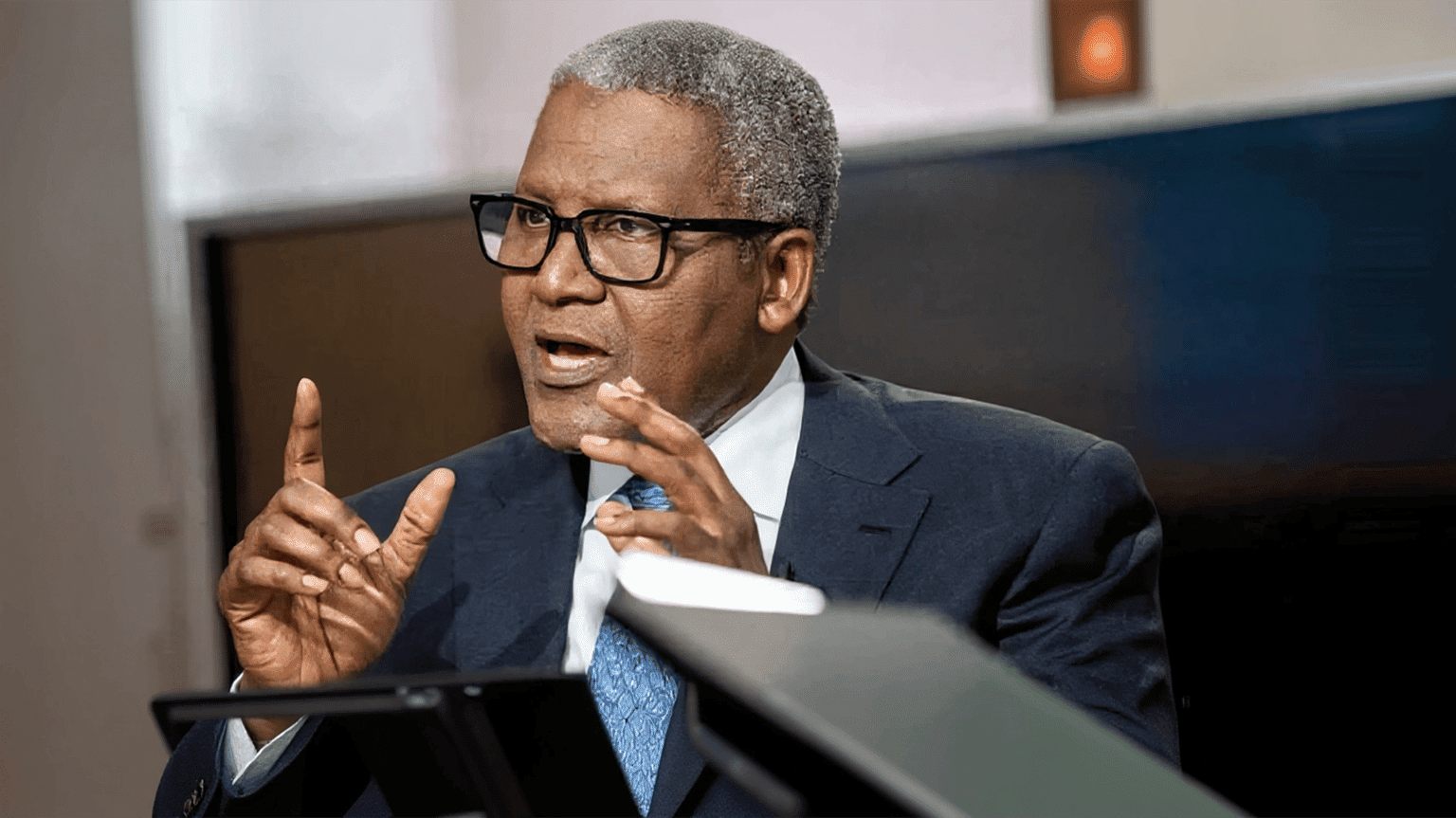
In a country where education has too often been treated as an expendable line item rather than a strategic priority, the Aliko Dangote Foundation’s N1 trillion education support programme marks a defining moment in Nigeria’s nation-building journey. It is not merely a philanthropic gesture; it is a profound statement about what Nigeria must do to secure its future in an increasingly competitive, skills-driven world.
Nigeria’s education crisis is well documented. Millions of children remain out of school, dropout rates remain stubbornly high, and public institutions struggle under chronic underfunding. At the heart of this crisis is a paradox: a nation bursting with youthful potential but constrained by systemic barriers that prevent talent from flourishing. In this context, the Dangote Scholarship Scheme arrives not just as relief, but as a challenge—to government, the private sector, and society at large—to rethink education as the central pillar of national development.
The scale of the intervention is unprecedented. With a commitment exceeding N1 trillion over a decade, the programme aims to support more than 1.3 million students across all 774 local government areas. Its design reflects a thoughtful response to Nigeria’s most acute educational gaps: funding STEM undergraduates, strengthening technical and vocational education, keeping girls in secondary school, and investing in teacher training. These are not arbitrary choices. They go to the core of Nigeria’s long-term productivity, equity, and social stability.
Particularly significant is the programme’s focus on financial exclusion as the primary driver of educational failure. As Aliko Dangote rightly observed, many Nigerian students drop out not for lack of talent, but for lack of means. By aligning tuition support with actual institutional fees, covering tools and materials for technical students, and ensuring sustained backing for girls through secondary and tertiary education, the initiative directly confronts the economic pressures that derail academic journeys.
Equally important is the emphasis on systems, not sentiments. A fully digital, merit-based selection and disbursement process—implemented in partnership with institutions such as NELFUND—signals a commitment to transparency, efficiency, and measurable outcomes. Retention rates, completion levels, and post-school impact are identified as benchmarks, underscoring that success will be judged not by announcements, but by results.
The broader implication of this intervention is its redefinition of philanthropy in Nigeria. Too often, private giving has been episodic, reactive, or driven by short-term visibility. By formally committing 25 per cent of his wealth to the Foundation and tying the programme’s sustainability to Dangote Group’s Vision 2030, Aliko Dangote has elevated philanthropy into the realm of structural investment. This is wealth deployed with intent, patience, and national purpose.
Government response to the initiative has been understandably enthusiastic. The Presidency’s endorsement, alongside commendations from state governors and traditional rulers, reflects recognition that public resources alone are insufficient to meet Nigeria’s human capital needs. Yet praise must not substitute for responsibility. Dangote himself was clear: this programme is a starting point, not a substitute for government action. Education remains a public good, and the state must continue to strengthen funding, infrastructure, governance, and policy coherence across the sector.
Vice President Kashim Shettima’s remark that “a population becomes a liability only when it is uneducated” captures the urgency of the moment. Nigeria’s demographic growth can be a dividend or a disaster. The difference lies in education. Without deliberate, sustained investment, the youth bulge will strain social systems and fuel instability. With it, Nigeria can unlock innovation, productivity, and inclusive growth.
This is why the Dangote intervention should serve as a catalyst. Other high-net-worth individuals, corporate institutions, and development partners must see this not as an exception, but as a benchmark. Nation-building is not the sole responsibility of government; it is a collective enterprise. When private capital aligns with public purpose, transformative change becomes possible.
Ultimately, the true measure of this programme will not be the trillion-naira headline, but the lives reshaped by opportunity—the girls who stay in school, the technicians who gain employable skills, the teachers who inspire excellence, and the graduates who drive Nigeria’s economy forward. Education is the foundation upon which prosperous societies are built. In taking this bold leap, the Aliko Dangote Foundation has reminded the nation that investing in minds is the most enduring form of patriotism.
The challenge now is for Nigeria to match this vision with collective resolve
A Trillion Naira for the Future: Education as Nigeria’s New National Project