By Dagogo Jack
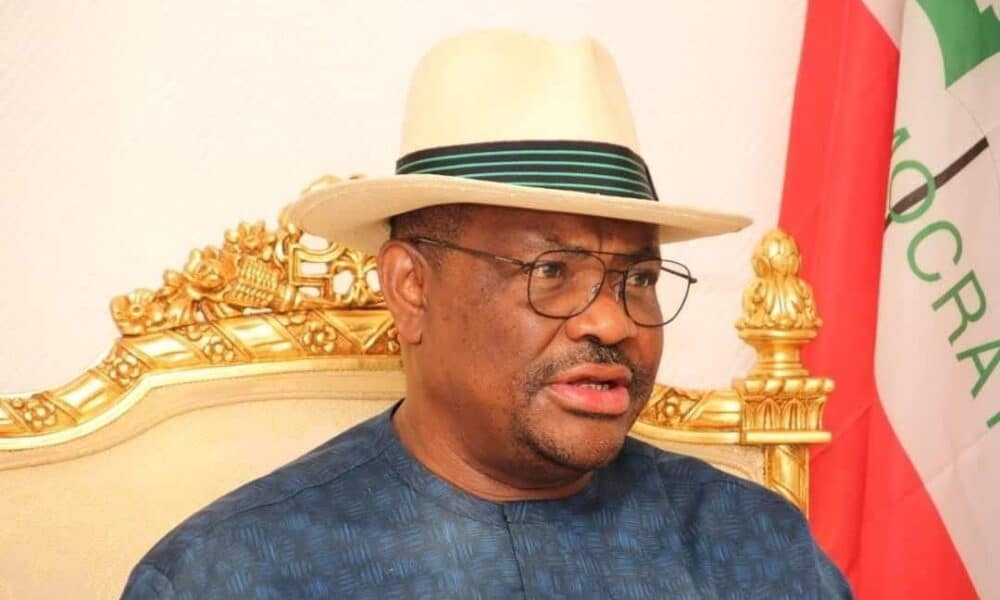
By any conventional political metric, Nyesom Wike has climbed higher than most of his contemporaries could ever dream. From chairman of one of the largest local government councils in Rivers State, to two-term governor of one of Nigeria’s most strategic and economically vital states, to Minister of State for Education, and now Minister of the Federal Capital Territory, Wike’s résumé reads like the summit of political achievement.
Yet, for all these towering milestones, a persistent question trails his public life: why does fulfillment still appear elusive?
Unlike several former governors of Rivers State who, after serving their constitutionally allotted terms, retreated into quieter national relevance or elder statesmanship, Wike’s political gaze seems perpetually fixed on Rivers State. Even after leaving office, his actions and utterances suggest an enduring desire not just to influence, but to tightly control the political direction of the state—by proxy if necessary.
To critics, this posture reflects more than mere political interest. It suggests an insatiable quest for power, one that refuses to recognize natural endpoints. Power, in this sense, becomes not a tool for service but an addiction—never enough, never complete. The implication is troubling: if eight years as governor, combined with influential federal appointments, cannot bring a sense of political closure, then what will?
Some observers interpret this fixation as political greed; others see it as envy-driven—a discomfort with watching successors exercise authority independently. Either way, the optics are damaging. Democracy thrives on institutional strength, not on the perpetual dominance of one individual. When former leaders refuse to let go, they risk reducing public office to personal property rather than a temporary trust.
Wike’s story is especially striking because his rise was not a solo journey. Like all politicians, he ascended through alliances, party structures, and the collective efforts of supporters who believed in him. Power was lent, not inherited. That is why the continued insistence on control appears less like leadership and more like entitlement.
It is difficult to comprehend how a single soul can rise through the help of others, complete two full terms in office, attain repeated national prominence, and still lay claim—directly or indirectly—to public authority as though it were a family estate. Public office is not ancestral land. It is borrowed power, meant to be exercised, respected, and ultimately relinquished.
This pattern is not without precedent in Wike’s recent political conduct. Observers recall how, after failing to secure the PDP presidential ticket, he appeared hell-bent on weakening the very party that had nurtured his rise. Rather than submit to party consensus or play the role of a unifier, he chose open rebellion—deploying influence, resources, and rhetoric that many believe contributed significantly to the party’s internal fracture and eventual electoral misfortune. To his critics, that episode revealed a recurring trait: when personal ambition is thwarted, institutions become expendable.
The same script, many argue, is now playing out in Rivers State. Just as he could not forgive the PDP for denying him its presidential flag, Wike is perceived to have vowed not to allow Governor Siminalayi Fubara the space to govern freely unless control of the state remains firmly in his hands. Governance, under such conditions, becomes secondary to dominance. Development stalls, institutions are strained, and the will of the electorate is overshadowed by the ego of one man determined to remain politically relevant at all costs. In the end, Rivers State risks being reduced to a battlefield for personal supremacy rather than a platform for public service.