By Emmanuel Nnadozie onwubiko
⁹
I was just a very innocent boy of about 10 and had just stubbornly followed my immediate elder sister Francisca to enrol into a secondary school known as KAFANCHAN TEACHERS COLLEGE.
My Dad gave his unqualified approval that I jumped to form one from my primary 5 at the Aduwan 1 primary school since I was such in a hurry to be in secondary school.

I met a lot of school mates and given the huge size of the students, I was assigned to Class 1 P. There were some three thousand students in my form but the school was considerably massive in terms of structures and infrastructure.
The school was a neat one with teachers and a principal who were clearly no-nonsense disciplinarians. The Vice principal was such a fine gentleman who also played the role of an informal counsellor. He was instrumental to my becoming fascinated about becoming a journalist. Together with my Father Mazi Osonduagwuike Okorieocha ONWUBIKO who often sent me to buy copies of Champion Newspapers and Imo Statesman from the newsstand near the main market in Kafanchan, these legends pushed into journalism.
Our class teachers were very friendly but disciplined so we were made to know the boundary between friendship and falling in line in the area of strict compliance to the rules and regulations of the school.
One of those abominable sins was coming late to school. Lateness to school was strictly forbidden just as offenders are made to face corporal punishments and caning which were regimented and very awkward but these disciplinary actions moulded us into respecters of authority and order.
Discipline and order were virtues that most of us were already used to from our homes. Dad made sure we do not stray into the arena of rascality and malfeasance. My Dad did not mind flogging anyone who derailed.
And so, it was an anathema to hear that one of us in the school by the name of Godwin was such a very stubborn chap to an extent that rumours swirled around the ears of students that he occasionally fought his Dad. His Dad was disabled in one leg but all the same was a highly educated Nurse who was highly placed in his place of work in the only publicly funded hospital in Kafanchan.
The man was so diligent in his tasks as a Nurse but there is something we suspected made it possible for Godwin to deviate from the societal norms and to have had the effrontery to physically confront his Dad. This was the existential fact that his mother deals on local brews of alcohol known as burukutu and this line of business attracted all kinds of bad characters into their living environment whereby the mother does her business. Godwin was uniquely badly behaved and indulged in all kinds of misbehaviour including smoking and drinking of alcoholic beverages. We hus contemporaries failed to correct Godwin.
It was strange to know that a son could fight his Dad but to Godwin, engaging in fisticuffs with his biological Dad was just one of those normal things. The news wasn’t palatable to our ears because it was a huge anathema to contemplate that a son could even engage his Dad in the exchange of words talk more of physically battling the man who co-created him and brought him to life.
This bad habit escalated. Then all of a sudden, Godwin fought his Dad with a knife and succeeded in stabbing him to death. This was the kind of news that as kids of just 10, it was traumatic to hear.
The entire school and thousands of students received this shocking news with considerable amount of disappointment that the boy Godwin could kill the man who brought him to the world. Godwin was picked up by the police and that ended his education as he was taken straight into detention and then prosecuted for murder.
But given his tender age, he was not subjected to the death penalty which was the legal sanction for such a heinous crime but he was consigned to the borstal home which was a prison yard for juveniles for decades. The killing of his Dad by Godwin thus ended his normal life. He lost all his friends and hung the stigma of a killer of his Dad.
But if you are reading this story, you might be asking yourself why i remembered a story that took place almost 40 years ago.
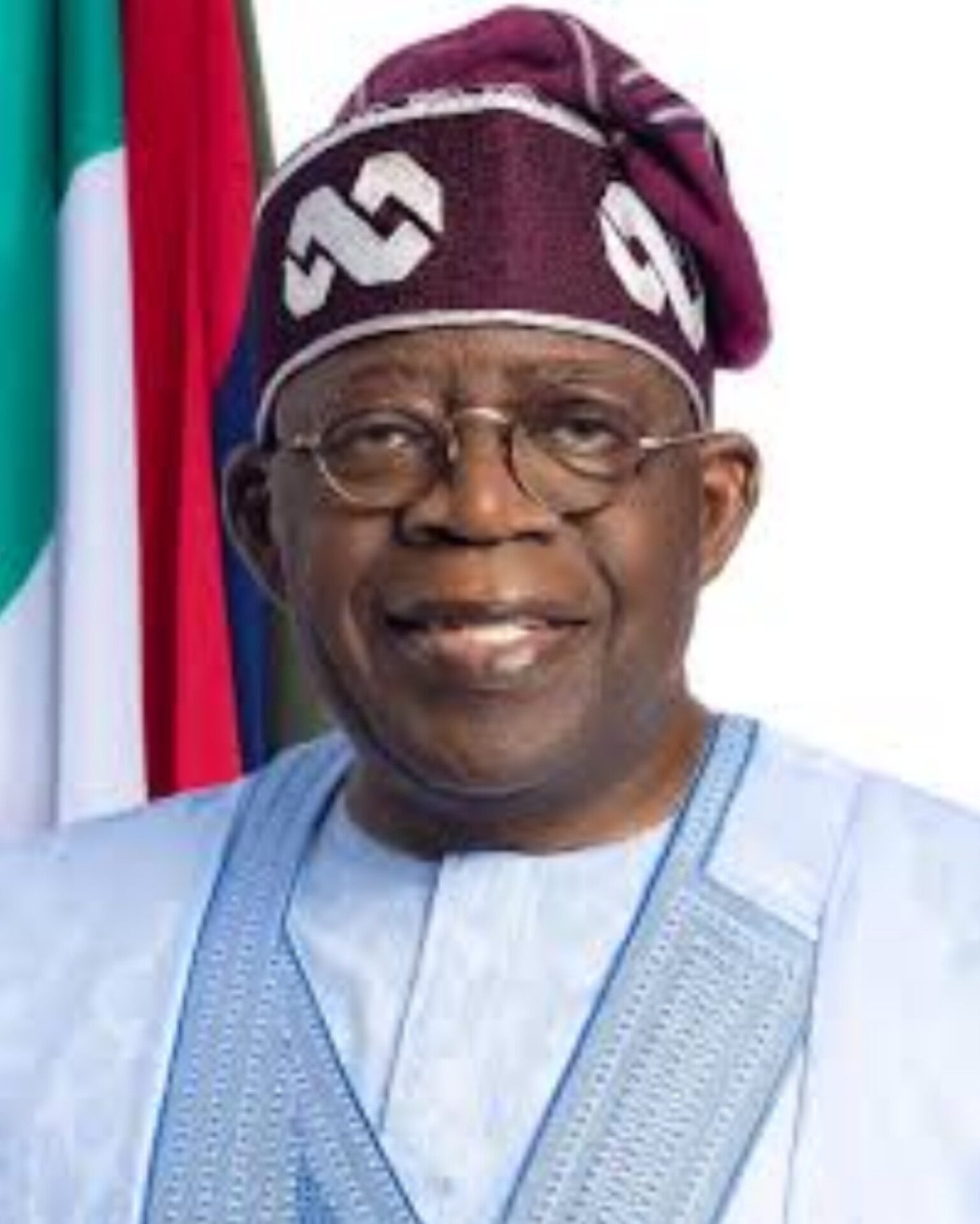
Yes, the memory of this incident flashed into my thinking faculty when I busied myself over a cup of coffee in reflecting about the political scenarios been created by the current Nigerian president known as Bola Ahmed Tinubu and precisely the angle that the president is actively working to kill off constitutional democracy and multiparty democracy. Everyone who works for sustainable development, would naturally work to nurture constitutional and multiparty democracy which is our best system of government as it were.
President Tinubu once said, he was so happy that the opposition political parties that gave him the toughest challenges during the year 2023 poll were in internal turmoils. These internal infighting were promoted and funded by the supporters of the second term ambition of president Tinubu who seems mortally afraid of strong opponents who may torpedo him in 2027 given the poor records he has built in the field of economy, insecurity and general wellbeing of the citizens.
The truth is that the President and his political party the All Progressives Congress, are actively engaged in the deliberate demolition of peoples Democratic Party and the Labour party and has also extended his tentacles into the newly registered African Democratic Congress which obviously is one opposition party whereby the fiercest rivals of Bola Ahmed Tinubu have congregated including Atiku Abubakar, Aminu Tambuwal, Nasir Elrufai and Peter Obi. Tinubu is allegedly using Economic and Financial Crimes Commission as his foot soldiers to threaten serving governors belonging to PDP most of whom have soiled their hands and they are jumping into APC like frogs running away from a consuming fire and because Adams Oshiomhole a former National Chairman of APC said anybody joining APC wouldn’t be haunted by the EFCC and ICPC because their ‘sins’ are forgiven, these fearful politicians of the opposition parties are lining up into APC for protection from the troubles of EFCC.
What the president and the APC are collectively doing by forcing elected office holders of the other political parties to cross over illegally into the APC so as to weaken the opposition parties to soften the ground for the incumbent president to re-contest for the second and the last constitutionally permitted tenure in less than a year from now, is just the same as the actions of the boy who killed his father in my high school days in KAFANCHAN.
Democracy is obviously the result of struggles and agitation by people who stake their lives to wrestle power from the military coupists who drove away civilians in 1982 and held on to power up until 1999. One of those agitators who struggled for civilian led constitutional democracy to take roots in Nigeria is the man who is president today who obviously took over power through a contentious general election in the year 2023. He is attempting by all means to muzzle political opposition by allegedly funding internal schism and because most politicians in Nigeria are not ideological but are ready to be bought over, the All Progressives Congress has used public funds as slush funds to sponsor infighting in political opposition including the appointment of a PDP member as minister whose duty is to destroy the once harmonious PDP. The courts in Nigeria are as corrupt as the Supreme Court of Venezuela so the president is also using them to destroy the opposition parties.
So if this leading agitator who contributed to the arrival of constitutional multiparty democracy is now misusing his presidential powers to whittle down political opposition parties with the aim of creating a one party state, it won’t be wrong to remember the boy Godwin who killed his Dad and to draw a parallel with the incumbent Nigerian President as the boy who is killing multiparty democracy if he is not resisted.
But like Godwin the boy in KAFANCHAN of the 1980s who made sure he ended the life of his boisterous and joyous Senior Nurse and father and then ended his life, if Tinubu’s programme to exterminate multiparty democracy sails through, then Tinubu’s legacy as a warrior of democracy would come to a scratching end.
But since unlike during my childhood days that I and my contemporaries failed to correct Godwin and to compel him to desists from fighting his Dad, a negligence that dovetailed into the eventual killing of his Dad by Godwin, since we are aware that Tinubu intends to kill multiparty democracy, we owe our consciences the debts to speak out and mobilise active resistance to this political anathema and suicide that is about to happen in Nigeria.
The history of multiparty democracy is illustrious and we may do well to look at what political scholars gave us as the historicity and etymology of multiparty democracy.
Ancient Democracy:
Political groupings in ancient Greek democracies and in the Roman Republic were typically formed around leaders whose wealth, oratorical skills or achievements could sway the citizenry around issues of war, trade, property and public services.
Factions often formed around two main societal interests — the wealthy aristocracy and common property holders, traders and artisans. These groups held different views of democracy somewhat in the manner political parties do today. The most famous Athenian politician, Pericles, won enduring majorities of the citizens’ assembly in part through his success at extending political participation to the less wealthy and in part through his adept management ─ for a time ─ of Athens’ foreign policy.
Unlike Athens, Rome was governed through layers of representative institutions and officials according to class and wealth. The dominant law-making institution was the Senate, which represented patricians, or the elite landowning class. The Plebeian Council represented the rest of the citizenry, including smaller landowners and merchants. In this setting, there were no political parties but rather supporters or opponents of individual politicians based on personal interests or on their views regarding the balance of Senatorial privilege and the power and rights of plebeians.
British Political Parties
The first modern political parties arose in Great Britain out of the English Civil Wars and became defined in the Exclusion Crisis of 1679-81. Those known as Tories defended absolutist prerogatives and hereditary succession. Whigs favored greater constitutional limits on the monarchy. Their history offers an example of political party development.
The Exclusion Crisis occurred when Whigs sought to bar the brother of the restored king, Charles II, from succession to the monarchy due to his adoption of Roman Catholicism and fears that he would again try to assert absolute powers over parliament — the cause of the English Civil Wars earlier that century. In the minority at that time, the Whigs’ effort failed. James II assumed the throne in 1685 on his brother’s death. But the Whigs’ fears were soon realized as James II sought to transgress parliament’s authority. Acting now in the majority after a new election, the faction acted to depose James II in the Glorious Revolution of 1688. They invited his Protestant daughter, Mary, and her Protestant husband, William of Orange and King of the Netherlands, to assume the throne, uniting the two kingdoms for a brief period. Whigs then passed bills asserting power over monarchical succession, parliamentary authority and citizens’ rights (known as the English Bill of Rights).
Whigs and Tories vied for power thereafter as political parties. Whigs were dominant for much of the 18th century and Tories in the late 18th and early 19th centuries. In John Stuart Mill’s categories, Whigs were the “change” party, supporting parliamentary supremacy, expanding the franchise and free trade. The Tories were the “stability” party protecting rural, aristocratic and Church interests as well as the prerogatives of the monarchy. There were also independent members. They would be central to ending the slave trade and abolition of slavery, gaining support from leaders of both Whigs and, at times, Tories.
Nigeria borrowed our political system mainly from Great Britain. So why does Tinubu intend on killing multiparty democracy in the Country? Why must all the opposition party governors and legislators be conscripted into the All Progressives Congress of Tinubu?
EMMANUEL NNADOZIE ONWUBIKO is the founder of HUMAN RIGHTS WRITERS ASSOCIATION OF NIGERIA and a former COMMISSIONER OF THE NATIONAL HUMAN RIGHTS COMMISSION OF NIGERIA.