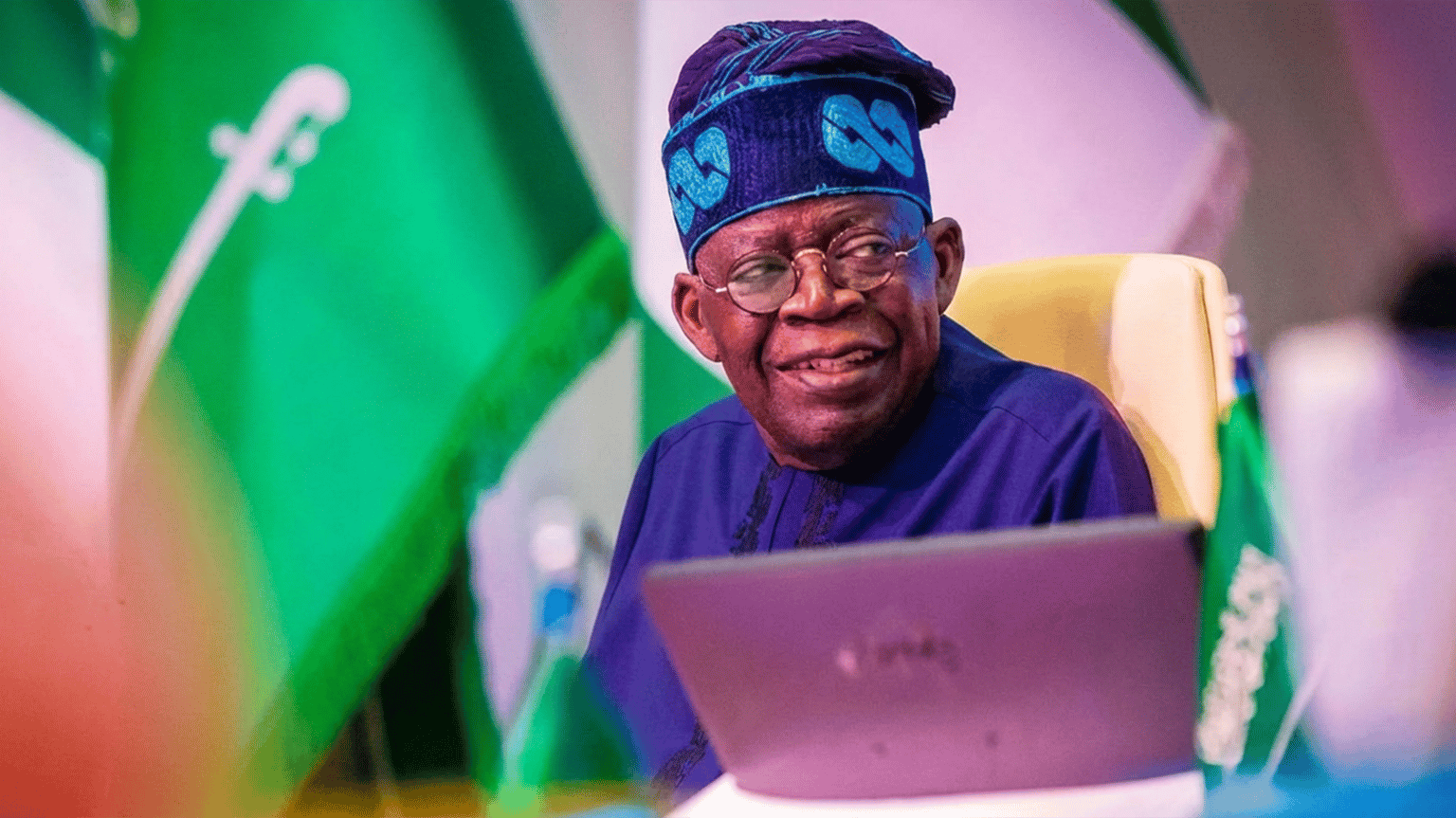
Five days after President Bola Ahmed Tinubu laid the ₦58.18 trillion 2026 Appropriation Bill before the National Assembly, the Senate on Tuesday revised the total spending figure to ₦58.47 trillion, explaining that the adjustment followed the discovery of minor calculation errors in the budget presentation and related documents.
The upward review, which adds about ₦292 billion to the executive proposal, aligns the budget with the figure earlier approved by the Federal Executive Council (FEC). The Senate subsequently passed the 2026 Appropriation Bill for second reading.
Chairman of the Senate Committee on Appropriations, Senator Adeola Olamilekan, explained that the discrepancy arose from arithmetic errors in the President’s presentation, stressing that the appropriation bill itself—not the speech—remains the authoritative document for legislative consideration.
“The official budget figure for deliberation is the one contained in the appropriation bill,” Adeola said. “While minor miscalculations may have occurred in the President’s speech or accompanying documents, the National Assembly will rely on the bill as laid before it. Accordingly, the 2026 budget stands at ₦58.472 trillion.”
He urged lawmakers and the public not to be distracted by the variation, noting that the substance and structure of the spending plan were more important than the marginal difference in figures.
The Senate, which gave the bill accelerated consideration, described the proposal as one of the strongest fiscal frameworks presented in recent years, pointing to its large capital component and emphasis on security and economic consolidation.
Leading the debate, Senate Leader Opeyemi Bamidele (Ekiti Central) said the bill seeks to authorise withdrawals from the Consolidated Revenue Fund of the Federation to fund government operations for the year ending December 31, 2026. He recalled that the bill was deemed to have passed first reading after being laid before a joint session of the National Assembly on December 19, 2025.
Bamidele described the 2026 budget as a “budget of consolidation,” designed to stabilise the economy and deepen reforms already undertaken by the Federal Government.
According to him, the expenditure framework comprises ₦4.097 trillion for statutory transfers, ₦15.909 trillion for debt servicing, ₦15.252 trillion for recurrent (non-debt) expenditure, and ₦23.214 trillion for capital expenditure through contributions to the Development Fund.
He said the size of the capital allocation reflects the administration’s focus on growth, productivity and infrastructure development, with priority sectors including transport, power, agriculture, housing, industrial development and the digital economy.
“The capital allocation is designed to stimulate private investment, create jobs, and strengthen food and energy security,” Bamidele told the chamber.
On recurrent spending, he said the ₦15.252 trillion provision would ensure efficient government operations and service delivery, adding that the President had committed to strict cost controls, improved payroll management and efficiency measures to curb waste.
While acknowledging the heavy debt service burden, Bamidele said the Federal Government was pursuing improved revenue mobilisation, expansion of the tax base and better performance by government-owned enterprises to reduce dependence on borrowing.
He also noted that the ₦4.097 trillion earmarked for statutory transfers was in fulfilment of constitutional obligations to key institutions and critical to the stability of democratic governance.
Bamidele disclosed that the projected budget deficit—estimated at about 4.28 per cent of GDP—remains within the medium-term fiscal parameters earlier approved by the National Assembly, with expected revenues for 2026 put at ₦34.33 trillion.
Contributing to the debate, several senators praised the strong emphasis on security, education, healthcare, infrastructure and agriculture. Senator Mohammed Sani Musa (Niger East) described the ₦15.9 trillion provision for debt servicing as essential to sustaining investor confidence and preserving Nigeria’s credibility with international partners.
Former Senate President Ahmed Lawan (Yobe North) described the budget as “historic and courageous,” noting that defence received the largest allocation, reflecting the administration’s commitment to tackling insecurity. He, however, cautioned that political activities ahead of 2026 must not disrupt budget implementation, particularly in the first quarter of the year.
Other lawmakers observed that capital expenditure now accounts for nearly 40 per cent of the total budget—an unprecedented development in Nigeria’s fiscal history—and stressed the need for robust legislative oversight to prevent implementation gaps.
At the end of deliberations, the Senate passed the bill for second reading and referred it to the Committee on Appropriations for detailed scrutiny, insisting that effective implementation, rather than ambitious projections, would determine the real impact of the 2026 budget on Nigerians.
Budget 2026: Senate Raises Tinubu’s Proposal to ₦58.47trn, Cites Minor Errors