The Pan-Niger Delta Forum (PANDEF) has thrown its weight behind President Bola Ahmed Tinubu’s ongoing reforms in the oil and gas sector, describing them as a decisive shift from years of regulatory uncertainty and policy inertia that weakened Nigeria’s most strategic industry.
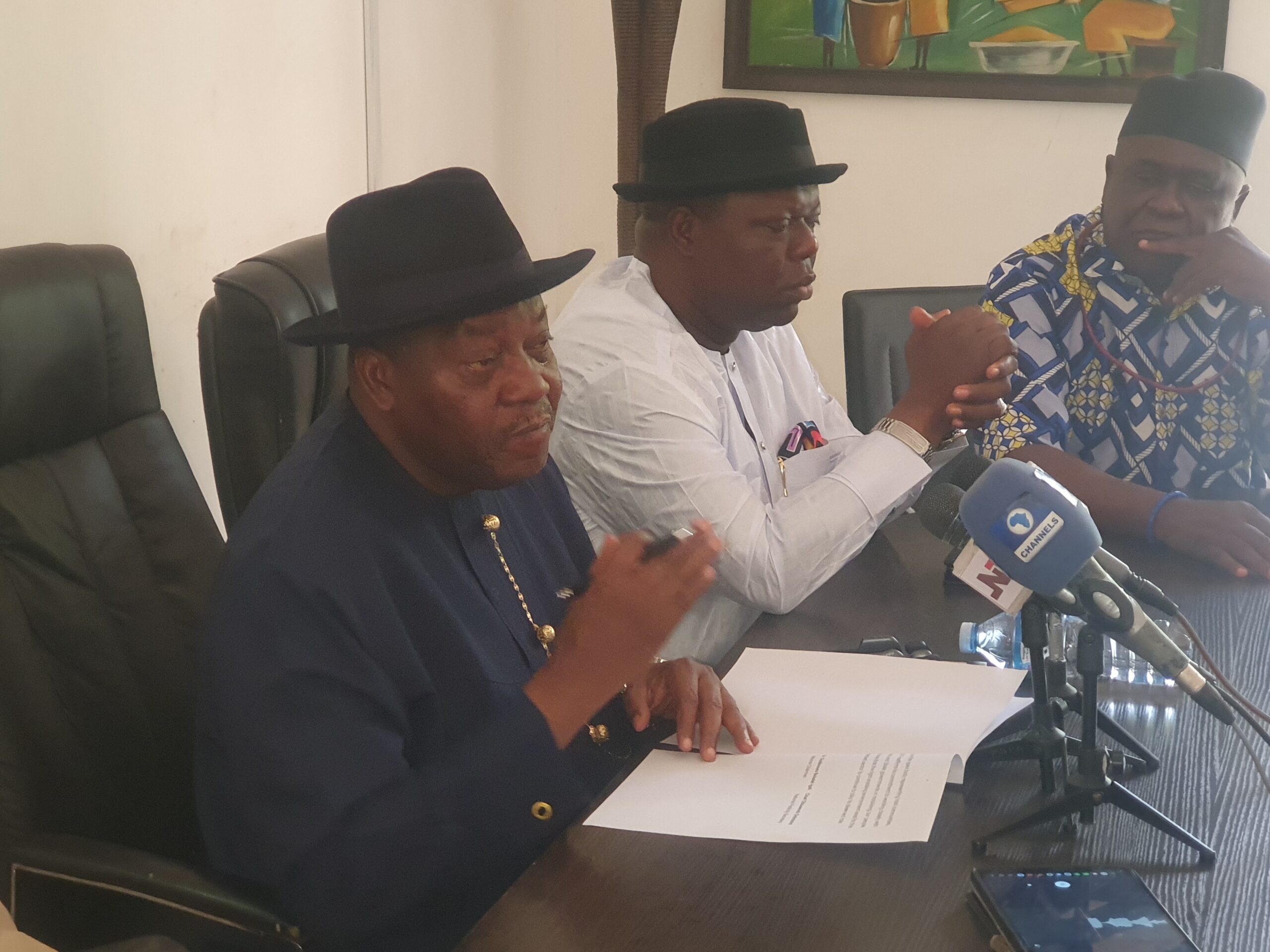
Speaking in Abuja on Friday, PANDEF’s National Publicity Secretary, Ambassador Gidknows Igali, said the reforms had been received across the Niger Delta with renewed optimism, noting that the region bears both the economic weight and environmental consequences of oil production.
According to Igali, the Tinubu administration’s early restructuring of the sector’s regulatory architecture signals a clear intention to restore professionalism, efficiency and investor confidence in an industry that remains central to Nigeria’s economic survival.
“The oil and gas sector is not an abstract policy space for the Niger Delta,” Igali said. “We live with its realities daily. That is why reforms in this sector are of existential importance to our people.”
PANDEF particularly applauded the appointment of Mrs. Oritsemeyiwa Amanorisewo Eyesan as Chief Executive Officer of the Nigerian Upstream Petroleum Regulatory Commission (NUPRC), describing it as a merit-driven decision that reassures both investors and host communities.
Igali said Eyesan’s extensive experience in the upstream sector, including her previous role as Executive Vice President (Upstream) at the Nigerian National Petroleum Corporation, positioned her well to drive reforms anchored on competence and transparency.
“This is a square peg in a square hole,” he said. “Her performance during screening and her professional pedigree show that expertise, not sentiment, is shaping this reform process.”
The forum also expressed confidence in the appointment of Engineer Saidu Aliyu Mohammed as Chief Executive Officer of the Nigerian Midstream and Downstream Petroleum Regulatory Authority (NMDPRA), describing the leadership combination as strategically balanced and capable of repositioning the industry.
“With competent hands overseeing both the upstream and midstream/downstream segments, the oil and gas sector is better positioned for a major leap forward,” Igali noted.
However, PANDEF urged the Federal Government to deepen the reforms by ensuring broader inclusion of qualified Niger Delta professionals in top management positions across the petroleum industry. The group argued that the region hosts Nigeria’s largest pool of trained oil and gas experts, developed through decades of specialised education and industry exposure.
“Greater inclusion of Niger Delta professionals is not about favouritism,” Igali said. “It is about deploying experience, local knowledge and technical depth for national benefit.”
On environmental concerns, PANDEF called for the expansion of remediation efforts beyond Ogoniland, warning that ecological degradation affects oil-producing communities across the entire Niger Delta. While commending ongoing cleanup efforts, the group stressed that a region-wide approach was necessary to address decades of pollution.
“Environmental restoration cannot be selective,” Igali said. “The damage cuts across states, and remediation must be holistic, sustained and just.”
The forum also renewed its call for the implementation of the Modular Refinery Development Fund, first agreed with the Federal Government in 2018. PANDEF said modular refineries would complement large-scale facilities such as the Dangote Refinery, formalise artisanal refining, create jobs, reduce fuel transportation risks and curb pipeline vandalism.
According to PANDEF, community-based modular refineries would integrate host communities into the oil value chain, reduce exclusion and strengthen local economic participation.
Reaffirming the Niger Delta’s commitment to peace, PANDEF assured the Federal Government of continued cooperation to maintain a stable operating environment for oil and gas activities.
Igali also dismissed predictions of the imminent decline of fossil fuels, arguing that oil and gas—especially natural gas—will remain central to global energy supply for decades.
“With over 210 trillion cubic feet of gas reserves, Nigeria has a strategic advantage,” he said. “Gas remains the cleanest and most reliable transition fuel, and with the right policies, Nigeria can remain a key energy player for the next half-century.”
PANDEF urged President Tinubu to sustain the momentum of the reforms through inclusive governance, environmental justice and community-focused industrial development, stressing that such an approach would secure long-term stability and shared prosperity in the oil-producing regions.