***Mohammed Unveils Bold Gas, Energy Vision
Nigeria’s oil and gas regulatory landscape may be poised for a major shift as two top nominees for leadership positions in the petroleum sector laid out far-reaching reform agendas before the National Assembly, promising data-driven regulation, renewed investor confidence and accelerated gas development.
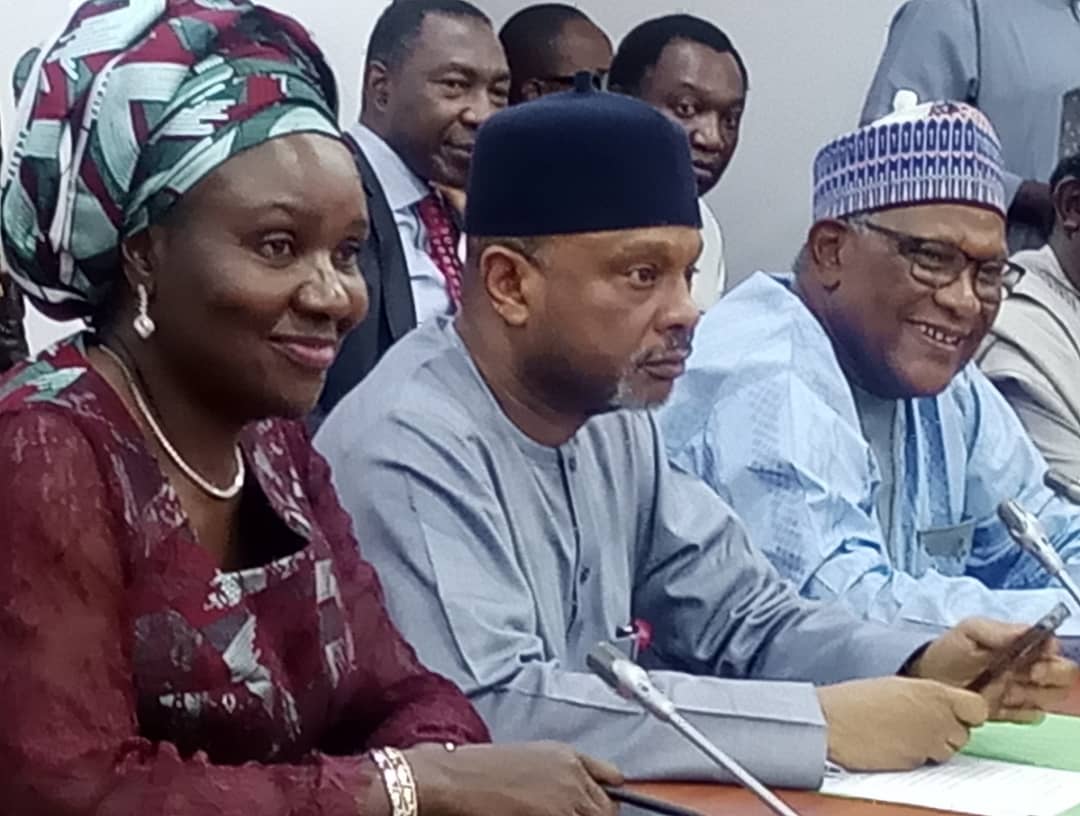
Appearing before the Senate Joint Committee on Upstream, Midstream, Downstream and Gas, Oritsemeyiwa Amanorisewo Eyesan, nominee for Chief Executive Officer of the Nigerian Upstream Petroleum Regulatory Commission (NUPRC), pledged to pursue a digital-first regulatory framework anchored on asset integrity, stakeholder collaboration and full implementation of the Petroleum Industry Act (PIA).
Eyesan told lawmakers that Nigeria could no longer afford inefficiencies in upstream regulation, arguing that digitisation was no longer optional in a modern energy economy.
“If you do not have a digitised system in today’s operations, you are losing money and wasting resources,” she said. “We must work with real data. Without it, you do not even know what you are regulating.”
She stressed that the role of the regulator is not to replace operators, but to provide clear, predictable and globally competitive rules that protect national assets, unlock investment and maximise value for the country.
Drawing on over 33 years of experience in Nigeria’s upstream sector, Eyesan highlighted her track record as both an operator and a strategist. She recalled how, as General Manager, Planning at the Nigerian National Petroleum Corporation (NNPC), she led efforts that resolved long-standing Joint Venture cash-call arrears, restoring investor confidence and unlocking more than $6 billion in new upstream investments.
She also pointed to her role in resolving multi-billion-dollar arbitration disputes with Production Sharing Contract partners, reducing Nigeria’s exposure of over $10 billion and paving the way for new deep offshore developments, including the Bonga Southwest project and discoveries in the Ntokon field.
Eyesan emphasized gas development as a national priority, noting the contradiction of Nigeria’s vast gas reserves—estimated at over 200 trillion cubic feet—coexisting with persistent power shortages and energy poverty.
“It is unacceptable that a country so richly endowed with gas still struggles with electricity supply,” she said, adding that early non-associated gas projects initiated under her watch helped correct years of policy and investment imbalance.
She disclosed that, most recently, Nigeria’s crude oil production rose from about 1.3 million barrels per day to approximately 1.8 million barrels per day, attributing the increase to coordinated engagement between regulators and operators.
With the global energy transition accelerating, Eyesan urged Nigeria to move decisively to convert its oil and gas resources into competitive domestic and export products. She thanked President Bola Ahmed Tinubu and the National Assembly for the opportunity to serve, assuring lawmakers of her readiness to lead a reformed, efficient and investment-friendly NUPRC.
Also appearing before the committee, Engineer Saidu Aliyu Mohammed, nominee for Chief Executive Officer of the Nigerian Midstream and Downstream Petroleum Regulatory Authority (NMDPRA), outlined an ambitious vision focused on strengthening local investment, expanding gas supply infrastructure and enforcing quality standards across the sector.
Mohammed stressed the importance of robust contractual frameworks, noting that gas is typically sold before production begins and therefore depends heavily on strong agreements between producers, transporters and end-users.
“We must build reliable networks and clear operational districts,” he said. “Investors will only return when there is certainty, efficiency and protection of assets.”
Reflecting on his experience as a gas company executive, Mohammed said strict enforcement of network costs, transport efficiency and operational standards is critical to attracting capital and sustaining growth. He also underscored the need for strong internal laboratory and quality assurance systems to ensure product integrity across pipelines and retail outlets.
On broader energy goals, Mohammed expressed confidence that with the right regulatory environment and stakeholder collaboration, Nigeria could achieve crude oil production targets of between 2.2 and 2.5 million barrels per day, while significantly boosting domestic gas utilization to power economic growth.
He concluded by calling for sustained engagement with lawmakers and industry players, including technical sessions and policy retreats, to ensure alignment and effective implementation of reforms.
Together, the presentations signaled a reform-driven approach to petroleum regulation, with both nominees projecting confidence that Nigeria’s energy sector can still deliver growth, stability and long-term national value under a strengthened regulatory framework.