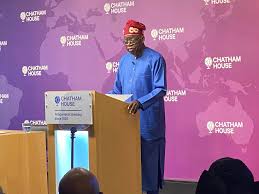
President Bola Ahmed Tinubu has reaffirmed that his directive ordering the withdrawal of police security from Very Important Persons (VIPs), Very Very Important Persons (VVIPs), and serving ministers is final and non-negotiable, warning that any form of defiance will not be tolerated.
Speaking at Wednesday’s Federal Executive Council (FEC) meeting at the State House, Tinubu said all ministers and privileged officeholders must immediately release police officers attached to them and seek clearance only when an assignment genuinely requires police protection.
“There is no going back on the directive to redeploy police officers working with VIPs, VVIPs and ministers,” the President said. “If you have any problem because of the nature of your assignments, contact the IGP and get my clearance.”
The President directed the National Security Adviser, Mallam Nuhu Ribadu; Minister of Police Affairs, Senator Ibrahim Gaidam; and the Inspector-General of Police (IGP), Kayode Egbetokun, to enforce the directive across all ministries, departments and agencies.
Tinubu stressed that police officers are trained to protect the public—especially vulnerable citizens—not to serve as personal guards for a privileged few. Releasing police manpower, he said, is vital to combating kidnapping, banditry, terrorism, and other nationwide threats.
To avoid gaps in VIP security, Tinubu approved the deployment of Nigeria Security and Civil Defence Corps (NSCDC) operatives for official protection duties.
“The Civil Defence Corps is trained for VIP protection, and they are armed too,” he said, noting that the switch would allow the police to refocus on core law-enforcement priorities.
He warned that any special request for police protection must now be routed directly through the IGP for presidential clearance. “NSA, take this very seriously,” Tinubu cautioned.
Beyond the security restructuring, the President also pressed for swift implementation of livestock and ranching reforms targeted at resolving decades-old herder–farmer clashes.
He instructed Vice President Kashim Shettima—Chairman of the National Economic Council—to intensify consultations with governors to ensure full buy-in.
The Minister of Livestock Development, Idi Muktar Maiha, was also directed to immediately begin mapping and rehabilitating grazing zones and villages suitable for ranching.
“We must eliminate this area of conflict and make the livestock reform economically viable,” Tinubu said. “The opportunity is there; let’s utilise it. Emphasise that the land belongs to the states.”
The President said the reforms would protect rural communities, reduce clashes, and create long-term stability in conflict-prone regions.
Tinubu Insists VIP Police Withdrawal Is Final, Orders Full Compliance