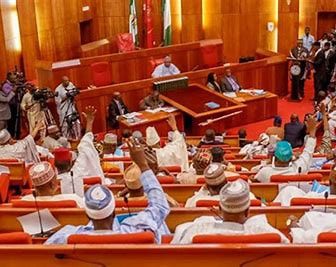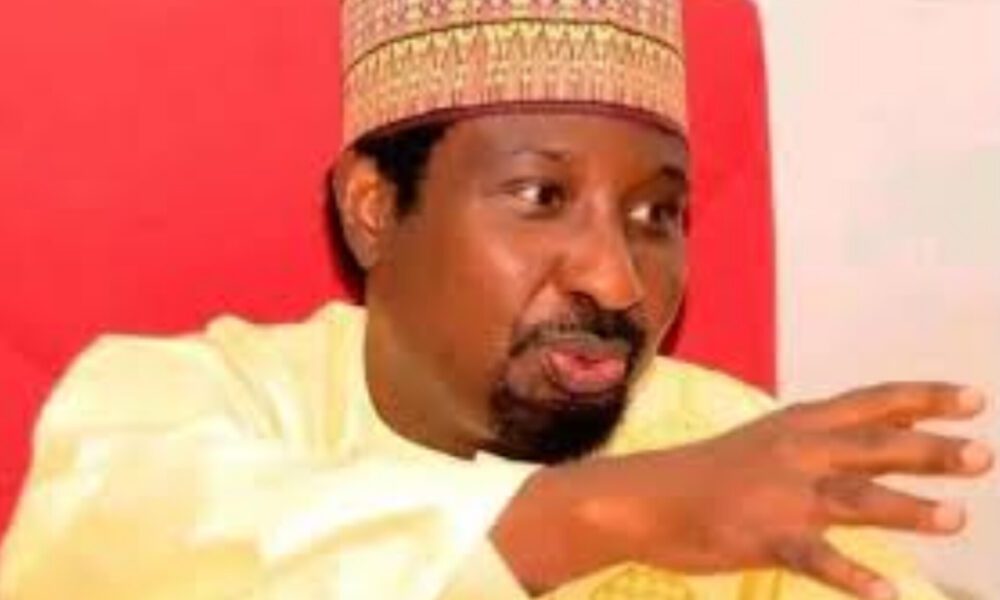
The Nigerian Senate on Tuesday unanimously approved President Bola Ahmed Tinubu’s request to deploy troops to the Republic of Benin, following an aborted coup attempt in the neighbouring country, affirming that the President acted within the powers granted by the 1999 Constitution (as amended).
The approval came two days after Nigerian forces were deployed to assist Beninese authorities in thwarting an unconstitutional seizure of power in Cotonou. The Senate’s consent, granted during plenary after deliberation in the Committee of the Whole, formally regularised the emergency intervention.
Senate President Godswill Akpabio read a letter from President Tinubu titled “Deployment of Nigerian Troops to the Republic of Benin for a Peace Mission”. The letter explained that the deployment followed an “exceptional and immediate” appeal from Benin’s government, which faced a serious threat to constitutional order.
“The situation as reported requires urgent external intervention,” the President wrote, noting that Nigeria’s response was guided by historic ties of brotherhood and the collective security principles of ECOWAS. Although troops had already commenced operations under emergency circumstances, Tinubu formally sought Senate approval in line with Section 5(5) of the Constitution, which allows the President to deploy forces during urgent threats, provided legislative consent is obtained within seven days.
After reading the letter, the Senate resolved into the Committee of the Whole and approved the request unanimously. Akpabio praised the swift action, saying it prevented a potential humanitarian crisis along Nigeria’s western border. “President Tinubu’s action saved Nigeria from thousands of refugees and ensured peace along our borders. An injury to one is an injury to all,” he said.
Senate Leader Opeyemi Bamidele clarified that the request was not a declaration of war but a constitutional requirement to ratify an emergency action. “Section 5 permits emergency deployment where national security is threatened. The President requested consent for what was already done, and the Senate acted within the time allowed by law,” he said.
Senator Jimoh Ibrahim framed Nigeria’s action within West Africa’s broader security context, noting the country’s duty as the region’s leading power to protect democracy and stability. “If global powers intervene repeatedly to defend democratic values, Nigeria cannot stand idle when democracy is under threat at its doorstep,” he said, adding that instability in Benin would directly affect Nigeria’s security and economy.
Former Bayelsa Governor and Senator Seriake Dickson emphasized national unity over politics. “The President acted correctly by consulting the National Defence Council and formally informing the National Assembly. In matters of national security, there should be no partisanship,” he said, while also urging West African leaders to strengthen constitutional governance in the sub-region.
A brief procedural point arose suggesting further discussion was out of order. Akpabio ruled that since the decision was unanimous, debate could not reopen, though senators could make contextual remarks. “Debate arises only where there is dissent. Here, there was total unanimity. Once the matter was decided, it was sealed,” he affirmed.
The Senate reaffirmed its support for President Tinubu’s deployment, describing it as constitutional, timely, and consistent with Nigeria’s historic role in regional peacekeeping. Lawmakers agreed the intervention was necessary to prevent democratic collapse in a neighbouring state and safeguard Nigeria’s security interests.
Senate Approves Nigerian Troop Deployment to Benin, Upholds Emergency Powers