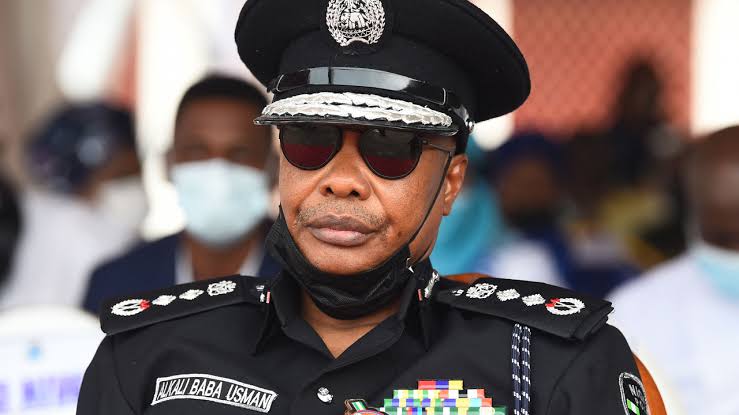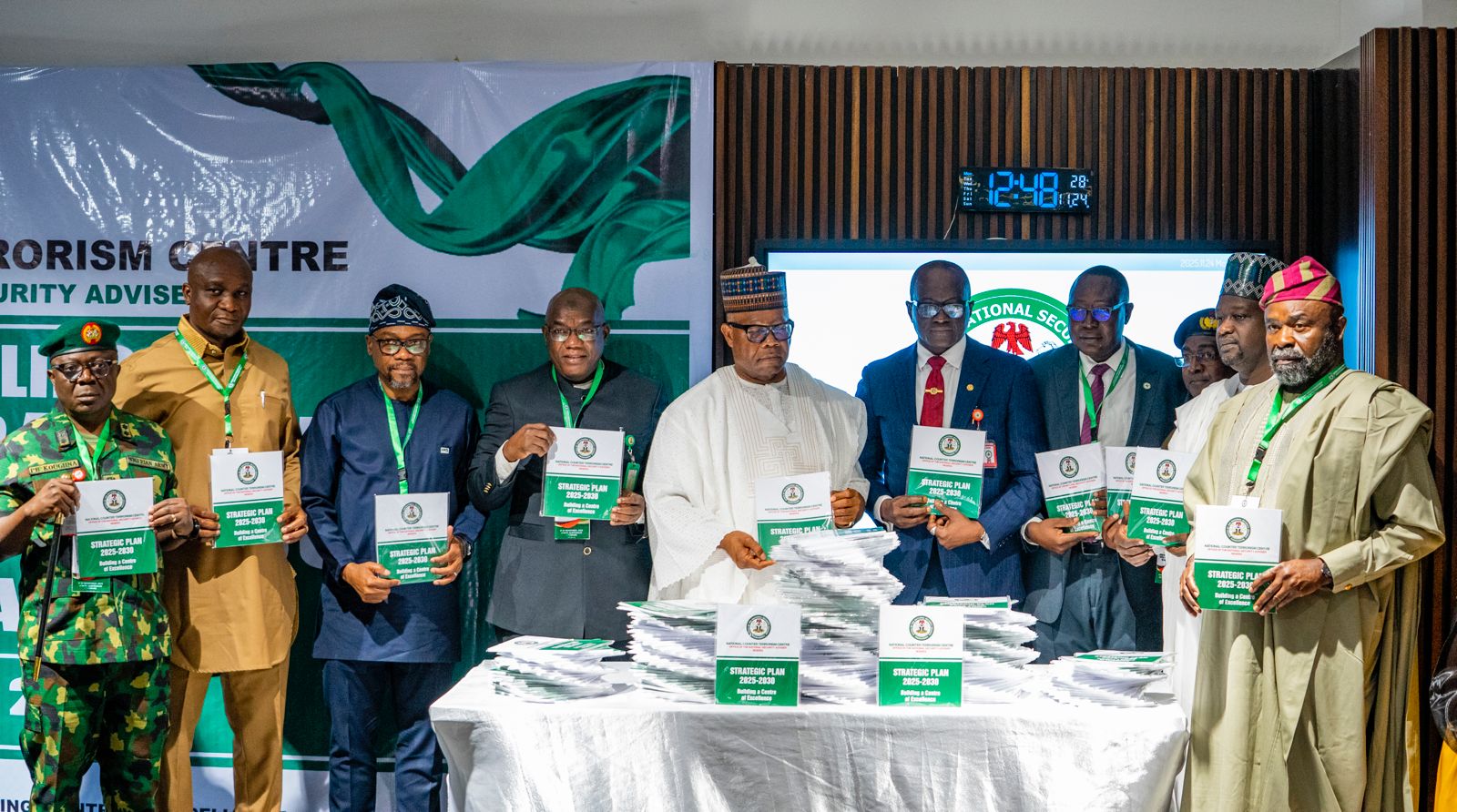
While Nigerians welcome the intensified military push against terrorists at home, President Bola Ahmed Tinubu is quietly activating a second front—one that stretches beyond Nigeria’s borders and focuses on the often-overlooked roots of insecurity.
In a strategic move aimed at sealing Nigeria’s porous frontiers, a special presidential team has arrived in Cameroon for a high-stakes security assessment mission. This followed a fresh national security directive designed to curb cross-border infiltration and reinforce Nigeria’s territorial defences.
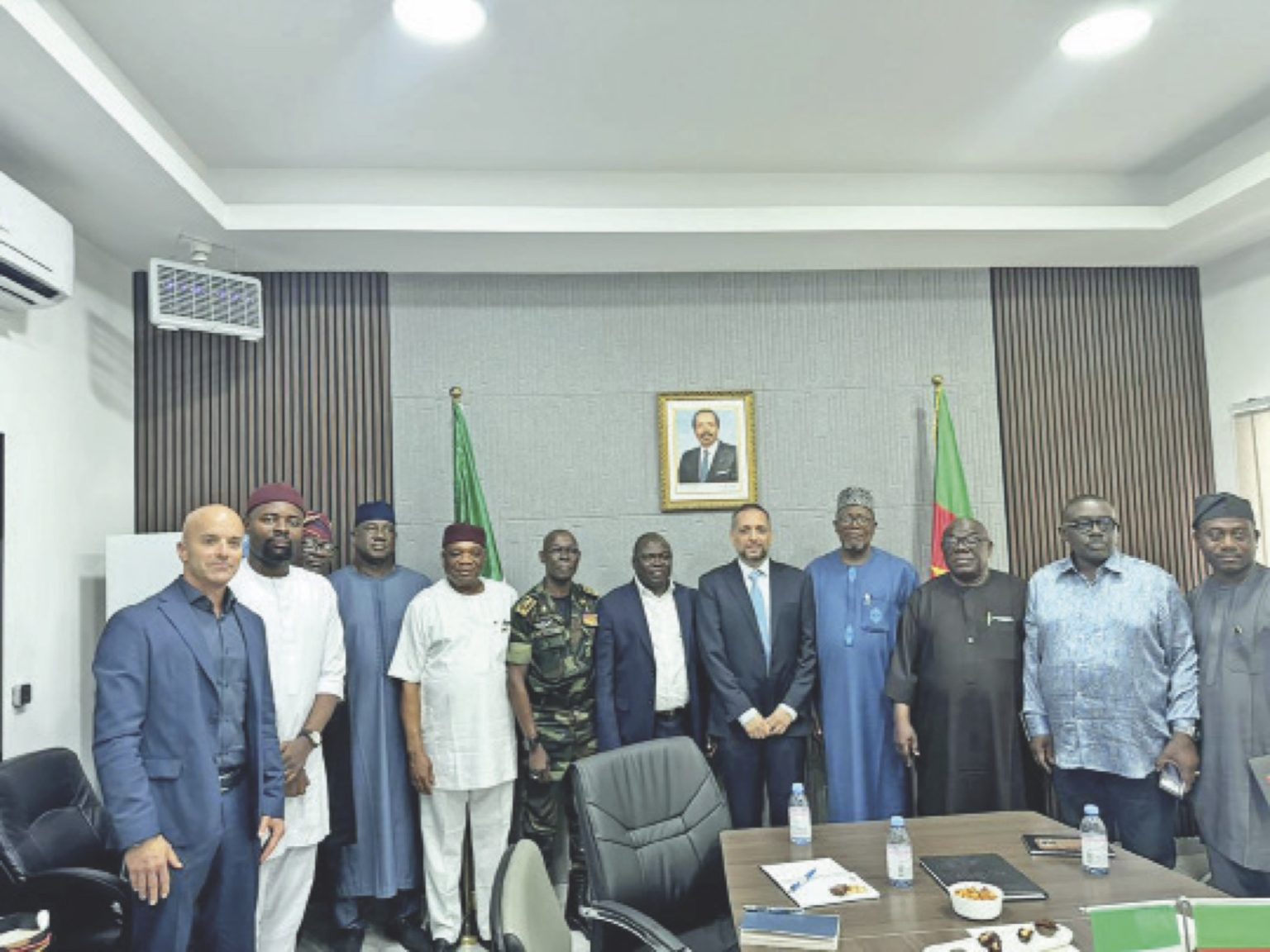
The delegation brings together some of the country’s most influential political and security actors, including Taraba State Governor Agbu Kefas, former Abia Governor and Senate leader Orji Uzor Kalu, Chairman of the Senate Committee on National Security and Intelligence Senator Yahaya Abubakar Abdullahi, and Taraba Speaker Rt. Hon. Bonzema John.
They are joined by security-intelligence specialists from ETOS (an Israeli security firm), Taraba lawmaker Rt. Hon. Peter Abel Diau, a representative of the Chief of Defence Intelligence, Col. J.G. Kwelle, and Nigeria’s defence attaché in Cameroon.
The team was formally received at the headquarters of Cameroon’s elite Rapid Intervention Battalion (BIR)—a force internationally praised for its counter-terrorism operations. The BIR’s General Coordinator, Brigadier General Relence François, briefed the Nigerian team on the battalion’s battlefield strategies, border-security model, amphibious operations, and intelligence-driven deployments.
François said Cameroon’s approach has delivered “measurable and consistent success,” adding that Nigeria can adapt similar frameworks to tighten security in border states like Taraba, Borno, and Adamawa, where insurgents often exploit difficult terrain and weak border surveillance.
Governor Kefas described the mission as “timely and transformative,” noting that the insights gained would fast-track Taraba’s efforts to safeguard its extensive border with Cameroon. Senator Kalu, speaking separately, affirmed the Senate’s readiness to support any collaborative framework that strengthens Nigeria’s regional security posture.
Senator Yahaya Abdullahi emphasized that no country can defeat transnational crime alone, calling for deeper intelligence sharing, improved surveillance technology, and coordinated border patrols.
Members of the delegation unanimously echoed the call for stronger Nigeria–Cameroon cooperation as part of the broader war against terrorism and banditry.
Beyond the troop deployments and aerial strikes at home, this diplomatic and intelligence-driven mission signals a subtle but significant shift: Tinubu’s security plan is moving beyond reaction and toward prevention—building alliances, securing borders, and shutting down safe corridors for criminals long before they strike.
Tinubu Sends High-Level Delegation to Cameroon to Strengthen Border Security