By Fatima Ndagi
The House of Representatives Ad-hoc Committee on the Implementation and Oversight of the Naira-for-Crude-Oil Policy has demanded a complete breakdown of all crude oil seizures, sales, and disposal activities from the Economic and Financial Crimes Commission (EFCC), accusing the agency of submitting incomplete documentation.
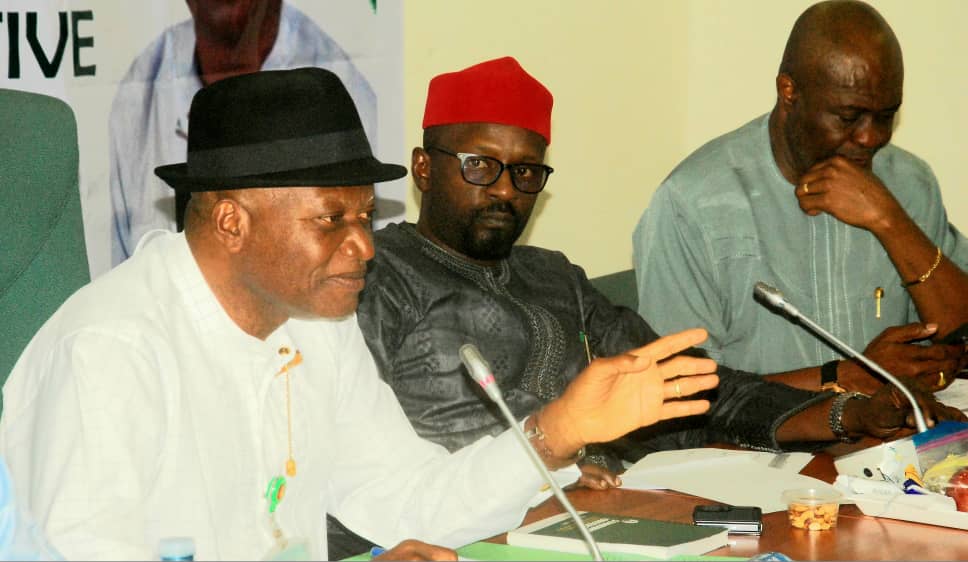
The directive was issued on Wednesday by the committee chairman, Rep. Emerengwa Boniface Sunday, during the committee’s resumed investigative hearing in Abuja.
The Naira-for-Crude policy—introduced in 2024 to stabilise the naira, support domestic refineries, and ease pressure on foreign exchange reserves—is under parliamentary scrutiny amid concerns over transparency and compliance.
Appearing before lawmakers, Special Adviser to the EFCC Chairman on Regulatory Compliance, Francis Usani, said the Commission’s submission contained referrals and oil-related seizures dating back to 2003. However, he admitted that the EFCC had conducted no direct investigations tied specifically to the Naira-for-Crude programme.
“We have not had any direct investigation or issue involving the Naira-for-Crude policy,” Usani told the committee. “Our submission was holistic and not restricted to transactions under that initiative.”
But members of the committee rejected the submission as inadequate.
Rep. Muhammed Bello Shehu faulted the EFCC’s documentation, noting that the tables submitted contained blank entries—particularly in columns meant to capture the volume and grade of crude seized. He questioned how the EFCC determined remitted amounts without key valuation information.
“The entries show ‘nil, nil’ for volume and grade,” Shehu said. “Yet there should be a section stating the value of whatever was seized. The document needs a thorough review; in its current form, it is incomplete.”
Shehu also expressed concern that the EFCC, as the nation’s foremost anti-corruption watchdog, had not proactively investigated the Naira-for-Crude initiative since its inception.
“This is a major policy intended to support local refining and reduce pressure on the naira. Nigerians deserve clarity on what is happening,” he said.
In response, Usani explained that the agency primarily handles crude oil seizures—not refined products—and promised to submit updated records showing volumes seized, disposal procedures, end users, and whether transactions were conducted in naira or dollars.
Committee Chairman Emerengwa stressed that the probe was not targeted at any individual or agency, but aimed at strengthening transparency in national economic policies.
“This is an oversight exercise to strengthen Nigeria’s economic systems,” he said.
The committee adjourned its hearing to December 4, 2025, pending the EFCC’s revised submission.