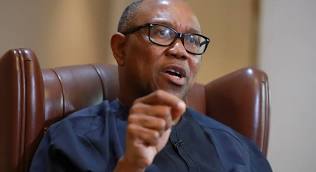
Former Labour Party presidential candidate, Peter Obi, has urged Nigerian editors to dig deep into the moral and systemic failures that have tarnished the country’s global image, challenging them to confront the hard truths behind why Nigeria is increasingly seen as “a disgraced nation.”
Speaking at the Nigerian Guild of Editors (NGE) Conference in Abuja on Thursday, themed “Reclaiming Our Nation’s Dignity: A Call to Conscience,” Obi described editors as the “custodians of national conscience.” He urged them to go beyond political rhetoric and expose the structural decay and value erosion that continue to fuel poverty, insecurity, and corruption.
“If someone calls us a disgraced country, we must ask whether there are issues within our society that justify that description,” Obi said. “Our concern should not just be about whether killings amount to genocide, but why such killings persist in the first place.”
The former Anambra State governor, who credited the media with shaping his political visibility, said journalists must now help redirect public attention toward rebuilding values and restoring public trust.
He condemned what he termed “executive recklessness,” likening it to “a situation where one feasts while asking others to fast.”
While acknowledging that policies like subsidy removal and currency unification could yield long-term benefits, he faulted their implementation, saying they lacked empathy and accountability.
“Borrowing is not a sin; every nation borrows,” he said. “The question is: are we borrowing to feast?”
In a post on his X (formerly Twitter) handle after the event, Obi reiterated his message of moral renewal, saying the media must “speak truth, guide reflection, and inspire hope.”
He referenced former U.S. President Donald Trump’s reported remark describing Nigeria as “a now disgraced country,” linking the comment to Nigeria’s worsening insecurity, mass killings, and deepening poverty.
“Our disgrace as a nation does not come from what others say about us,” Obi said. “It comes from what we have allowed—killings, impunity, corruption, hunger, and neglect of our people. Today, more than 130 million Nigerians live in poverty, and over 20 million children are out of school. These should trouble our conscience.”
Obi stressed that true national redemption must begin with truth, sacrifice, and leadership by example — not propaganda or excuses.
“Nigeria can rise again if we rebuild our moral foundation, invest in education and healthcare, and put people before privilege,” he asserted. “Editors are not just recorders of history; they are the conscience of the nation.”
He concluded with a call for transparent, compassionate, and accountable governance, saying such leadership would restore Nigeria’s dignity and global respect.
“When we lead with integrity, Nigeria will no longer be seen as a disgraced country but as a nation that, though it stumbles, strives to stand tall. A New Nigeria is possible.”
Obi Challenges Editors to Uncover Why Nigeria Is Branded a “Disgraced Nation”