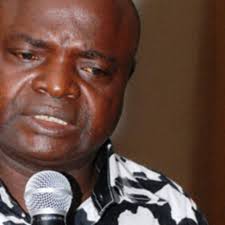
Resident Electoral Commissioner (REC) of the Independent National Electoral Commission (INEC) in Benue State, Prof. Sam Egwu, has accused every Nigerian president since 1999 of governing in breach of the Constitution and abandoning its fundamental promises of social justice, equality, and citizens’ welfare.
Speaking at the National Conference on the Future of Democracy in Nigeria in Abuja, themed “Sustaining Democratic Growth Beyond the Polls for Effective Governance,” Egwu lamented that successive governments have turned their backs on the Constitution’s core ideals while pursuing market-driven economic prescriptions dictated by global financial institutions.
“If you read the 1999 Constitution, which mirrors that of 1979, Chapter Two clearly commits the Nigerian state to the doctrine of democracy — the welfare of citizens, health, education, and social justice,” Egwu said.
“All presidents that have come since 1999 have refused to obey that constitutional mandate.”
Egwu argued that while the Constitution binds the nation to a social democratic ethos, Nigerian leaders have instead embraced liberal economic models that deepen inequality and erode social safety nets.
He also faulted the overcentralisation of power in the executive, describing it as the major reason Nigeria’s federal system remains weak and local governments disconnected from citizens.
“Our domestic policy space has been hijacked by the World Bank and the IMF,” he said, warning that Nigeria’s sovereignty is being quietly traded for policy dependency.
The INEC official called for a fundamental rethinking of Nigeria’s democratic practice, insisting that civil society — once the moral engine of democratic struggle — has grown feeble due to poor membership structures and declining funding. He advocated for local government reforms that empower communities to determine their own development priorities.
Also speaking, former presidential candidate Dr. Gbenga Olawepo-Hashim observed that many Nigerians are losing faith in democracy because it has failed to deliver tangible improvements in their lives.
He cited recent youth protests in which demonstrators waved the flags of Russia and China, describing it as a symbolic rejection of a democracy that appears hollow and elite-driven.
“Political parties have become vehicles for personal ambition rather than platforms for ideas or reform,” he said, calling for an independent electoral system that guarantees credible elections and accountable leadership.
Development expert Dr. Hussaini Abdu added that Nigeria’s democracy has been “captured by political elites” who manipulate institutions for personal gain, constantly rewriting electoral laws without ensuring enforcement.
“Democracy must translate into real freedoms, equality, and shared prosperity,” Abdu asserted.
Earlier, Executive Director of Peering Advocacy and Advancement Centre in Africa (PAACA), Ezenwa Nwagwu, explained that the conference sought to push democratic reforms beyond elections, focusing instead on governance and institutional integrity.
“Reforms must not be episodic or elite-driven; they must be citizen-centred, inclusive, and enduring,” he stated.
INEC Commissioner Faults Successive Presidents for Flouting Constitution, Betraying Social Contract