
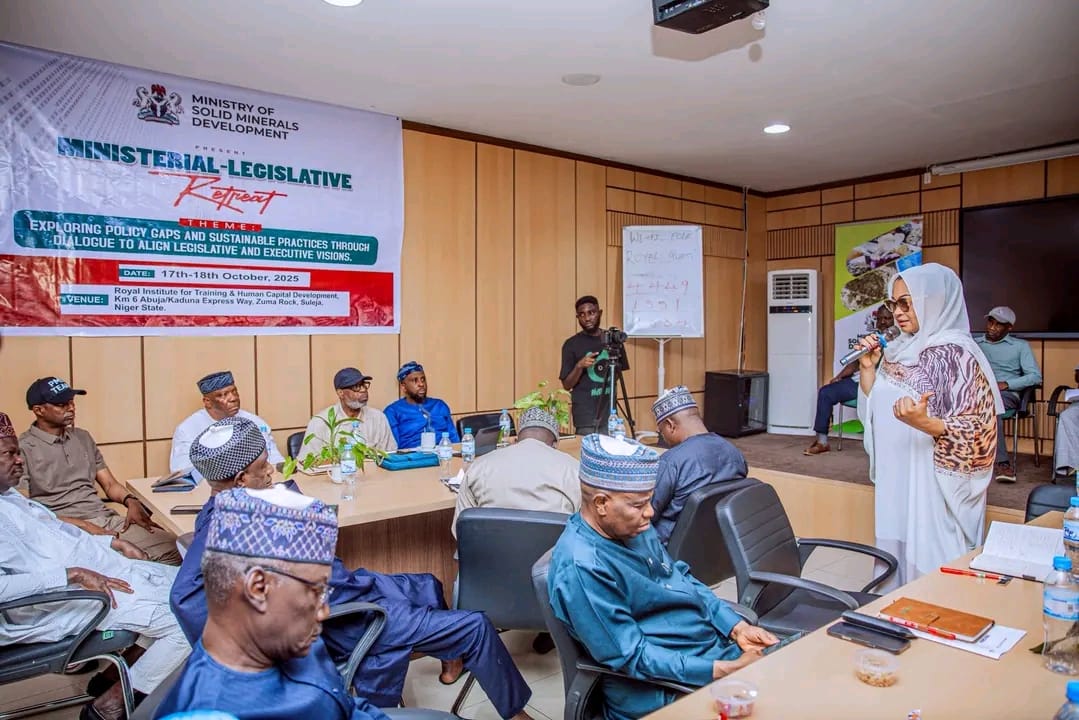
At the just-concluded Ministerial–Legislative Retreat on Solid Minerals Development, Senator Natasha Akpoti-Uduaghan issued a powerful caution that reverberated through the room:
Nigeria must not allow its solid minerals sector to repeat the mistakes of the oil industry.
The retreat, which brought together the Minister of Solid Minerals Development, Dr. Dele Alake, alongside Senator Ekong Sampson, former Sokoto State Governor Aminu Waziri Tambuwal, and other key policymakers, served as a rare platform for open dialogue between the executive and legislature on how to shape the nation’s next frontier of economic growth.
For Senator Akpoti-Uduaghan, representing Kogi Central, the conversation went far beyond policy — it was a warning born of history.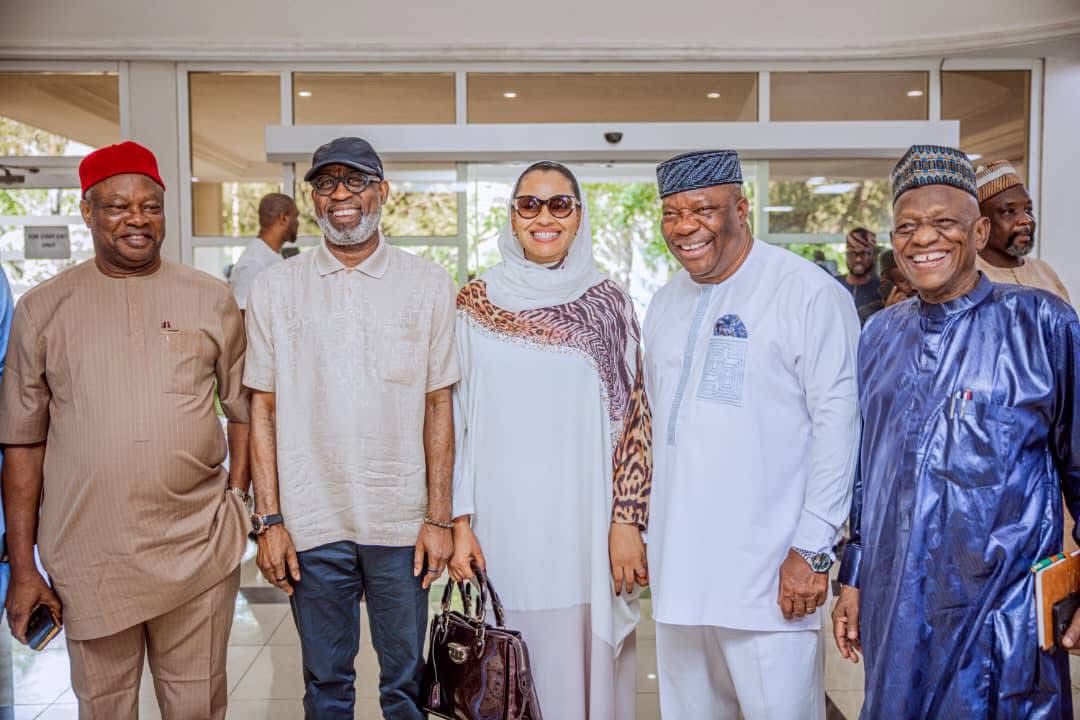
“While the Honourable Minister’s initiatives are driving with great speed and that is commendable, we must also apply the brakes,” she cautioned. “We must meticulously cross the T’s and dot the I’s to ensure we do not fall into the same pitfalls that we suffered in the oil sector.”
The senator emphasized that the surest safeguard against corruption and mismanagement is transparency which is the foundation of public trust and investor confidence.
She called on the Ministry of Solid Minerals Development to publish all Memoranda of Understanding (MoUs), contracts, and partnerships it has entered into, not only for legislative oversight but also for Nigerians to scrutinize.
“We would like all the various MoUs you have entered to be made available to Nigerians,” she said. “Deploy the Freedom of Information Act, because we are in an age where transparency must not be a slogan but a working principle.”
Akpoti-Uduaghan urged the Ministry to digitize and upload such documents on its official website, describing openness as the first step toward credible governance.
“We cannot begin to demand accountability if transparency is not in place,” she stressed. “Let Nigerians see what their government is signing on their behalf.”
Linking her advocacy to her home constituency, the senator lamented the paradox of poverty amid abundance in resource-rich regions.
“Kogi Central has over 52 solid minerals in commercial quantity,” she said. “Yet we are people impoverished in the land of plenty. Each time I interact with my communities, they always demand to know when they will begin to benefit from the abundant minerals beneath our soil?”
She revealed that many Nigerians remain unaware of the country’s gemstone wealth, including ruby, emerald, and tourmaline — already being mined in parts of Cross River State, yet yielding minimal benefits to the nation.
“For the first time, I got to know that my community stands to benefit from these resources,” she said. “But I also learned that these minerals are already being exploited — and I do not think Nigeria is deriving meaningful revenue from that.”
Senator Akpoti-Uduaghan’s remarks struck at the heart of Nigeria’s development dilemma: how to escape the “resource curse” that has long haunted the oil sector.
“In the solid minerals sector, we must proceed carefully,” she warned. “Transparency is not just an ethical choice; it is an economic strategy.”
She argued that the nation’s experience with oil, where opacity, rent-seeking, and weak regulation fueled corruption and community neglect, must never be repeated.
According to her, a new legislative framework for the Nigerian Solid Minerals Company is essential to establish operational standards, environmental safeguards, and clear accountability mechanisms.
“Legislation is crucial,” she said. “It will set administrative and operational standards and ensure that environmental and community interests are protected as we industrialize this sector.”
Turning her attention to fiscal governance, Akpoti-Uduaghan questioned the management of the National Resources Fund, which receives 1.68 percent of the Consolidated Revenue Fund of the Federation.
“This account, established during President Obasanjo’s administration, should by now contain trillions of naira earmarked for the development of our solid minerals sector,” she said. “How much have we generated into the Fund over time, and how much do we have now? Nigerians deserve to know — these are public resources.”
Her intervention highlighted a broader principle; that natural resources belong to the people, and any funds generated from them must be managed transparently and for public good.
Senator Natasha Akpoti-Uduaghan’s contribution at the retreat was both cautionary and visionary. She urged the Ministry and lawmakers to build a solid minerals sector defined by openness, not secrecy, by inclusion, not exclusion.
“It won’t take much to publish this information online,” she said. “When we show Nigerians what we are doing, we build trust and when we build trust, we build a stronger nation.”
Her message lingered long after the session ended: Nigeria’s solid minerals could define its economic future but only if managed with the honesty that oil never had.
Don’t Let Solid Minerals Become Another Oil Story, Senator Natasha Warns
kn99b6