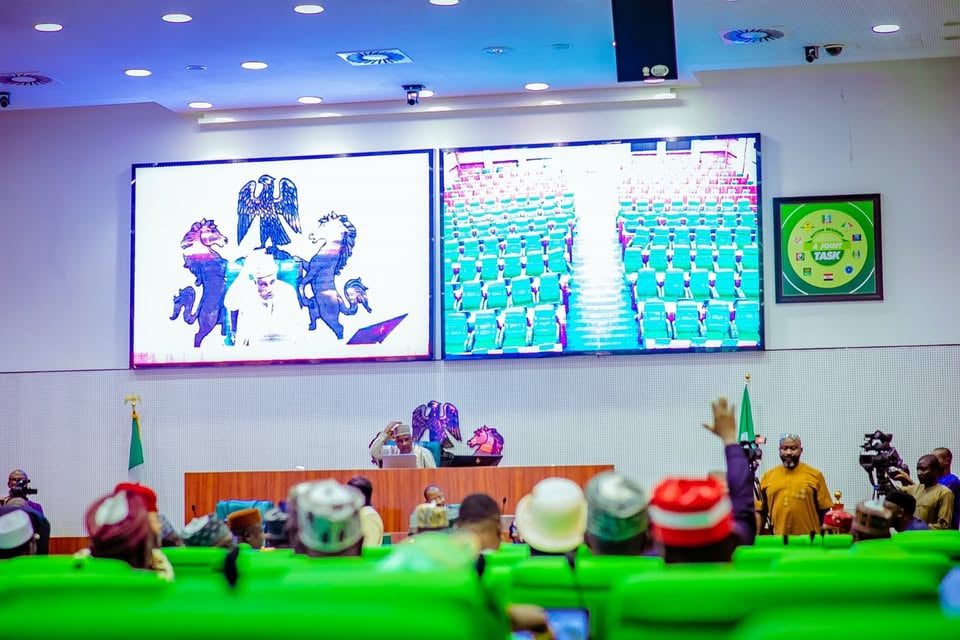
Speaker of the House, Rt. Hon. Abbas Tajudeen, on Tuesday set the tone for the new legislative session, declaring electoral, security, and economic reforms as the top priorities as lawmakers reconvened after their annual recess.
In his welcome address, Abbas said the 10th House would fast-track debates and voting on constitutional amendments, with 87 proposals on the table—including devolution of powers, local government autonomy, judicial reform, and socio-economic rights.
“We must complete these votes and transmit the approved amendments to the State Assemblies before the end of December to enable early concurrence ahead of the election period,” the Speaker told his colleagues.

Abbas stressed that the chamber must deliver a new Electoral Act ahead of the 2027 general elections to address ambiguities that trailed the last polls.
“The Electoral Act Amendment Bill seeks to strengthen measures against violence, improve access for persons with disabilities, establish clearer timelines for resolving disputes, and reduce costs through single-day voting. It will also make party primaries more democratic and inclusive,” he said.
He added that related constitutional changes would pave the way for an Electoral Offences Commission.
The Speaker also identified the Reserved Seats Bill for women as another critical reform. “We are all HeForShe in advancing gender inclusion. How we vote on this bill will shape how history and our daughters remember us,” he declared.
On security, Abbas said the House must move beyond rhetoric to action on multi-level policing. While acknowledging the debate over state police, he argued for a hybrid approach that devolves recruitment, training, and deployment of community police officers to states under federal oversight.
“This would give states a greater role in shaping their security architecture while preserving national standards and coordination,” he explained.
On the economy, Abbas said the House would pursue legislation to accelerate job creation and recovery through the Start-up Act, vocational hubs, and technology parks, as well as progressive measures to promote renewable energy and stabilise power supply.
“The Nigerian people expect deliberate action that improves their daily lives. These efforts require a legislature that provides rigorous oversight, crafts sound laws, and engages constructively with all arms of government,” he said.
The Speaker maintained that the 10th House has been the most productive since 1999, citing a midterm assessment that recorded 2,263 bills considered, 237 passed, and 50 signed into law—covering areas such as power, student loans, cybersecurity, and tax policy.
He noted that House oversight had led to financial recoveries, while constructive collaboration with the executive delivered timely budgets and aligned reforms “without compromising legislative independence.”
Abbas also pointed to improved national indicators during the recess, including headline inflation falling for the fifth consecutive month to 20.12 per cent, easing food inflation, and the restoration of UAE visa services and Emirates Airlines flights.
Despite this, he acknowledged that citizens still face high living costs, underemployment, and insecurity in parts of the country.
Abbas praised members for their maturity and cohesion in a politically diverse chamber. “The 10th House has demonstrated remarkable maturity in managing differences and earned a reputation for stability and responsible leadership,” he said.
“I urge us to remain united and continue addressing issues through dialogue, ensuring that the House stays strong and focused on delivering for the Nigerian people.”