

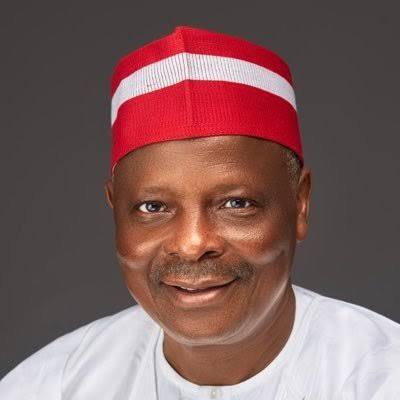

By: Ashahabu Lawal Rafukka
In every generation, there emerges a leader who carries the hopes of the downtrodden not as a burden but as a sacred trust. For northern Nigeria, and indeed for millions across the country, that leader has been Senator Rabiu Musa Kwankwaso. His politics, often misunderstood by the elite, has always been about service, loyalty, and an unrelenting commitment to the ordinary man and woman whose voices are often drowned out in the noise of partisan struggle.
When news broke in Kano that Kwankwaso had declared, “We are ready to join APC… if,” many rushed to interpret his words as another sign of political maneuvering ahead of 2027. But for those who have followed his journey, from the days of the red cap revolution to his current role as the anchor of the NNPP, his statement was not a signal of desperation for power. Rather, it was the voice of a man tested by betrayal, tempered by sacrifice, and now speaking with the moral clarity of one who has placed the interest of his people above personal ambition.

Kwankwaso reminded Nigerians that he was among the founding fathers of the All Progressives Congress, a coalition that once carried the dreams of millions hungry for change. He recalled the persecutions endured at the hands of state machinery, the battles fought when it was neither safe nor fashionable to stand on the side of the opposition. Yet, when the party finally triumphed, he and his loyal movement were cast aside, denied recognition, and sidelined in the very house they helped to build.
The bitterness of that betrayal did not break him. Instead, it sharpened his resolve. For Kwankwaso, politics has never been about personal accommodation but about ensuring that the people who trust him; the artisans, the farmers, the teachers, the jobless graduates who line the streets in their thousands whenever he speaks are never abandoned to the whims of opportunists.
His message to the APC was clear: any partnership must recognise the _Kwankwasiyya_ Movement, not as an appendage to be exploited and discarded, but as an equal force with dignity, history, and a living bond with the masses.
And therein lies the uniqueness of Kwankwaso. In a political culture where defection is often seen as opportunism, his insistence on conditions is an act of defiance against the transactional nature of Nigerian politics. He is not closing doors, but neither is he willing to sell out the very people who gave him relevance. His creed is simple: “My movement and its people are paramount to me, and I cannot abandon them for any political arrangement.”
The People’s Democratic Party, too, has not been spared his critique. He recalled how, even after swallowing pride to return, his people could not secure something as modest as a zonal party chairman seat. The lesson was searing: the established parties of today are more concerned with factional preservation than genuine inclusivity. By rejecting humiliation from both PDP and APC, Kwankwaso has shown that his struggle is not a scramble for office but a fight for his dignity and that of the ordinary Nigerian.
Those who mistake his stance for stubbornness miss the larger picture. Kwankwaso has evolved into something beyond a career politician. He has become a symbol of political independence in a system that often crushes individuality. His red cap is no longer just cloth; it is a banner of resistance, a rallying cry for the poor, and a statement that politics can be people-driven, not elite-manipulated.
What makes his current position even more profound is the fact that he could easily have succumbed. At 68, having contested for the presidency twice, and after decades in public life, many would argue he has little left to prove. Yet, rather than clutching at the straws of personal ambition, he has chosen to stand on principle. His words carry the weight of sacrifice: “We are ready to join APC under strong conditions and promises. We will not allow anyone to use us and later dump us.”
In the wider canvas of Nigerian politics, this is radical. Here is a man telling the ruling party that the price of his entry is not a personal appointment, not a ministerial slot, not even the promise of a presidential ticket, but the recognition of his people. By placing the downtrodden above himself, Kwankwaso has elevated the meaning of politics to something nobler than the pursuit of power.
For the _talakawa_ who make up the heart of the _Kwankwasiyya_ Movement, this is not rhetoric. They know the story of a man who, as governor, introduced free feeding in schools, scholarships for indigent students, empowerment programs for widows and small traders, and countless opportunities for the forgotten. They know the man who turned hundreds of youths into graduates abroad through overseas scholarships, giving poor families a chance to dream. These are not abstract achievements; they are living testimonies in thousands of homes across Kano state and beyond.
And so, when Kwankwaso speaks of not abandoning his people, he speaks with the moral capital of one who has already invested in their lives. That is why they fill stadium to hear him, why they march in his red cap, why they defend him in conversations across streets and motor parks. To them, he is not just a politician; he is a servant who has never ceased to serve.
Therefore, the road to 2027 will no doubt tempt many with promises and alliances. But Kwankwaso’s current posture is a reminder that the real measure of leadership is not how many offices one holds but how firmly one protects the trust of the people.
Indeed, by refusing to trade away his movement cheaply, he has preserved the dignity of the _talakawa_ who stand behind him. In doing so, he has also offered Nigeria a mirror, showing what politics could look like if principles were valued over expedience.
Perhaps his destiny is no longer in chasing the presidency. Certainly, his role now is even greater: to remain the conscience of the North, the defender of the neglected, the one man who can stand before the elite and declare, “My people are not for sale.” Therefore, in a country starved of integrity, that is leadership enough.
Undoubtedly, Kwankwaso’s refusal to bow to the seduction of power at all costs is more than a political strategy rather it is a lesson. It tells us that the truest ambition is not personal glory but collective uplift. It affirms that, in a nation where betrayal has become second nature, loyalty to the masses is still possible.
And so, when the story of this political era is written, Kwankwaso will not be remembered merely as a two-time presidential candidate or a former governor of Kano state. Instead, he will be remembered as the man who chose his people over power, who refused to abandon the downtrodden at the altar of ambition, and who showed Nigeria that politics can be more than a game; it can be service, sacrifice, and fidelity to the very end.
*Ashahabu Lawal Rafukka, a veteran Journalist, and former Kano State Bureau Chief of NAN, writes from Katsina*