


By Ineye Baritor
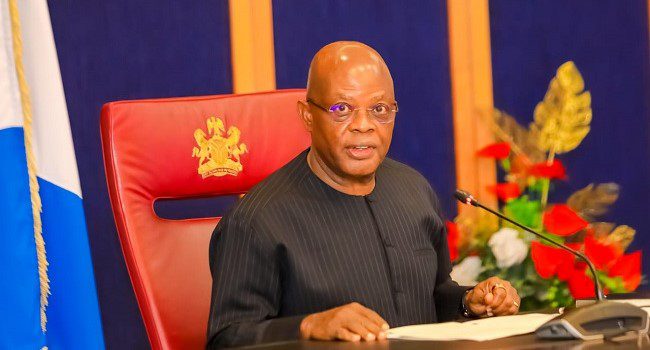
In the intricate theatre of public administration, governance resembles a symphony — a layered performance that demands coordination, harmony, and an unwavering sense of purpose. Like every successful orchestra, it needs a conductor who understands tempo, mediates discord, and guides various instruments toward a unifying and uplifting melody. In the case of Rivers State during a turbulent political interregnum, that conductor has been Ibok Ette Ibas, the Sole Administrator.
Appointed under extraordinary conditions, Ibas stepped into a vacuum not of his making. Rivers State was engulfed in a complex crisis. Political hostilities had rendered institutions dysfunctional, public confidence had waned, and service delivery had slowed to a crawl. There was palpable tension, and expectations were low. Few could imagine that anything meaningful could be achieved in such an atmosphere of chaos and mistrust.


Yet, what unfolded under Ibas was not just a caretaker tenure. It became a recalibration, a period of quiet but firm governance anchored on one guiding philosophy: put the people first.
The appointment of a Sole Administrator was controversial, no doubt. It was met with suspicion, constitutional concerns, and political resistance. However, Ibas was not distracted by the noise. He did not seek to please every political faction, nor did he attempt to entrench himself in the public consciousness through flamboyant public relations. Instead, he turned his focus toward the things that mattered most, service delivery, institutional stability, and restoring the dignity of government.
He governed not with bluster, but with balance.
In those early weeks, his administration’s silence was loud. While some critics mistook it for passivity, it soon became clear that it was intentional discipline. There were no self-congratulatory speeches. No grandstanding. No headlines bought for image laundering. Just steady steps toward fulfilling a singular mandate: restore functionality in governance.
One of the most impactful areas was the handling of pension payments, a long festering wound in the heart of public service in Rivers State. Retirees, many in the twilight of their lives, had endured neglect for years. Verification exercises became nightmares, payment processes were opaque, and corruption took root in the gaps. Under Ibas, that changed drastically.
A painstaking verification process was carried out, humane yet thorough. The result was the payment of over two point eight billion naira to five hundred and eighty three pensioners across the state. These payments were made without ceremony, without gatekeepers, and most importantly, without the physical and psychological stress that had previously become the norm. Beneficiaries received their dues directly in their accounts, from the comfort of their homes. It was not merely a financial transaction. It was an act of justice and restitution.
The pension reform alone speaks volumes about the ethical foundation of the Ibas administration. Where previous systems thrived on delay and opacity, Ibas introduced transparency and timeliness. He did not reinvent the wheel. He simply ensured that it turned.
But the legacy of the Ibas administration goes beyond pensions. Across the state, essential services saw a quiet revival. Salaries were paid on time. Health facilities received timely attention. Roads and infrastructure projects resumed in critical areas. The aim was not to impress. It was to impact. While others debated who should hold power, Ibas held the state together.
Communication, often the Achilles heel of many past administrations, was also transformed. Rather than operating in isolation, the Ibas government launched the Rivers First radio talk show, hosted town hall meetings across the senatorial districts, and commissioned weekly opinion publications to provide updates and invite citizen feedback. These platforms became bridges between government and the governed. They allowed the people to speak and more importantly, to be heard.
In doing this, Ibas reaffirmed a forgotten truth. Governance is not a monologue. It is a dialogue.
His style of leadership did not seek applause, yet it earned respect. He did not engage in media wars, yet his administration stayed in the news for the right reasons. In a political climate often marked by vanity, vitriol, and vendettas, Ibas offered sobriety, sincerity, and service.
And that is why, as his tenure winds down, Rivers State must pause and reflect. There are lessons here, lessons that must not be forgotten when a new administration resumes constitutional leadership. The values of people centered governance, fiscal responsibility, communication clarity, and political neutrality are not ideals for emergencies alone. They are the blueprint for sustainable development.
Indeed, one of the strengths of the Ibas approach was that it did not seek to do everything. It focused on doing the essentials well. This minimalist approach, under normal circumstances, may not seem revolutionary. But in a crisis, it becomes transformational. It allowed for clarity, removed distractions, and channeled energy where it was needed most.
Moreover, his refusal to play politics with governance sent a strong message. Despite being surrounded by political landmines, he never took sides. His loyalty was to Rivers State, not to any party or individual. That restraint is both rare and admirable in today’s political climate.
Critics may say that the emergency administration was not subject to the same political pressures as elected governments. And that may be true. But it is also true that many with similar latitude have squandered it. Ibok Ette Ibas chose, instead, to model a form of leadership rooted in integrity and modesty.
This is not to say his administration was without flaws. No government is. But when measured against its original mandate, to stabilise, restore, and serve, there can be little doubt that it performed with commendable diligence.
As September eighteen approaches, the spotlight will inevitably shift to what comes next. But as Rivers steps forward, it must not walk away from the gains already made. The systems and values introduced by Ibas must be strengthened, not discarded. They must become part of the state’s governance DNA.
Ibok Ette Ibas may be stepping off the stage, but his legacy must remain a reference point. He showed that it is possible to govern without dominating headlines. That one can lead effectively without cultivating a cult of personality. That public service is not a performance but a responsibility.
His departure will be quiet, in the same manner that he led. But the results of his leadership will continue to speak. In homes where pensioners now sleep better. In public offices where salaries are paid on time. In communities that once felt forgotten, but now feel seen.
The real applause, perhaps, is not in public praise, but in private gratitude. And by that measure, Ibok Ette Ibas has already received his standing ovation.
Ineye Baritor writes from Port Harcourt