


By Barido Tamunotonye
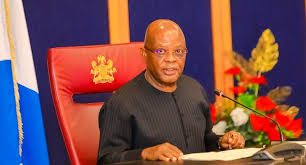
In the turbulent theatre of Nigerian politics, few states have endured the kind of prolonged political trauma that Rivers State has witnessed in recent times. From bitter intra-party feuds to violent street clashes and legislative paralysis, the state teetered on the edge of breakdown. Into this charged atmosphere, Vice Admiral Ibok-Ete Ibas (retd.) was thrust in March 2025, appointed as Sole Administrator under a federally-declared state of emergency.
For many observers, the immediate question was not what Ibas would do, but whether the centre could hold. With both the governor and the state assembly suspended, public trust at an all-time low, and political factions trading accusations of betrayal and sabotage, expectations were minimal. Yet, in just under five months, something remarkable has begun to unfold: the slow, deliberate healing of a wounded state.
Unlike conventional administrators who rely heavily on the machinery of bureaucracy and coercive power, Ibas has leaned into what may be described as the soft power of leadership—the ability to persuade, symbolise, and empathise. He has embraced reconciliation not as an event, but as a process.
One of his earliest acts in office was to convene listening sessions with traditional rulers, women leaders, and youth representatives. These were not perfunctory town halls designed to tick a box but sincere engagements where raw emotions, buried grievances, and communal frustrations found voice. At one such session in Tai LGA, an elderly chief who had been side-lined for years declared: “Today, I feel seen. The government has ears again.” It is in such moments that the power of presence and listening becomes a tool for mending broken trust.
Rather than privileging political actors, Ibas has chosen to elevate voices long marginalised in the political discourse. The Christian Association of Nigeria (CAN), Muslim leaders, and civil society actors have all been brought into confidence, not merely for ceremonial roles but as conduits for rebuilding fractured communal relationships. Religious organisations have been given the task of promoting forgiveness, co-existence and moral reorientation, a move that acknowledges the deep spiritual and cultural currents that run through Rivers communities.
His soft power strategy is not limited to dialogue. It extends into symbols and actions. In April, the administrator attended the funeral of a community youth leader killed in a pre-emergency political clash. His quiet attendance, without media fanfare, was described by local observers as “an act of state empathy”—a departure from the aloofness that had come to define political leadership in the state.
Equally significant was Ibas’s personal visit to the home of a former political appointee from the opposing camp who had been hospitalised. The visit was not publicised, but it sent a powerful signal across political divides that governance had returned to decency and maturity.
His meetings with rival political actors have been largely off-camera, away from microphones, and devoid of chest-thumping communiqués. This is deliberate. It signals a shift from performance politics to substantive dialogue.
Security interventions, too, have carried the imprint of reconciliation. Rather than treat flashpoints purely as security liabilities, Ibas has sought to understand the historical roots of agitation—whether land disputes, environmental degradation, or exclusion from state largesse. In several cases, he has directed mediatory panels involving neutral elders and stakeholders to resolve long-festering issues, a model reminiscent of traditional conflict resolution mechanisms.
A particularly notable instance occurred in Okrika, where a brewing conflict between two youth groups threatened to spiral into violence. Instead of dispatching only police reinforcements, the administrator sent a combined team of conflict resolution specialists, community elders, and youth mentors. The result? A jointly signed peace accord and a framework for local economic cooperation.
The rehabilitation of the East-West Road and renewed dredging of Port Harcourt waterways are not only infrastructure projects; they are also confidence-building measures. By linking remote and restive communities back to the economic heartbeat of the state, these projects are reducing the physical and psychological distance between the people and the state.
Even his fiscal policies reflect a reconciliatory philosophy. The inclusion of labour unions and civil society in budget-monitoring processes is not merely a governance reform; it is an invitation to co-ownership of the state’s development. When people feel they are stakeholders in decision-making, the appetite for confrontation diminishes.
The pension reform recently unveiled under his administration is yet another stroke in his reconciliation palette. By eliminating the indignity of pensioners travelling long distances to verify and collect stipends, and by transferring payments directly to verified accounts, Ibas has sent a clear message: the state will no longer subject its senior citizens to humiliation. One retired teacher from Khana LGA put it poignantly: “For the first time, I don’t feel forgotten.”
This historic intervention will see over ₦2.8 billion paid to 583 verified retirees, all electronically, ending years of stress and indignity for pensioners who previously travelled and queued endlessly. The payment reform was overseen by Ibas himself to ensure transparency and empathy in equal measure. Pensioners’ groups across Rivers have lauded this effort as a new era of human-centred governance, reinforcing the state’s commitment to service above politics.
It would be naïve to pretend that all tensions have vanished or that Ibas’s efforts are universally lauded. Political resistance remains. Some see his style as too quiet, too modest, even too slow. But leadership, especially in transitional times, is not about grandstanding; it is about stitching together the torn social fabric. And that takes time, empathy, and steadiness.
As Rivers State gradually emerges from the ruins of division, the question ahead is whether this fragile peace can hold beyond Ibas’s tenure. That depends on two things: the extent to which the political class is willing to learn from his inclusive, dignified approach, and the readiness of Rivers citizens to reject the politics of bitterness that brought them to the brink.
If anything endures from this season of emergency administration, let it be the reminder that governance can be kind, that leadership can heal, and that even in the aftermath of crisis, a new civility can be forged. Vice Admiral Ibas may not have run for office, but in the minds of many, he is quietly redefining what it means to lead.
Barido Tamunotonye writes from Port Harcourt