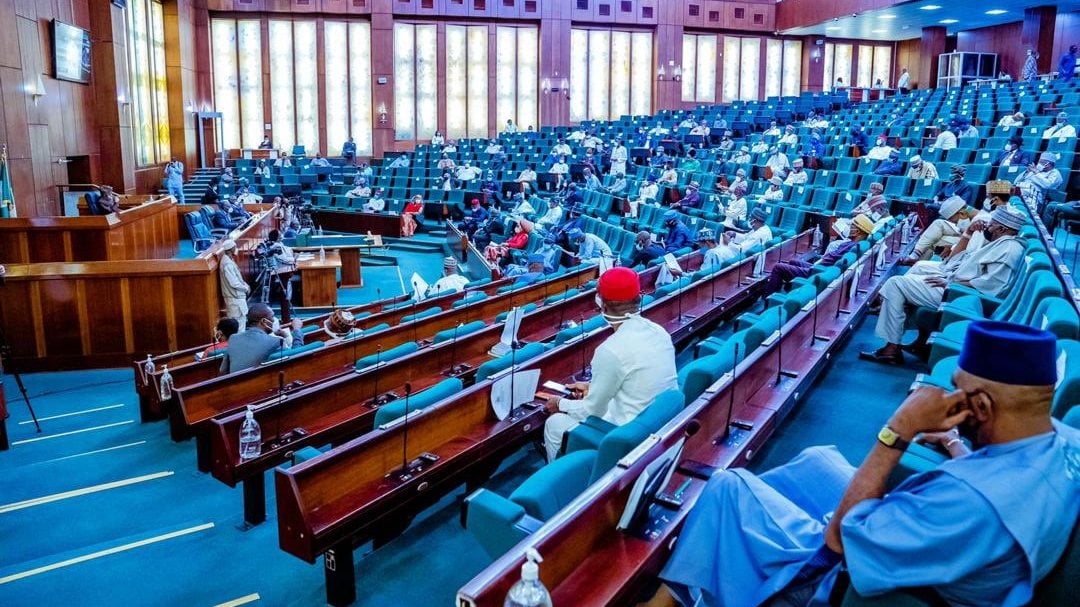

In a bold legislative stride toward a sustainable future, the House of Representatives has kick-started efforts to anchor Nigeria’s energy transition on inclusive green job creation, placing youth and women at the centre of the agenda.
Speaking at the Africa Policy Dialogue Kick-off Workshop held Thursday at the National Assembly Complex, Chairman of the House Committee on Renewable Energy, Hon. Afam Victor Ogene, unveiled plans for a landmark bill — the National Inclusive Green Jobs Act (NIGJA) — aimed at embedding equity in Nigeria’s shift to a low-carbon economy.

“This is not just another policy dialogue,” Ogene declared. “It is the beginning of a legislative and national framework that will shape our economic transformation.”
The workshop, attended by key stakeholders from the United Nations Development Programme (UNDP), civil society, renewable energy companies, and foreign diplomats, builds on the momentum from the Legislative Conference on Renewable Energy held earlier this year in Lagos.
According to Ogene, NIGJA will legislate job quotas for youth and women in renewable energy projects, mandate MDAs to adopt sustainable power sources, and link clean energy investments to local manufacturing and skills development — critical pillars for boosting Nigeria’s competitiveness under the African Continental Free Trade Agreement (AfCFTA).

“Green jobs are not abstract,” Ogene emphasized. “Every solar panel installed, every mini-grid deployed, every EV charged means jobs created, livelihoods sustained, and futures secured.”
While Nigeria’s renewable energy sector currently supports about 70,000 jobs, Ogene cited massive potential for scale: the Solar Power Naija and DARES initiatives are expected to electrify over 17 million homes and create thousands of jobs. Meanwhile, the Next-Gen RESCO programme is projected to deliver 10,000 new green jobs alone.
Still, significant disparities remain. Youth represent only 28% of formal jobs in the distributed energy sector, and women between 27–37%. Yet only 8% of women hold technical STEM roles — a statistic Ogene calls “deeply troubling.”
“We must not only create green jobs,” he stressed. “We must ensure they go to those who need them most.”
If passed, the National Inclusive Green Jobs Act will: Mandate job quotas for women and youth in all national renewable energy projects, Create public-private training pipelines aligned with labour market needs, Embed green job metrics in government procurement and energy policy, Support local content and incentivize domestic manufacturing and Establish accountability mechanisms for job impact and inclusion
Ogene credited the Speaker of the House, Rt. Hon. Tajudeen Abbas, for setting the tone by creating the Committee on Renewable Energy — a first in Nigeria’s legislative history. Abbas, represented by Deputy Minority Whip Hon. George Ozodinobi, reaffirmed the House’s commitment to bold climate action grounded in social and economic justice.
Victoria Manya of the INCLUDE Knowledge Platform challenged policymakers to embed social equity at the heart of Nigeria’s energy reform. She warned that without intentional inclusion, the low-carbon transition could replicate existing inequalities.
“No be who dey shout ‘transition’ go chop the green jobs — na who prepare ground well,” Manya said, invoking a Nigerian proverb to underscore the urgency of systemic readiness.
Manya cited the country’s soaring youth unemployment rate — over 42% for those aged 15–34 — and gender exclusion in technical fields as critical challenges. She noted that fewer than 5% of Nigeria’s vocational training programmes currently align with the needs of the renewable energy sector.
She called for urgent investment in what she described as the “infrastructure of inclusion” — training, policy coherence, labour equity, and enforcement.
Drawing lessons from global leaders like Germany, Morocco, and South Africa, Manya argued that deliberate labour mandates and retraining schemes can make or break a just transition. “We must move from consultation to co-implementation. Climate action must feed families, not just tick boxes,” she said.
As Nigeria pursues its Energy Transition Plan — aiming for 30% renewable energy by 2030 — experts agree that green jobs could be one of the most powerful tools to fight unemployment, poverty, and climate injustice simultaneously.
Hon. Ogene closed the session with a call to action:
“When our youth and women help build Nigeria’s energy future, they power not just the grid — they power our economy, our communities, and our dreams.”
With the legislative process now in motion, the spotlight turns to the National Assembly and its partners to ensure that the next phase of Nigeria’s green economy isn’t just sustainable, but also inclusive.