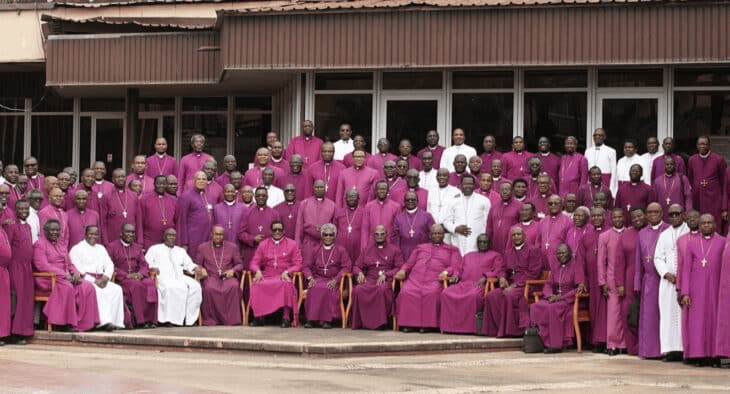
In what many see as a timely intervention amid growing concerns over political theatrics in churches, the Church of Nigeria (Anglican Communion) has issued firm new guidelines on how politicians and government officials are to be received during worship services and official church programmes.
This move comes in the wake of recent incidents, including a widely publicised outburst by Minister of the Federal Capital Territory (FCT), Nyesom Wike, whose fiery remarks during a church thanksgiving in Asokoro sparked national conversation about the misuse of religious platforms for political brawling.
In a memo signed by the Primate of the Church, The Most Revd Dr Henry Ndukuba, and issued after the Episcopal Consultation held in the Diocese of Nike, Enugu, the Anglican Communion warned against turning the altar of God into a battleground for political ego and personal vendettas.
“The Church must not be used as a platform for partisan propaganda or political grandstanding,” the memo stated. “We must protect the sanctity of worship and the neutrality of the Church in the eyes of both the faithful and the nation.”
The guidelines, which now apply across all Anglican parishes in Nigeria, lay out clear boundaries:
Politicians and officials are still welcome at services, but they must not use the pulpit to make political statements or promote party agendas.
Any guest expected to speak must be briefed in advance and given strict guidance on the tone and content of their remarks.
Eulogies or excessive praise of political guests are strongly discouraged to prevent any perception of alignment or endorsement.
Where possible, politicians should not speak from the Church’s lectern, which is consecrated for the reading of Scripture.
Clergy are to maintain neutrality, avoiding any conduct that could imply political bias or divide the congregation.
While the memo does not directly mention any individual or incident, the timing and tone suggest a clear response to the rising trend of politicians using religious platforms to issue warnings, make veiled threats, or seek validation.
Observers say the Church’s move is a bold attempt to reclaim its spiritual space and prevent the politicisation of its sacred rituals—something that has become more pronounced during electoral seasons and post-election thanksgiving events.
Despite these boundaries, the Church reaffirmed its commitment to offering moral guidance to leaders and praying for the nation.
“The Church remains open to engaging government on issues affecting the people, but not at the expense of its core mission as the light of the world and the salt of the earth,” the memo added.
In a political climate where places of worship are increasingly being drawn into partisan drama, the Anglican Church’s declaration sets a tone for other religious bodies grappling with similar challenges. For many faithful Nigerians, the message is clear: the altar is no place for altercations.ss. We will work to build a future where access to healthcare is not a privilege, but a right.”
The inauguration marked a renewed sense of urgency—and hope. With legal backing, dedicated leadership, and rising momentum, the NHIA is now positioned to be a catalyst for a stronger, fairer, and more inclusive health system.
After Wike’s Outburst, Anglican Church Draws the Line