
In a searing critique of Nigeria’s worsening socio-economic conditions, Emir Muhammadu Sanusi II has declared that “every sector in the country is battered”, warning that the nation risks total collapse unless urgent reforms are undertaken.
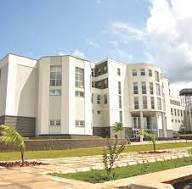
Speaking through human rights activist Auwalu Yakasai (Danmalikin Kano) at the 51st National Executive Council meeting of SSANU at the Aliko Dangote University of Science and Technology, Wudil, Sanusi painted a bleak picture of a country spiraling under the weight of economic decay, institutional weakness, and public despair.
“The economy is in decline, education is struggling, healthcare is deteriorating, and even the labour movement — once a moral compass — is fading into irrelevance,” Sanusi said.
His words struck a chord at a time when many Nigerians are grappling with rising prices, stagnant wages, mass unemployment, and a loss of faith in governance.
Sanusi’s warning comes amid troubling data showing Nigeria among the 10 African nations with the weakest currencies. According to Business Insider Africa, referencing the Forbes currency tracker (as of June 23, 2025), the naira now trades at ₦1,553.68 per U.S. dollar, reflecting severe devaluation despite government assurances of stability.

Other struggling currencies include:
São Tomé and Príncipe: 22,281.80/$
Sierra Leone: 20,969.50/$
Guinea: 8,657.48/$
With inflation still biting and the cost of imports skyrocketing, ordinary Nigerians are bearing the brunt of what Sanusi described as the “systemic failure of leadership and policy coherence.”
Beyond the numbers, Sanusi’s deeper concern lies with Nigeria’s institutional decline — especially the loss of voice within the labour movement, which he said once stood firm against injustice and anti-people policies.
“In the past, unions led the charge against fuel hikes, corruption, and poor governance. Today, they are largely silent — sidelined by politics or fatigue,” he noted.
His remarks challenged not only labour but also academia, civil society, and political leaders to confront the dysfunction eroding the country from within.
For Sanusi, Nigeria’s crisis is not just about currency or commodities — it’s about direction, values, and urgency.
His message wasn’t just a lament; it was a call to action: to rethink governance, rebuild public institutions, and reclaim the moral authority needed to guide Nigeria out of the shadows.
As hardship deepens and the naira weakens, the question lingers: Who will rise to lead Nigeria out of the rubble?