***Warn of Backlash Amid Emergency Rule Tensions
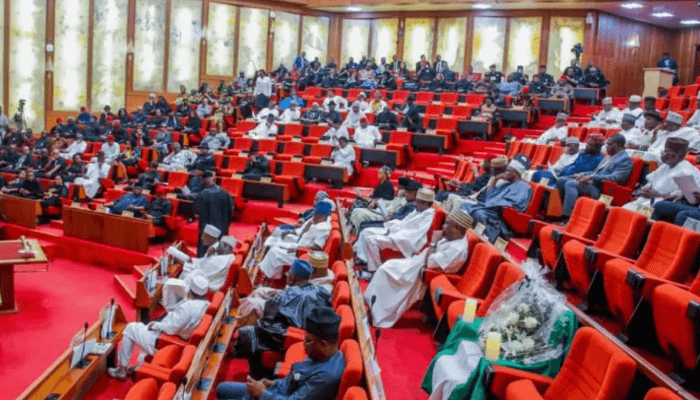
In a fiery session that exposed deepening fault lines in Nigeria’s democracy, the Senate on Wednesday confirmed Dr. Michael Ekpali Odeh, a Cross River State indigene, as Chairman of the Rivers State Independent Electoral Commission (RSIEC)—a decision that drew fierce opposition and set off alarm bells over federal overreach in a state already under emergency rule.
What should have been a routine confirmation quickly unraveled into a dramatic political confrontation, as senators clashed over legality, morality, and the soul of federalism.
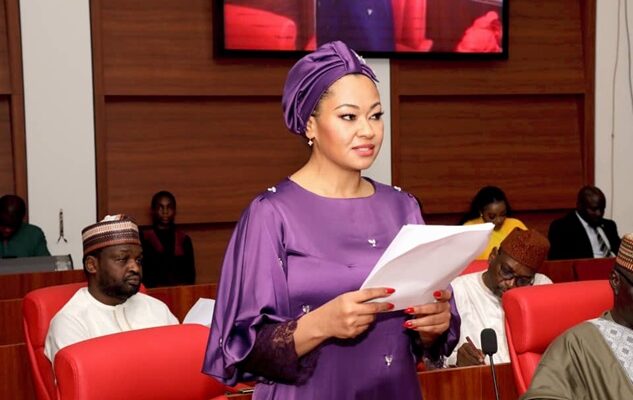
“Are there no qualified people left in Rivers State?” thundered Senator Abdul Ningi (PDP, Bauchi Central). “This is not just inappropriate—it is inflammatory. Let it be on record that I reject this.”
Odeh’s nomination—made during the interim administration of Vice Admiral Ibok-Ete Ibas, the sole administrator of Rivers State—has been widely viewed as an extension of federal control over a state already on edge. Both men hail from Cross River, fueling accusations of ethnic and political favoritism.
Though the Senate Ad-Hoc Committee on Rivers, chaired by Senate Leader Opeyemi Bamidele, claimed no constitutional breach had occurred, the optics sparked outrage.
“We are not guided by the Constitution alone,” warned Senator Ali Ndume (APC, Borno South). “We are guided by conscience and common sense. This isn’t governance—it’s domination dressed in law.”
Senate Minority Leader Abba Moro added his voice, warning that the move risks igniting unrest in a politically volatile state.
“Rivers is not an APC state. It’s under emergency rule. This decision is provocative and tone-deaf,” he cautioned.
Even within the ruling APC, murmurs of disapproval emerged. A senior senator was overheard saying, “This may pass procedurally, but it will explode politically.”
Yet the Senate proceeded, confirming Odeh’s appointment along with nominees for the Rivers State Local Government Civil Service Commission and the Primary Healthcare Management Board. The chamber also approved the ₦1.48 trillion 2025 Rivers State budget, earlier defended before the Bamidele Committee by Sole Administrator Ibas.
Senate Whip Mohammed Monguno and Deputy Senate President Jibrin Barau, who presided over the session, defended the appointment on constitutional grounds.
“Any Nigerian can serve in any part of the country,” Monguno argued. “The Constitution does not discriminate.”
Barau echoed the sentiment, citing the case of Abia State’s Head of Service, who is reportedly from Edo State.
“This is all politics,” Barau declared. “The law was followed. That’s what matters.”
But for opposition senators and democracy advocates, the real concern is legitimacy—not legality.
“This is constitutional colonialism,” one lawmaker said afterward. “Where Abuja imposes outsiders to run local systems under the cover of law.”
Senators Ningi, Ndume, and Moro formally requested their dissent be recorded in the proceedings.
“We may have lost the vote,” said one departing senator, “but history will remember this as the day Rivers people were denied their right to choose.”
The confirmation of an outsider to oversee elections in a state under emergency rule has now become more than a procedural oddity — it is a constitutional flashpoint, raising urgent questions about trust, local autonomy, and the spirit of democratic governance.
As the Senate presses forward, the battle between federal authority and local legitimacy may just be getting started — and Rivers State, once again, finds itself at the center of Nigeria’s struggle between power and principle.