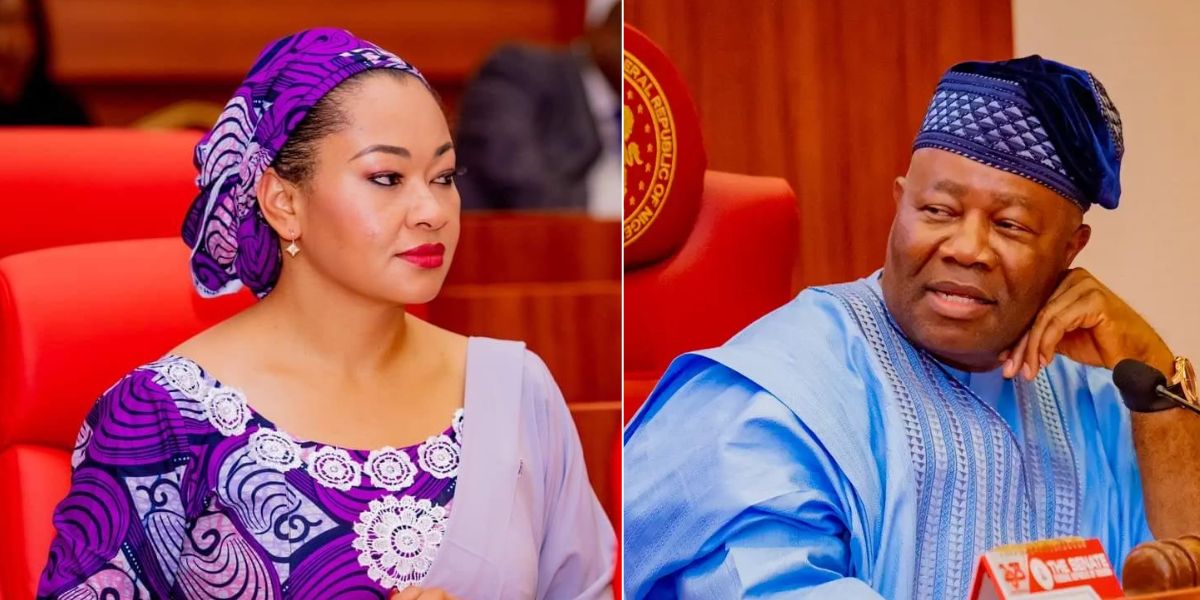
In what may become Nigeria’s most consequential financial probe in recent history, the Senate has uncovered alarming discrepancies in the Nigerian National Petroleum Company Limited’s (NNPCL) audited accounts — including ₦210 trillion in unexplained figures — and issued a one-week deadline for clarification.
At a tense session on Wednesday in Abuja, the Senate Committee on Public Accounts, chaired by Senator Aliyu Wadada (Nasarawa West), grilled NNPCL’s Chief Financial Officer, Mr. Adedapo Segun, and representatives of the company’s external auditors over figures lawmakers described as “frightening,” “deliberately opaque,” and “a betrayal of public trust.”
At the heart of the inquiry lies a baffling contradiction: between 2017 and 2021, the National Petroleum Investment Management Services (NAPIMS)—an arm of NNPCL—declared over ₦9 trillion in profits. Yet, over the same period, NNPCL posted a ₦16 billion operational loss. Lawmakers questioned why NAPIMS’ profits were never consolidated into the group’s financials, suggesting possible concealment and financial misrepresentation.
“Is this incompetence or intentional deception? The public deserves to know,” a senator asked bluntly.

The committee also zeroed in on NNPCL’s 2023 audited report, which showed ₦103 trillion in accrued expenses and ₦107 trillion in receivables — figures submitted without corresponding documentation, breakdowns, or contract references.
“Retention fees alone exceed ₦600 billion. Where are the contracts? Who approved them? These are not rounding errors — they are systemic problems,” Senator Wadada said.
To worsen matters, NNPCL submitted a separate document on the morning of the hearing that differed significantly from the official audit already in the public domain, further deepening senators’ suspicion of a cover-up.
Senators also grilled NNPCL over subsidy discrepancies, questioning why page 62 of the audit listed ₦3 trillion in subsidy while page 80 listed ₦5.1 trillion — a difference described as “chameleonic.” An unexplained ₦2.7 trillion foreign exchange loss in 2017 also came under scrutiny, with lawmakers wondering why such a loss was not repeated in subsequent years of oil trading.
Another sore point was ₦1.2 trillion in Joint Venture cost deductions between 2019 and 2021 — a charge the lawmakers argue should have been borne by international oil companies through cash calls, not from Nigeria’s crude revenues.
CFO Segun admitted that although reconciliations were internally conducted, the final figures in the audit did not reflect those reconciliations — a confession senators interpreted as deliberate financial distortion.
The committee concluded that NNPCL’s financial statements from 2015 to 2023 could no longer be trusted and called for a comprehensive forensic audit of the entire period. Lawmakers also demanded full disclosure of parties linked to ₦27 trillion in impairments and questioned the disappearance of some of Nigeria’s most lucrative oil assets from official records.
“This is not mismanagement — this is sabotage,” Wadada declared. “The concealment of revenue streams and assets is economic terrorism against the Nigerian people.”
The revelations arrive at a critical time, as NNPCL reportedly prepares for an Initial Public Offering (IPO). Lawmakers warned that any attempt to list the company based on distorted financials could damage Nigeria’s credibility in global markets and expose investors to fraud risks.
“If this document is riddled with lies, why should any investor trust our oil sector?” a senator asked.
The committee has submitted 11 written queries to NNPCL and its auditors and expects written responses within seven days. Failure to comply could trigger criminal investigations and further Senate action.
As public attention now turns to NNPCL’s response, the case is shaping up as a defining test of the Tinubu administration’s anti-corruption stance and a potential turning point in the battle for transparency in Nigeria’s most vital economic sector.