In a powerful show of regional collaboration and resolve, West Africa has launched one of its most ambitious youth employment and agricultural transformation efforts to date.
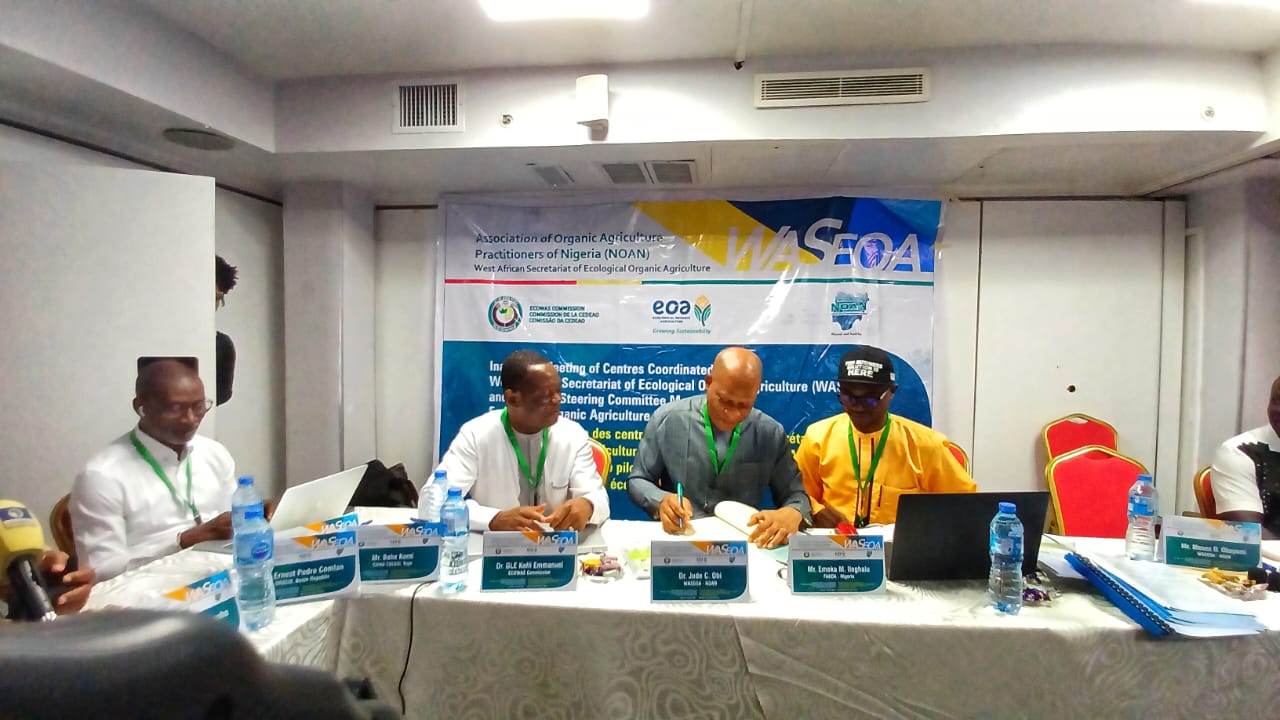
At the heart of this vision is the Inception Workshop of Centres Coordinated by the West African Secretariat of Ecological Organic Agriculture (WASEOA), which opened in Lagos with a rousing address from Dr. Gle Koffi Emmanuel of the ECOWAS Commission.
Held at the Ibis Hotel, Ikeja, the high-level gathering brought together agricultural leaders, organic practitioners, policymakers, development partners, and centre coordinators from across the region—marking the official start of an ECOWAS-backed initiative to train 3,850 youths across the agro-sylvo-pastoral and fisheries (ASPH) sectors, with 1,270 trainees directly under WASEOA’s supervision. At least 40% of those trainees will be women.

In his opening remarks, Dr. Emmanuel, Chairman of the Regional Steering Committee of the Ecological Organic Agriculture Initiative (EOA-I), described the initiative as a “historic turning point” in youth development, urging stakeholders to see the workshop as more than a formality but “a launchpad for economic renewal, ecological justice, and regional solidarity.”
“We are gathered here not just to train young people but to rebuild broken bridges between generations, transform rural livelihoods, and redefine the meaning of agriculture in West Africa,” he declared.
The $2.2 million ECOWAS grant supporting the initiative is part of a larger Priority Investment Programme aimed at revitalizing the ASPH sector, long plagued by low productivity, aging farmer populations, and waning youth interest. WASEOA will receive $594,000 to train young West Africans in six countries through a network of selected centres.
This investment responds to a demographic emergency: over 60% of West Africa’s population is under 30, yet more than 75% of youth entering the job market face unemployment or underemployment. According to Dr. Emmanuel, this program is not just about jobs—it’s about justice.
“We must disrupt the trend of rural exodus, income inequality, and environmental degradation,” he said. “We must empower young women and men to become stewards of land, innovation, and food sovereignty.”
Ecological Organic Agriculture (EOA), the foundation of the training program, was described by Dr. Emmanuel as “more than a method; it is a movement rooted in nature, dignity, and resilience.” He emphasized the role of EOA in addressing climate change, food insecurity, and public health challenges across the continent.
The African Union’s endorsement of EOA-I in 2011, he noted, was a continental affirmation that organic and sustainable farming must be central to Africa’s future. ECOWAS now leads implementation in West Africa, reporting back to the African Union Commission and supporting national centres with both funding and strategic guidance.
As the organic market grows, Dr. Emmanuel called for urgent harmonization of regional regulations, particularly in the certification and quality control of organic fertilizers. He encouraged all centres to contribute to the drafting of policies that protect consumers and support organic producers across the region.
“Safe food begins with safe soil,” he asserted. “We must regulate the use of inputs and eliminate hazardous pesticides if we are truly committed to ecological farming and community health.”
President of the Association of Organic Agriculture Practitioners of Nigeria (NOAN), Jude Obi described the initiative as a “watershed moment” in youth engagement and agricultural transformation:
“This programme must leave a significant impression on the dynamics of food and nutrition systems across the region. We have an odorous burden and a glorious opportunity—to turn West Africa’s youth bulge into an agricultural renaissance. Welcome to Lagos. Welcome to the future.”
The workshop served as a platform for, sharing success stories and challenges from earlier project phases; Reviewing implementation blueprints from new training centres; Aligning national youth policies with agroecological goals and nd forging partnerships to boost agri-business capacity and innovation.
A key pillar of the programme is to curb irregular youth migration by making rural economies more attractive and economically viable.
The two-day workshop will allow new and returning centres to exchange insights, evaluate progress from earlier phases, refine implementation plans, and align with ECOWAS’s broader agricultural and youth development frameworks.
Participants will also engage in policy reflections, develop partnership strategies for access to finance, and create stronger support systems for agro-entrepreneurship.
“The task ahead is not easy,” Dr. Emmanuel concluded. “But with transparency, collaboration, and shared passion, we can—and we will—succeed.”
As the room echoed with applause, a sense of urgency and optimism took hold. WASEOA’s centres are not just training grounds—they are becoming hubs of transformation, innovation, and youth-led resurgence in West African agriculture.
With this workshop, ECOWAS and its partners have thrown open the door to a future where farming is no longer seen as a last resort, but a first choice—a profession of pride, purpose, and prosperity.
The future of West African agriculture, it seems, is young, organic, and unstoppable.