


By Dr. James Aduku Odaudu
The agitation for the creation of new states and local government areas in Nigeria is deeply rooted in the quest for equity, growth, political and economic inclusiveness. The faulty federal system in place has ensured that no matter the number of states in existence, the agitations will not end as long as there are cases of marginalisation, inequity and fear of domination. I dare say, however, that some of the demands are not only just, but also timely.
Nigeria’s democracy must be built on fairness, inclusion, and responsiveness to the aspirations of its people. One of the clearest expressions of these ideals is the call for the creation of Okura State—an idea whose time has surely come.
Situated in the eastern flank of Kogi State, the proposed Okura State is home to over 2.5 million people, predominantly of Igala descent. This ethnic nationality boasts a proud history dating back centuries, marked by an organized kingdom and deep cultural heritage. Yet, despite their numbers and contributions 0configuration of Kogi State—a situation that has bred deep political and developmental frustrations.
But the call for Okura State is not just about correcting past wrongs. It is a forward-looking proposition that promises administrative efficiency, economic vitality, and national cohesion. With a landmass of over 13,000 square kilometers, Okura is not only viable—it is strategic.
Resource Abundance Meets Strategic Location
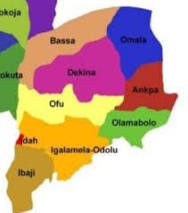
Rich in petroleum deposits, solid minerals, and fertile agricultural land, the region holds immense untapped potential. The oil-rich Ibaji axis, the iron ore and petroleum deposits in Omala, the vast coal deposits in Omala and Ankpa areas, and the vast arable lands across Dekina, and Olamaboro can support industries ranging from petrochemicals to agro-processing. Add to this a network of rivers and streams ideal for irrigation, aquaculture and tourism, and you have a blueprint for a self-sustaining, growth-driven economy
A Region of Remarkable Human Capital
Okura’s strongest argument may well be its people.
The region has consistently produced some of Nigeria’s most accomplished personalities across sectors. These include former Governors Abubakar Audu (late), Ibrahim Idris and Idris Wada, former Deputy Governors like Isa Odoma (late), Sule Iyaji, Simon Achuba, and the incumbent Comrade Joel Oyibo.
In the political sphere, the area has also produced stalwarts like the late Dr Steven Achema, Senator Dr Ahmadu Ali who has also served as Minister and National Chairman of the then ruling party, PDP, Senators Jibrin Isah (Echocho) Andrew Abogede, Dangana Ocheja, Attai Aidoko Ali, Isaac Alfa, Abdul Abubakar and numerous members of the House of Representatives, including the current Deputy Leader of the House, Rt. Hon. Abdullahi Ibrahim Ali (Halims). They also include former and serving Ministers like the current Minister of Steel Development, Prince Shuaibu Aubakar Audu, Abdullahi Ibrahim (SAN), Abubakar Usman, Barrister Humphrey Abah, James Ocholi (SAN) and Professor Stephen Ocheni.
The area also boasts of top guns in various spheres of life, including the late former Chief of Defence Staff, Admiral Ibrahim Ogohi, former Chief of Naval Staff, Vice Admiral Usman Jibrin, former Chief of the Air Staff, Isaac Alfa. The list is endless in the Federal and state bureaucracies where it has produced a cream of retired and serving Permanent Secretaries and Directors, the academia with a plethora of serving and Emeritus Professors like Gabriel Oyibo of a GAGUT fame, the legal profession with uncountable Senior Advocates, the medical profession, the organised private sector with the likes of Thomas Etuh, chairman of 9Mobile, etc.
This list is not representative enough of the volume of human resources available in the proposed state but serves not only as a testament to the region’s human capital but also a ready resource for state-building and economic advancement.
State creation remains a strategic instrument for promoting equitable development, national integration, and responsive governance in Nigeria’s federal system. As the demand for Okura State continues to gather momentum, it is essential to outline the multifaceted benefits of state creation and present a compelling case for the establishment of Okura State from the present Kogi East Senatorial District.
Benefits of State Creation
Enhanced Grassroots Participation: State creation brings governance closer to the people, encouraging more civic engagement, accountability, and responsiveness from local leaders.
Improved Infrastructure Development: New states typically invest in administrative infrastructure (e.g., secretariats, roads, schools, hospitals), which can accelerate regional development.
Balanced Federal Character: In multi-ethnic societies, state creation can help promote inclusiveness and reduce feelings of domination by larger ethnic groups or regions.
Reduction in Urban Overcrowding: By developing new capitals and administrative hubs, state creation can reduce pressure on major cities and promote decongestion.
Promotion of Local Enterprise and Investment: New state governments often incentivize investment in order to build a viable economy, which encourages private sector growth.
Cultural Renaissance: It may spur efforts to preserve, promote, and institutionalize indigenous languages, traditions, and cultural practices through festivals, media, and education.
Revenue Generation Autonomy: States may explore local revenue sources (e.g., taxes, natural resources, tourism), reducing overdependence on federal allocations over time.
Symbolic Empowerment: For many communities, having a state named after them or governed by their own people serves as a source of pride and collective identity.
The Case for Okura State
Ethno-Cultural Identity and Heritage Okura State, predominantly inhabited by the Igala ethnic group, has a rich historical and cultural heritage. Creating a state that aligns with the socio-cultural homogeneity of the region would reinforce identity, pride, and cohesion.
Historical Justification The Igala Kingdom is one of the oldest and most organized pre-colonial entities in Nigeria. The demand for Okura State dates back to the 1980s and has remained consistent through various constitutional conferences, indicating deep-rooted aspirations for self-determination.
Correcting Political Marginalization Since the creation of Kogi State in 1991, the Igala have experienced diminishing political influence, especially at the federal level. This is despite their population size and contributions to state and national development. Okura State would restore equitable representation and empower the region politically.
Addressing Developmental Neglect Kogi East has suffered from underinvestment in roads, healthcare, education, and infrastructure. A new state government would prioritize the region’s development needs, ensuring that resources are directed where they are most needed.
Administrative Convenience Carving out Okura State would ease the administrative burden of managing a large, diverse state like Kogi. It would allow for more tailored and efficient governance.
Peace and Stability By creating Okura State, long-standing ethnic tensions within Kogi could be diffused, promoting peace and stability in the region.
Economic Viability Okura State is rich in agricultural resources and human capital. With appropriate investment, it has the potential to develop into a thriving economy through agro-industrialization, education, tourism, and commerce.
Grassroots Support and Legitimacy The call for Okura State has wide support among local traditional institutions, political stakeholders, civil society, and the general populace, underscoring its legitimacy and urgency.
A Just and Forward-Looking Demand
Opponents may argue about cost or political complexity. But history has shown that new states, when well-managed, do not become burdens—they become engines of local development and national balance. The creation of Bayelsa, Ekiti, and Gombe States proves that smaller administrative units can unlock economic and political inclusion in ways larger states often fail to do.
Okura State represents a legitimate aspiration rooted in historical consistency, economic promise, and democratic ideals. It offers a peaceful solution to regional tensions and a practical means to spread development to previously underserved areas.
Conclusion: A Call for Action
The National Assembly, federal authorities and, indeed, everyone that has a role, must rise to this moment. The creation of Okura State is not merely a regional plea—it is a national opportunity to deepen federalism, promote equity, and empower millions of Nigerians with the tools to shape their own destiny.
Let justice be done, and let Nigeria move forward.


About the Author
Dr. James Aduku Odaudu, a retired Aviation Director, is a development administrator, communication consultant, and Convener of the Kogi Professionals Network. He can be reached at jamesaduku@gmail.com