

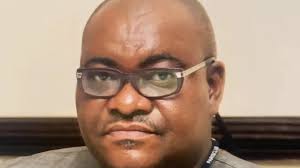

By Tunde Olusunle
That Nigeria’s very highly regarded The Guardian newspaper published a two-part editorial in the immediate past week on the nation’s judiciary, attests to the seriousness with which this arm of government is taken. The Guardian has deservedly earned its place in the nation’s media space, having survived four full decades, consistently making regular, daily showings on the newsstands. This is despite the country’s unabated inclement socioeconomic situation which has summarily interred several other similar initiatives over the years. On Thursday March 16 and Friday March 17, 2023, an editorial titled “The judiciary and public criticism” featured on prominent pages of the authoritative publication. The editorial alluded to public denunciation of certain judgments delivered and actions taken, by the nation’s apex court and its leadership. Principally cited in the commentary, are pronouncements gifting Ahmed Lawan, president of the Senate, and Godswill Akpabio, former governor of Akwa Ibom state, tickets to contest the recent senatorial elections. Such appropriation was done by the Supreme Court, even when both political leaders did not participate in the primaries which would have presaged their emergence.
Little known Bashir Machina had won the senatorial ticket for Yobe North, while Lawan was contesting the presidential ticket of the All Progressives Congress, (APC). Udom Ekpoudom a former deputy inspector general of police, (DIG), had also contested to represent Akwa Ibom North West zone in the senate, while Akpabio from the same zone, sought without success, the ticket of the nation’s top job. To the consternation of most followers of Nigerian politics, however, the Supreme Court ruled in favour of Lawan and Akpabio! Lyrics from Unknown Soldier, one of the classic hits of the maverick Afrobeat precursor, Fela Anikulapo-Kuti, appropriately capture such bewildering turn of events. Fela alludes to “government magic” which turns “red into blue and electric into candle!” The January 2020 “installation” in confounding circumstances, of Hope Uzodinma, by the Supreme Court, as governor of Imo State a few years ago, and the displacement of Emeka Ihedioha, remains fresh in popular consciousness.


Unsettled by accentuated public angst and vituperations against the Lawan/Machina and Akpabio/Ekpoudom twin-rulings, the Supreme Court through its director of information and press affairs, Festus Akande, issued a rejoinder. Titled: “Be mindful of unwarranted attacks on the judiciary,” the statement countered insinuations to the effect that sections of the judiciary had been compromised. Akande had stated that the concoctions to the effect that its justices were bought over “by some unknown and unseen persons, was nothing short of a bizarre expression of ignorance.” The release was very obviously a response to public bewilderment to the apex court’s arbitration in the substantial political litigations of Lawan vs Machina, and Akpabio vs the Independent National Electoral Commission, (INEC) and other interested parties. The Supreme Court, Dr Akande noted, was overburdened with nearly 600 cases deriving from the primaries of the various parties. The topmost arbiter in the land, Akande advanced, “was duty-bound to adjudicate on the matters brought before it to the best of its ability and in accordance with the law.”
Our recent very highly controversial and largely opaque general elections, have spawned additional responsibility for the Supreme Court. From parliamentary, to gubernatorial and thenceforth to the presidential elections, fall-outs, without doubt, will engage election tribunals and be escalated to the Supreme Court, in the weeks and months to come. Of the multilevel petitions emanating from the polls, that of the presidential election engenders the most interest and attention of Nigerians and indeed the global community. This is understandable given the pivotal place and preeminence of the president to the superintendence over, and guardianship of the people and the state. A winner, Bola Tinubu of the All Progressives Congress, (APC), was in the early hours of Wednesday February 28, 2023 returned by INEC.
There are, however, crystal clear, convincing and compelling reasons to interrogate the authenticity and veracity of the electoral exercise which produced him, in its totality. INEC which supposedly, had been preparing for the recent elections for four full years since the last general polls, pooling resources close to the one billion US dollar mark, delivered a complete sham, a shameful string of elections. INEC’s pretences and deceit of Nigerians about technological innovations to enhance and ensure seamless, fraud-proof, open, transparent and believable elections, was a colossal scam. The process was a perfidious bouquet of gross impunity, unashamed indiscretions, unparalleled and unpardonable lawlessness, unacceptable violence, brazen electoral thievery and mass disenfranchisement among others. The Centre for Democracy and Development, (CDD), reports that Nigeria’s recent electioneering, claimed 109 lives, which means more than one death per day within the period.
Mahmood Yakubu, a professor of History and INEC’s chairman for a second term of four years, delivered the most preposterous general elections this fourth republic. If the performance of Maurice Iwu, also a professor and Yakubu’s last but one predecessor was presumed controversial, Yakubu has unwittingly beatified Iwu. Yakubu’s outing fell way below the basement of global best practices. The characterisation of the elections by the local and global media, has been most unsparing. The Economist described the presidential election as “a chaotically organised vote and messy count.” An editorial by The Financial Times said the poll was “deeply flawed” and the winner “a wealthy political fixer.” Aljazeera wrote about “How violence robs Nigeria of their votes.” A Canadian newspaper also writes that “depression, anxiety, uncertainty be-clouds Nigeria’s political space as a drug-kingpin wins the election.”
Yakubu’s regime which popularised the culture of “inconclusive elections,” has equally introduced the dismissive expression, “go to court,” to the nation’s electoral vocabulary, in direct reference to disaffected parties. Atiku Abubakar, Nigeria’s former vice president, flew the flag of the Peoples’ Democratic Party, (PDP) at the recent presidential poll. There is substantial, even mind-boggling evidence to the effect that he won the election. Theories and hypotheses about the pre-election cannibalism of his vote tally by Peter Obi’s breakaway from the PDP to the Labour Party, (PDP), and the G-5 governors, fall flat in the face of tangible evidence. Obi, by the way, filed his petition investigating the process of the emergence of Tinubu as president-elect, 24 hours before Atiku’s.
There is apprehension that electoral malfeasance as already committed and legalised by the issuance of the apposite “Certificate of Return,” (CoR) is fait accompli. Atiku, however, is calling for the withdrawal of Tinubu’s CoR, on the basis of “noncompliance with the electoral act, which invalidates Tinubu’s election.” While observing that by-passing and non-use of BVAS in the transmission of results impugned the integrity of the polls, Atiku also listed a dozen corrupt practices perpetrated by INEC to swing the election in favour of Tinubu. The suppression of votes; manipulation of ballots and ballot boxes; manipulation of BVAS machines; manipulation of accreditation and collation, and the manipulation of election material(s) delivery, feature among these infractions. Manipulation of election material(s); reverse logistics; massive thumb-printing of ballot papers, destruction of electoral materials; mutilations, cancellations; overwriting on result sheets, have also been highlighted in the petition. Atiku urges the court to either declare him Nigeria’s president or order a fresh election. Atiku’s core desire is that the votes of the people, their franchise, should count, consistent with global democratic traditions and expectations.
Flowing from recent experience where the judiciary has been repeatedly kicked around and disrespected by the executive, there are palpable concerns that the judiciary as presently constituted may not be in a position to deliver justice. The homes of revered judges and justices were breached under the cover of night in places, by operatives of the secret police, ostensibly to search for monies paid to them to influence judgements, under the present regime. The manner of the suspension, arraignment and summary retirement of Walter Nkanu Onnoghen, former CJN within the 2019 electoral season, reaffirms the dilemma of the judiciary under an all-powerful executive arm of government. There are apprehensions about the plausibility of objective, dispassionate, independent opinion and adjudication, by the Supreme Court. Yet, there is no better time for the judiciary to exercise its professionalism, forthrightness, and alignment with popular will and democracy, than at this time in our national and democratic evolution.
Certain video clips have been trending of late, depicting the incumbent CJN, Olukayode Ariwoola as presumably politically partisan. Ariwoola spoke at a banquet in his honour in Port Harcourt late last year, expressing delight that the governor of his state, Seyi Makinde, was a member of the G-5 faction of governors in the PDP. Whereas Ariwoola said he intended to recommend to the Oyo State governor the handbook of infrastructural development in Rivers State, the manner of his expression lent itself to dialectics. There are also salient doubts accentuated by the nepotistic governmental manual operated by the outgoing President Muhammadu Buhari. Faith and ethnicity, more than anytime in our political trajectory, sadly, have played very critical roles across the broad canvas of governance and administration under Buhari.
There are reservations that justice may be difficult to get under a judiciary headed by a kinsman of the president-elect, if the latter, who hails from Lagos State, gets sworn-in. CJN Ariwoola hails from Oyo, in the same south west geopolitical zone like Bola Tinubu. An online newspaper has just reported that Ariwoola was in London on a short vacation, during which he will hold a secret meeting with Tinubu who himself was reported to have travelled to Paris earlier this week. Will all of these impact on honesty, believability and transparency at the coming arbitration? This is a unique opportunity for the judiciary to rediscover and reassert itself as the irrepressible temple of truth and justice in the service of democracy and the people.
Tunde Olusunle, PhD, is Special Adviser on Media and Publicity to Atiku Abubakar, GCON, presidential flagbearer of the Peoples’ Democratic Party, (PDP)