


By Azeez Mojeed Olusola
While working on my final paper for my environmental management course, I was pleased to share with my class that the Philippines pioneered a community-based approach to marine protected area management. I spent a whole season with Canadian classmates and a few others, like me, who were overseas. During this time, I represented real-life examples of climate change issues like Typhoon “Paeng” wreaking havoc on Luzon. The module on agroforestry, allowed me to share examples from my little farm where we got yields from cacao trees we planted five years ago between coconut and other native trees. Learning that we had a head start in marine protected areas management gave me a little sense of pride. We’re not so bad, and we aren’t always climate victims.
As early as 1974, the Philippines set a framework for coral reef management in Sumilon and Apo islands where a “no take zone” was established. This resulted in protecting the coral reef habitats, enhancing biodiversity, and increasing fish yields for traditional fishermen in the community. Not all countries with marine protected areas (MPAs) commit to strict no “take zone” declarations. In the Philippines, we do. And what we lack in monitoring resources, we make up for in community management and involvement.


The jewel of our MPAs is Tubbataha Reefs Natural Park, 150 kilometers southeast of Puerto Princesa City, Palawan. It was declared a World Heritage Site by Unesco in 1993. For perspective, Canada did not establish its first MPA until 2003. However it had other legal frameworks for environmental protection through its Parks departments. In terms of a pure objective to protect habitats and biodiversity, the Philippines was a pioneer. Examples are Apo, Sumilon and Tubbataha.
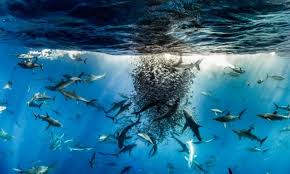
Tubbataha protects an area of almost 100,000 hectares of high quality marine habitats with two big coral atolls and a reef. It is a rare example of a diverse and almost pristine coral reef with a 100 meter perpendicular wall and lagoon. Over 360 species of coral and almost 700 species of fish are found here. The presence of apex predators such as the hammerhead shark is an indicator of good ecological balance. Tubbataha is an important natural habitat for in-situ conservation of biological diversity.
National policies helped strengthen the protection of marine resources. In 1988, Tubbataha was established by Presidential Proclamation 306 as the first marine national park by President Corazon Aquino. In 1995, President Fidel V. Ramos established the Presidential Task Force on Tubbataha Reefs through Memorandum 128 composed of government agencies, private sector and civil society. In 2009, after almost 20 years of managing the site as a no-take zone, Tubbataha was declared a Protected Area under the Nipas Law through Republic Act 10067. This prohibited exploration, exploitation, or use of non-renewable resources, conducting of bioprospecting without a permit, introduction of exotic species, to hunt, catch, fish, kill, take resources.
Despite the laws and policies protecting Tubbataha, a US Navy warship, USS Guardian, ran aground on the northern tip of the southern atoll in 2013. It damaged over 2,300 square meters of reef and took 72 days for the ship to be extracted. Also in 2013, an illegal Chinese fishing vessel, Min Ping Yu, ran aground on Tubbataha’s northern atoll. Only one somewhat good thing came out of this incident. It allowed the International Maritime Organization’s declaration in 2017 of Tubbataha as a sensitive area to be avoided by maritime routes, giving the area an extra layer of protection. This designation is a big breakthrough because it protects Tubbataha from the impact of noise, pollution and further potential shipping accidents.
According to a International Union for the Conservation of Nature (IUCN) report in 2020, Tubbataha is “excellent and effective at planning, outreach, enforcement, and implementation of conservation and regeneration efforts.” Tubbataha addressed ecological issues early by declaring it a no-take reserve in 1988, and continued to support it by legislation and international declarations. There are still some threats that persist from local anthropogenic activity, which are minimized by resident ranger patrol and global impacts of climate change.
While the establishment of MPAs had the initial objectives of protecting and restoring biodiversity within the specific area for a long-term period, it is now found to be an effective climate change mitigation and adaptation principle as well. When non-climate stressors are reduced in an MPA, such as prohibiting fishing, exploration and bottom-trawling, there is an added benefit of storing carbon within, therefore reducing impacts on climate. Blue carbon is carbon that is stored within marine and coastal ecosystems. Oceans store more blue carbon per unit area than terrestrial forests. Protected mangroves, marshes, seagrass beds also provide climate change adaptation benefits like protecting coastal communities and providing food security. When coastal areas are protected under MPAs, they continue to play their role as carbon sinks. MPAs with complex, intact ecosystems resist and recover better from climate disturbances compared to unprotected areas.