
The Dumebi Kachikwu-led faction of the African Democratic Congress (ADC) has unveiled what it describes as a “Break the System” agenda, positioning its 2027 presidential campaign as a direct challenge to Nigeria’s entrenched political structure.
Speaking in Abuja during his acceptance address as flagbearer of the factional bloc, Kachikwu framed Nigeria’s current reality as a national crossroads, warning that worsening insecurity, economic hardship, and social discontent reflect deeper systemic failures rather than routine governance lapses.
Opening with Shakespeare’s “to be or not to be,” he described the moment as one of existential national urgency, arguing that millions of Nigerians are already trapped between endurance and despair due to long-standing institutional decay.
The factional ADC candidate accused Nigeria’s political establishment of sustaining what he called a closed system of power built on elite compromise, recycled leadership, and weak accountability structures.
He positioned the Kachikwu-led ADC bloc not as a traditional opposition wing, but as a reform movement seeking to disrupt what he described as a “stagnant political order” and replace it with a new governance framework.
Central to his message was a proposal for a “new national charter,” which he said would move Nigeria away from identity-based politics and toward a citizenship-driven system anchored on merit, competence, and national integration.
Kachikwu argued that ethnic bargaining, zoning arrangements, and political patronage have weakened national cohesion, insisting that Nigeria must redefine its sense of unity beyond regional and religious calculations.
He also outlined governance reforms that would require public officials to operate within the same service systems as citizens, including healthcare and education, as a way of closing the gap between leadership and lived reality.
According to him, public office in Nigeria has become overly insulated from the consequences of poor service delivery, a gap he says must be urgently addressed.
“If leadership is truly service, then leaders must live the reality of those they govern,” he said.
On economic direction, he called for a shift toward a digital-first development model, arguing that broadband infrastructure and technology expansion should form the backbone of future national growth.
Security also featured prominently, with Kachikwu promising a more aggressive national response to terrorism, kidnapping, and organised criminal activity, while advocating structural reforms in security coordination.
He further proposed a “Nigerian Patriot Act” aimed at tightening accountability standards for public officials and reducing what he described as excessive privileges enjoyed by political office holders.
Despite acknowledging the limitations of the faction in terms of funding and institutional reach compared to dominant political forces, he framed the movement as a citizen-driven political uprising built on public frustration with the status quo.
He urged Nigerians to see the 2027 elections as a referendum on governance systems rather than political personalities, insisting that real transformation would require structural change rather than superficial leadership turnover.
The address underscores the increasingly factional nature of the ADC, with the Kachikwu-led bloc seeking to position itself as a radical reform wing within Nigeria’s opposition landscape ahead of the 2027 elections.
Related Posts

Lamido Declares PDP United, Battle-Ready After Jigawa Primaries 2027
Mustapha Sule Lamido, the Peoples Democratic Party (PDP) governorship candidate for the 2027 election in Jigawa State, has expressed strong…
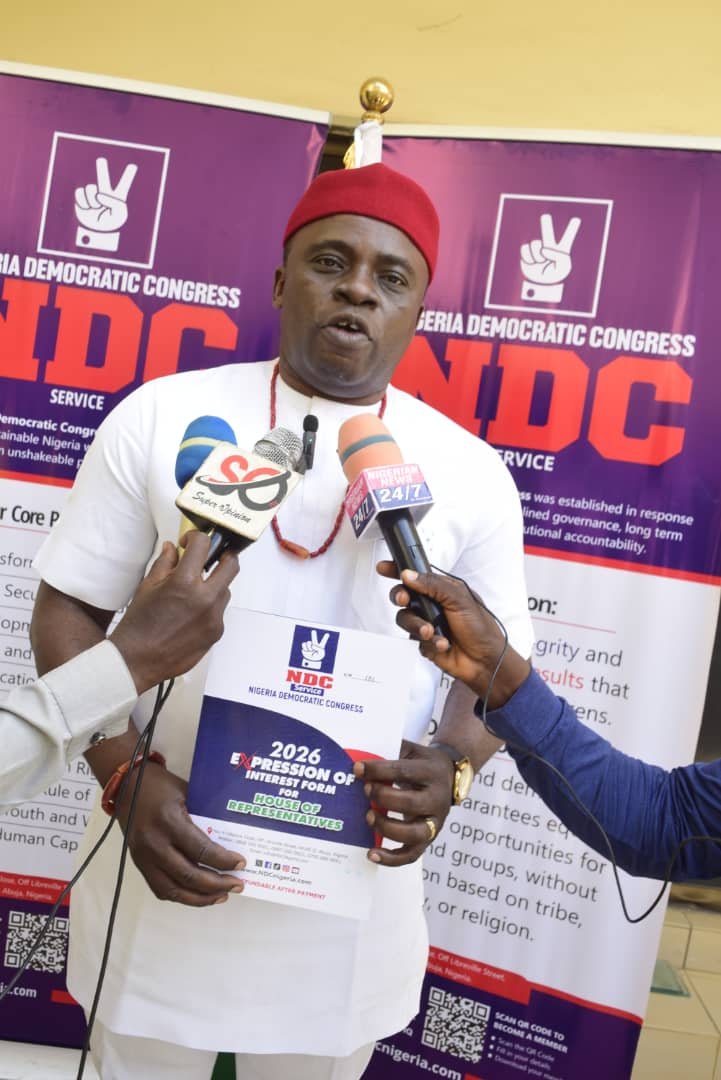
“Ceejay Is Okay”: Owerri Reps Aspirant Unveils Jobs, Development Agenda
An aspirant for the Owerri Federal Constituency seat in the House of Representatives, Chijioke Onyeneke, has unveiled an ambitious development…
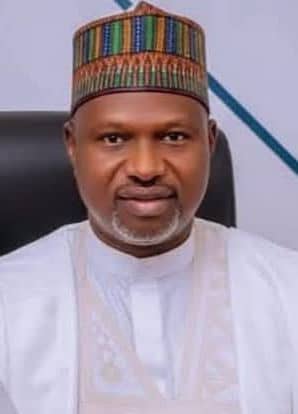
Jigawa North East Senate Seat: APC Affirms Malam Madori as Sole Candidate
By Ahmed Rufa’i, Dutse The senator representing Jigawa North East Senatorial District, Ahmad Abdulhamid Malam Madori, has secured the ticket…