The Human Rights Writers Association of Nigeria (HURIWA) has accused Nigeria’s anti-corruption agencies and electoral institutions of watching helplessly as political parties descend into what it described as a “dangerous marketplace of fraud, confusion, and institutional anarchy.”
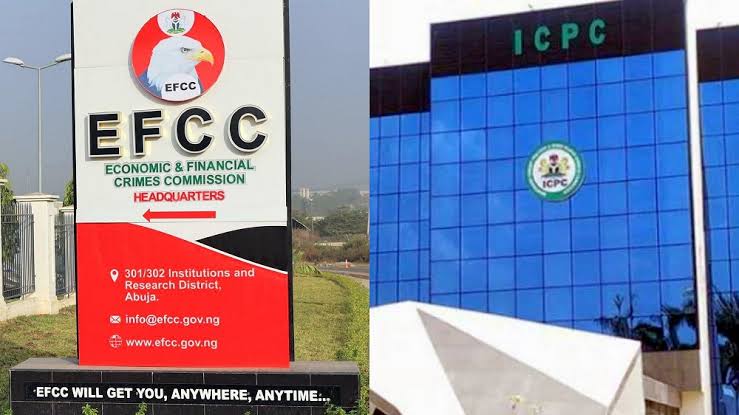
In a hard-hitting statement released on Saturday by its National Coordinator Emmanuel Nnadozie Onwubiko, the rights group demanded the immediate resignation of the leadership of the Economic and Financial Crimes Commission and the Independent Corrupt Practices and Other Related Offences Commission over their alleged failure to investigate rival political factions openly selling nomination forms despite unresolved leadership crises and conflicting court rulings.
HURIWA said Nigeria’s democracy was gradually being transformed into a chaotic business enterprise where political actors allegedly collect massive sums from aspirants under disputed party structures while law enforcement agencies remain silent.
According to the group, the situation has exposed what it called a frightening collapse of institutional authority and accountability.
“What Nigerians are witnessing is no longer ordinary political crisis. This is organised political commercialisation happening openly while institutions that should enforce the law are pretending not to see,” the group declared.
HURIWA alleged that the ruling All Progressives Congress had benefited from the instability within opposition parties, accusing the APC of enabling internal sabotage and weakening rival platforms through political infiltration and compromised actors.
The association pointed particularly to the crisis rocking the Labour Party and other opposition parties where multiple factions allegedly continue to sell nomination forms and operate parallel leadership structures despite ongoing legal disputes.
The group questioned why anti-graft agencies had allegedly failed to trace the movement of funds generated through the sale of forms by competing party factions.
“Different factions are openly collecting money from politicians across the country, announcing sales publicly, operating bank accounts, and nobody is asking questions,” HURIWA stated.
“Which authority approved these transactions? Who supervises these accounts? Why are security agencies behaving as if these allegations do not exist?”
HURIWA also criticised the Independent National Electoral Commission for allegedly failing to clearly enforce legitimate party leadership structures, warning that the confusion was damaging Nigeria’s democratic credibility internationally.
The organisation said recent judicial pronouncements on party leadership disputes had deepened uncertainty and emboldened political actors to operate without restraint.
According to HURIWA, Nigeria now risks appearing before the global community as a country where court judgments can be ignored and political institutions manipulated without consequences.
The group consequently demanded that the heads of the EFCC, ICPC, and relevant law enforcement agencies resign if they are unwilling or unable to investigate what it described as open financial irregularities within the nation’s political system.
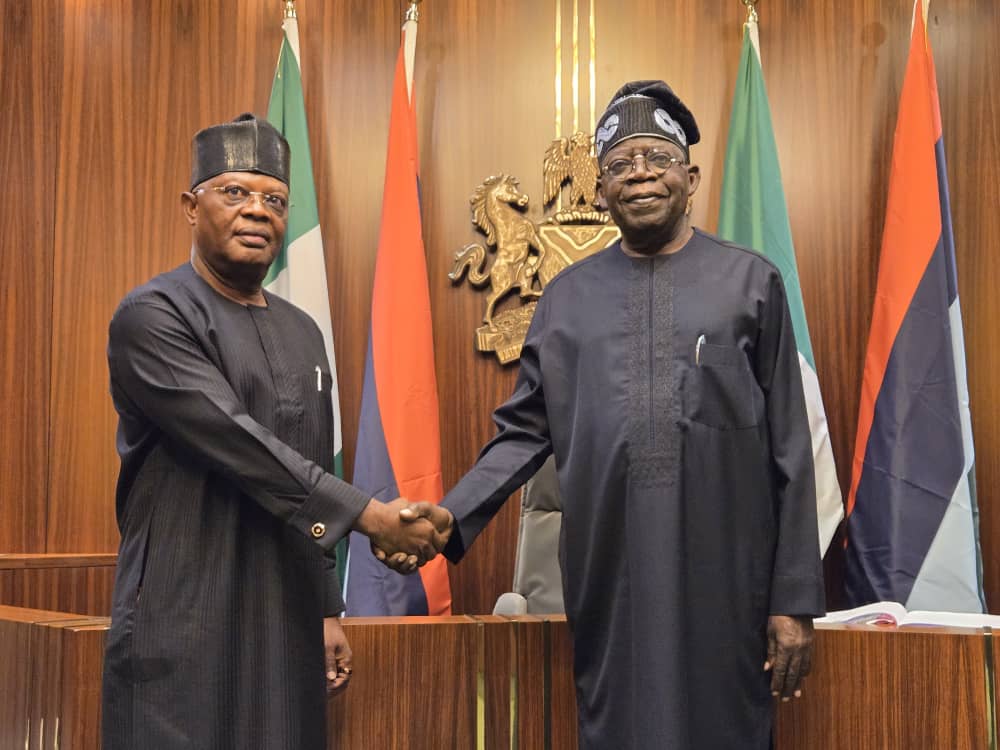
HURIWA also criticised President Bola Ahmed Tinubu, accusing his administration of overseeing what it termed a steady erosion of institutional credibility and democratic order.
HURIWA Raises Alarm Over ‘Political Marketplace’, Demands EFCC, ICPC Leadership Resign